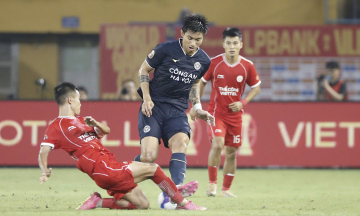
U23 Vietnam is set to open its campaign at the 20th Asian Games in Japan against Kuwait. The Vietnamese side, having secured a bronze medal at the U23 Asian Championship, enters the tournament as a top seed, avoiding powerhouses like South Korea, Japan, and China. In Group C, Uzbekistan is considered the toughest opponent, while the Philippines and Kuwait are seen as manageable for positive results.
The 20th Asian Games in Japan's men's football tournament features only 16 teams, primarily based on the U23 Asian Championship 2026 final results. Iraq's withdrawal later reduced one group to three teams. Teams will play a single round-robin format, with the top four group winners and four runners-up advancing to the quarterfinals. The format requires U23 players, meaning those born on or after 1/1/2003, along with a maximum of three overage players.
Vietnam's first opponent, Kuwait, is currently ranked 133rd in the FIFA rankings, 34 ranks below Vietnam. The last encounter between the two nations' U23 teams was at the U23 Asian Championship 2024, where Vietnam secured a 3-1 victory.
Unlike the U23 Asian Championship earlier this year, Vietnam arrives in Japan without head coach Kim Sang-sik, who is focusing on leading the national team for the FIFA ASEAN Cup 2026. Assistant Dinh Hong Vinh was appointed interim coach for the Asian Games squad.
The team is also not at full strength. Nguyen Dinh Bac, Tran Trung Kien, and Nguyen Nhat Minh were assigned to the national team. Meanwhile, Nguyen Hieu Minh, Vo Anh Quan, Nguyen Thai Son, Bui Vi Hao, and Khuat Van Khang have not recovered from injuries. Thirteen players from the U23 Asian Championship bronze-winning squad are present, with Pham Ly Duc elected captain. The coaching staff also integrated 13 U21 players to gain experience for U23 tournaments in the 2027-2028 period.
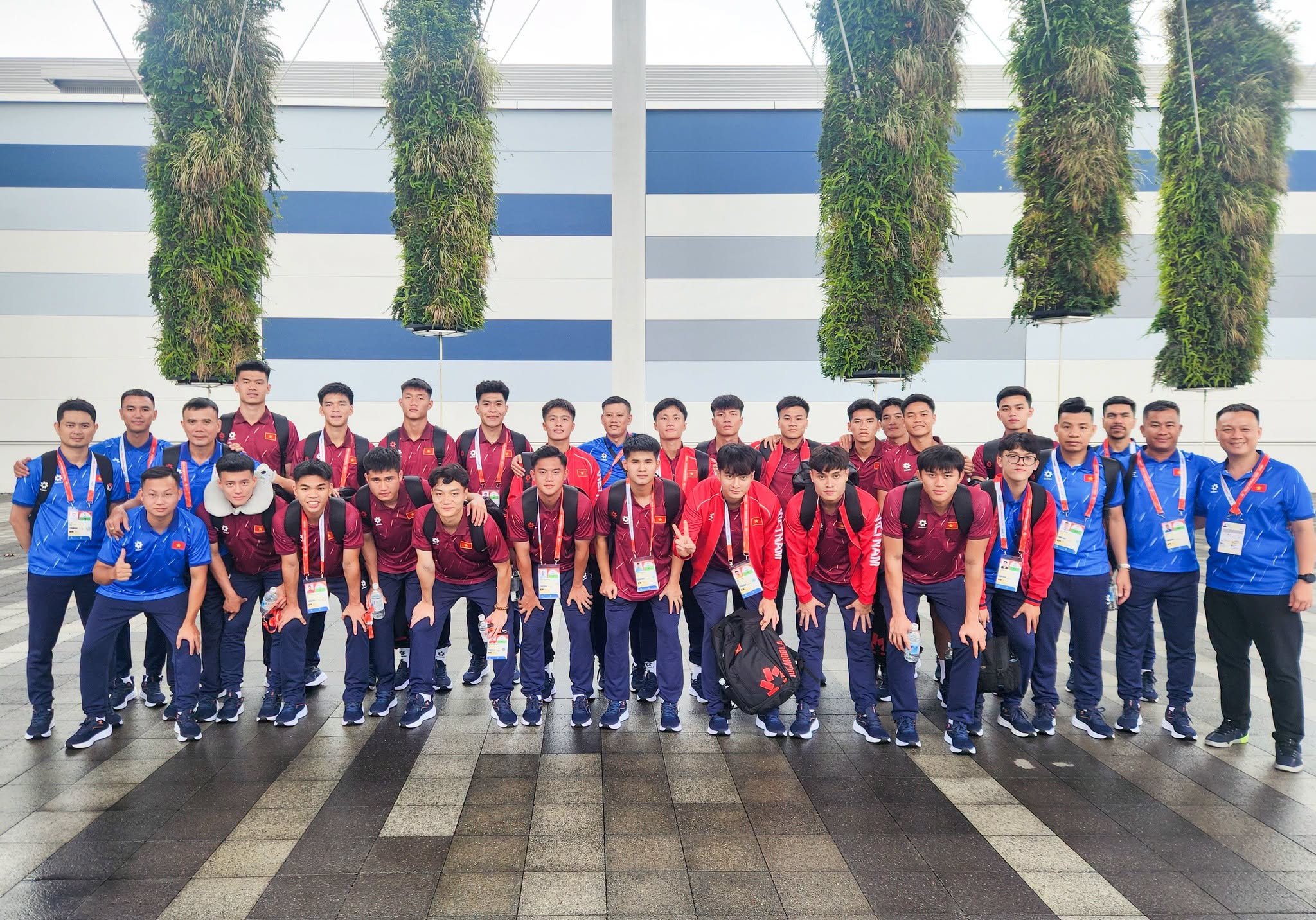 |
The U23 Vietnam football team arrived in Nagoya, Japan on 13/9. Photo: VFF. |
The U23 Vietnam football team arrived in Nagoya, Japan on 13/9. Photo: VFF.
Kuwait's national team was once an Asian powerhouse between 1980 and 2010, achieving its highest FIFA ranking of 24th in 1998. They participated in the 1982 World Cup, the 1992 and 2000 Olympics, and won the 1980 Asian Cup. However, government interference in football led to numerous FIFA sanctions from 2007, leaving the team in a precarious state and experiencing a rapid decline.
After years of instability, Kuwait decided to reform its football system, beginning to rebuild its national teams starting with the 2022 World Cup qualifiers. For the U23 team, participation in the U23 Asian Championship finals in 2022 and 2024 marked its return. At ASIAD 19, Kuwait lost 0-9 to South Korea but rallied to draw with Bahrain and Thailand before exiting the tournament.
The resurgence of Kuwaiti football is linked to European coaches working with both the national and U23 teams. In 2022, Kuwait convinced two coaches, Rui Bento and Emilio Peixe, to leave their youth development roles at the Portuguese Football Federation after 15 years and accept positions in the Gulf region. Bento took charge of the national team, while Peixe managed the U23 Kuwait team. This year, Portuguese coach Helio Sousa continues to lead the national team, while Spanish coach David Doniga leads the U23 team.
Half of Kuwait's squad consists of U21 players. The team also utilizes three players over 23 years old, all playing domestically: midfielder Muath Al-Asaimi, and forwards Fawaz Al-Mubailish and Bandar Al-Salama. This provides a significant advantage in terms of strength, experience, and competitive ability, especially since Vietnam is not utilizing overage player slots.
Vy Anh