The phenomenon of not getting faster despite continuous running is a concern for many runners. In running communities, it is common to find individuals diligently accumulating tens of kilometers each week, yet their pace and VO2 Max remain stagnant. From a sports science perspective, this plateau is not due to a lack of effort, but because the body has adapted to a familiar level of exertion. When the training stimulus remains unchanged, the cardiovascular and nervous systems no longer have a reason to evolve.
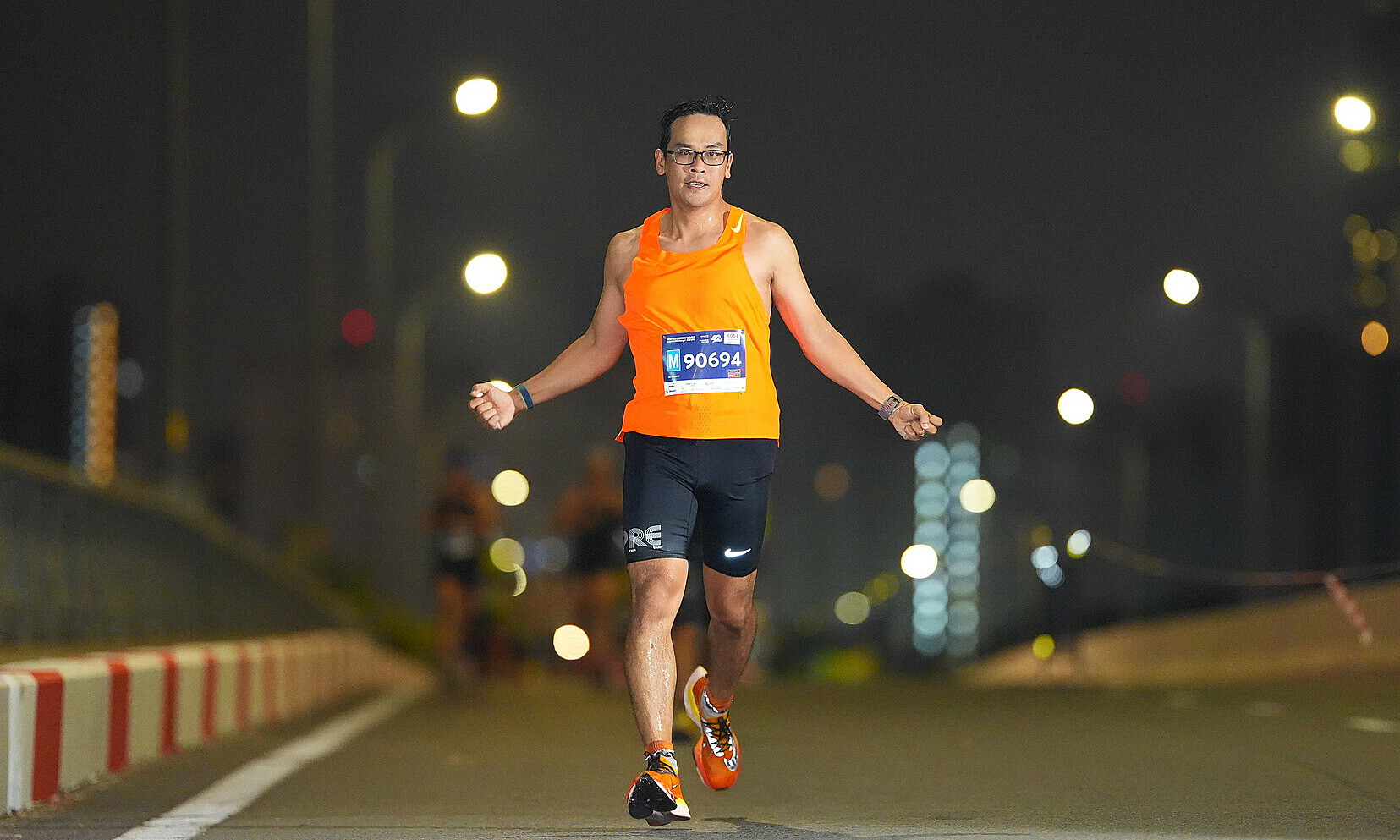 |
Many runners "get stuck" at a performance level despite diligent training. *VnExpress Marathon*
One significant reason many amateur runners hit a performance plateau is an over-reliance on long slow distance (LSD) runs. In the initial stages, LSD is a crucial foundation for building aerobic endurance and the body's load capacity. However, once the cardiovascular system adapts to this intensity, LSD can become a trap. Low-intensity runs no longer provide a strong enough stimulus to force the body to continue evolving.
Research by Helgerud and colleagues published in 2007 showed that for individuals with an existing fitness base, training primarily at around 60% of VO2 Max does not create sufficient pressure to force the heart to increase its blood-pumping volume. When low intensity is repeated over an extended period, the cardiovascular and respiratory systems gradually adapt, causing performance improvement to stagnate.
To overcome this plateau, runners need to push their bodies into a high-exertion zone. Many experts recommend incorporating interval training at 85-95% of maximum heart rate.
One classic training plan is the "4x4 Norwegian" method: run at high intensity for 4 minutes, interleaved with 3 minutes of recovery, repeated 4 times. Empirical research indicates this method can improve VO₂ Max by up to 7.2% in just 8 weeks.
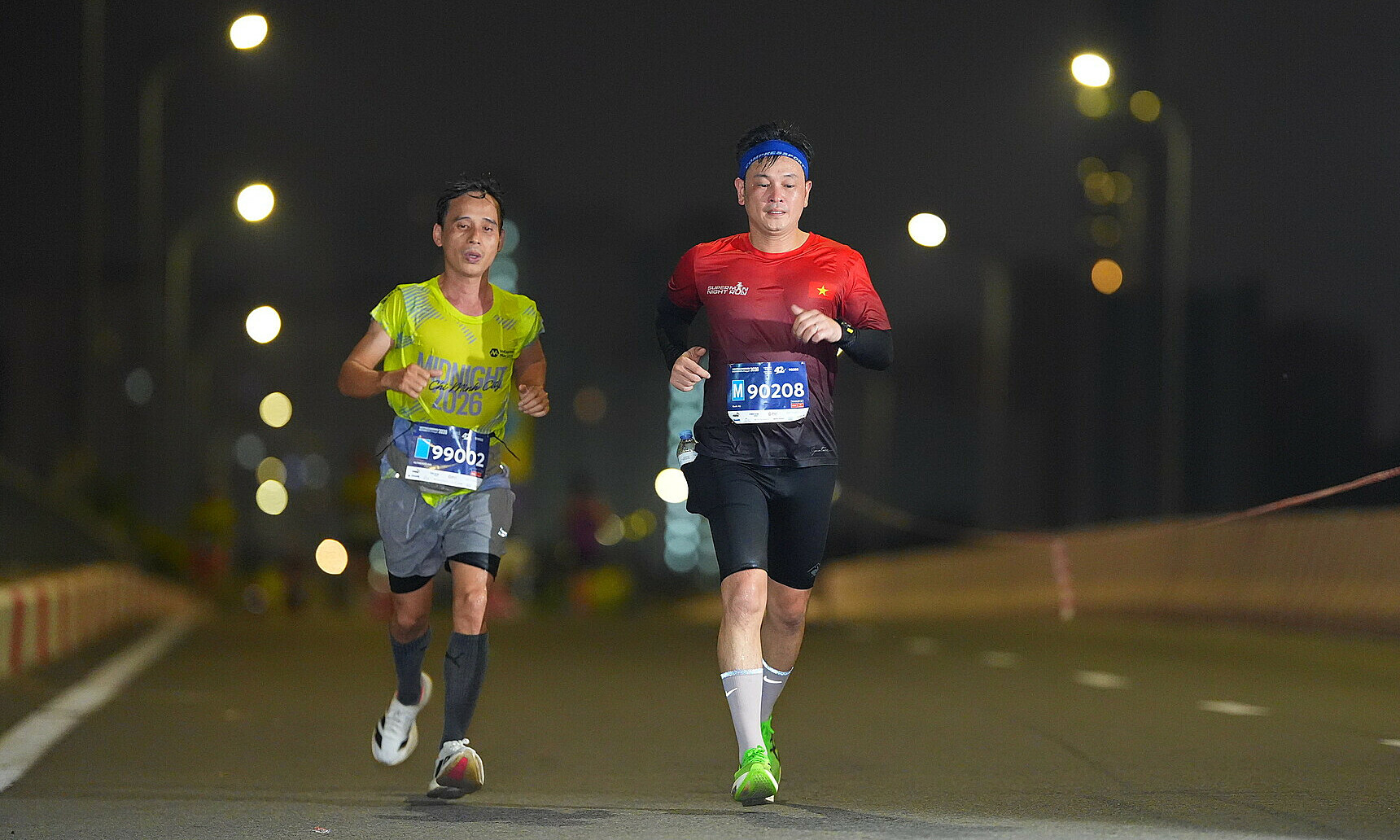 |
High-intensity cardiac workouts can be a "boost" for performance improvement, but require careful application. *VnExpress Marathon*
Continuously accelerating and then recovering during short breaks forces the heart muscle to increase its blood-pumping capacity, while also activating fast-twitch muscle fibers, a group of muscles typically less engaged during slow runs.
However, to implement high-intensity cardiac workouts, runners need a strong foundational strength and a focus on recovery. This not only reduces stress on the musculoskeletal and nervous systems but also plays a crucial role in improving performance.
To optimize this process, runners can incorporate other sports like cycling, swimming, or supplementary weight training. This approach helps reduce joint pressure, allows running muscle groups time to recover, and supports the body in more efficiently clearing lactic acid.
Runners should not "idolize" the metrics on their watches. There is no evidence that interval training alone can easily help complete a marathon if a foundation of endurance and strength is lacking.
High-intensity workouts should only be seen as a tactical tool to create a "boost." Runners need to balance this by maintaining slow runs to build endurance, incorporating one or two faster runs to stimulate the cardiovascular system, and prioritizing nutrition and sleep.
Nguyen Ky
Taking place on 19/4, the VnExpress Marathon Hue 2026 features three distances: 5 km, 10 km, and 21 km. Offering the experience of "striding into the imperial city," the route guides athletes along the Perfume River, through moss-covered city gates around the Imperial Citadel, past Truong Tien Bridge, Quoc Hoc, and towards a brilliant sunrise by Ky Dai. The heritage theme is evident in the traditional art-inspired merchandise, including a khanh-shaped medal and a 21 km finisher's shirt. Interested runners can register here.