 |
In mid-May, photographer Ngo Tran Hai An (Quy Coc Tu) visited Thai Nguyen to participate in tourism activities themed "Lake on the Mountain - Tea in the Clouds". He shared six experiences from his trip, combining them with suggestions from the provincial Department of Culture, Sports and Tourism.
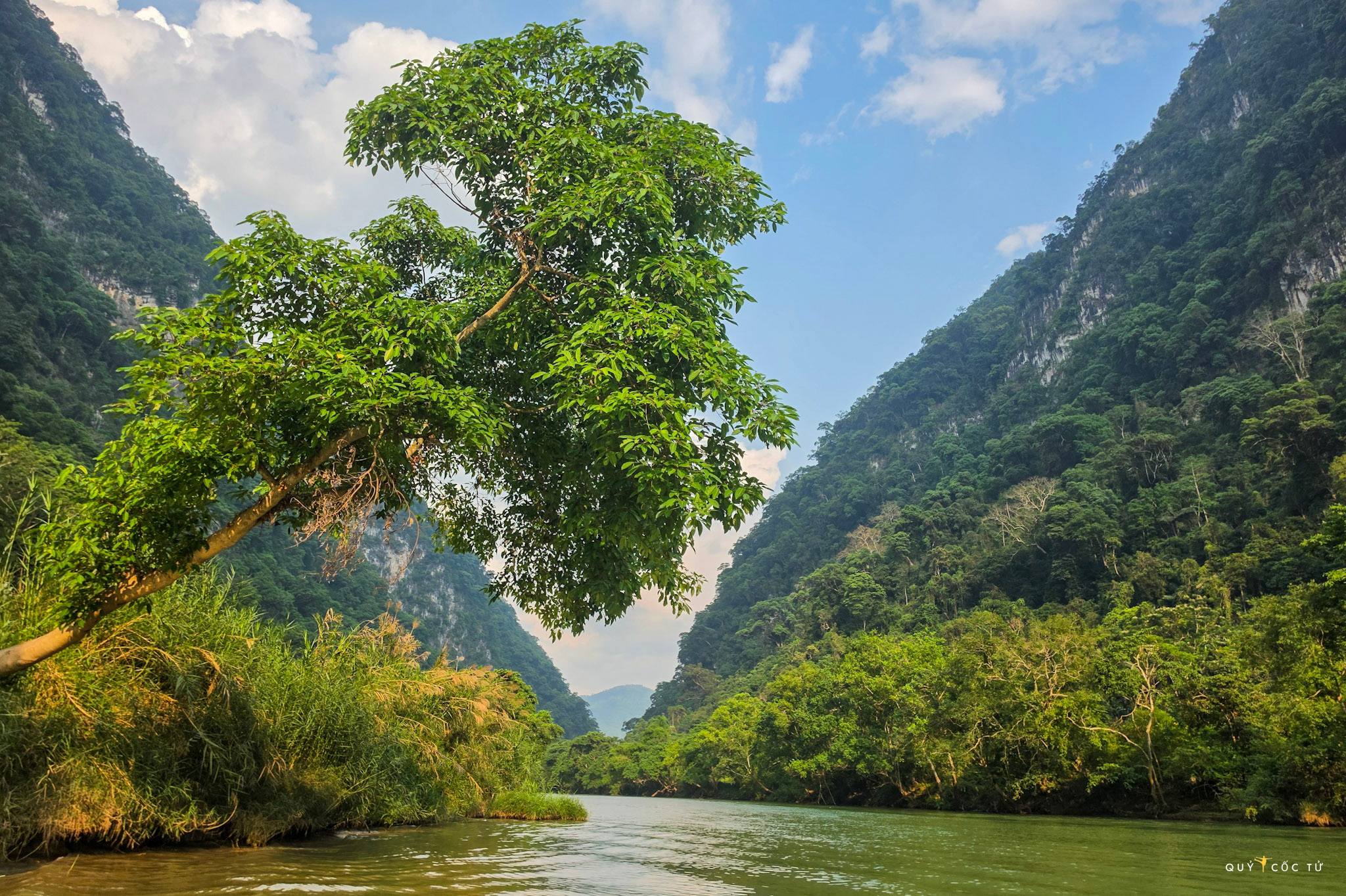
One prominent activity is boating on Ba Be lake. Ba Be is a freshwater lake located in Thai Nguyen (formerly Bac Kan). It is Vietnam's largest natural freshwater lake and ranks among the 100 largest freshwater lakes globally.
Situated within Ba Be National Park, the lake formed over 200 million years ago and is recognized as a national tourism site in Vietnam.
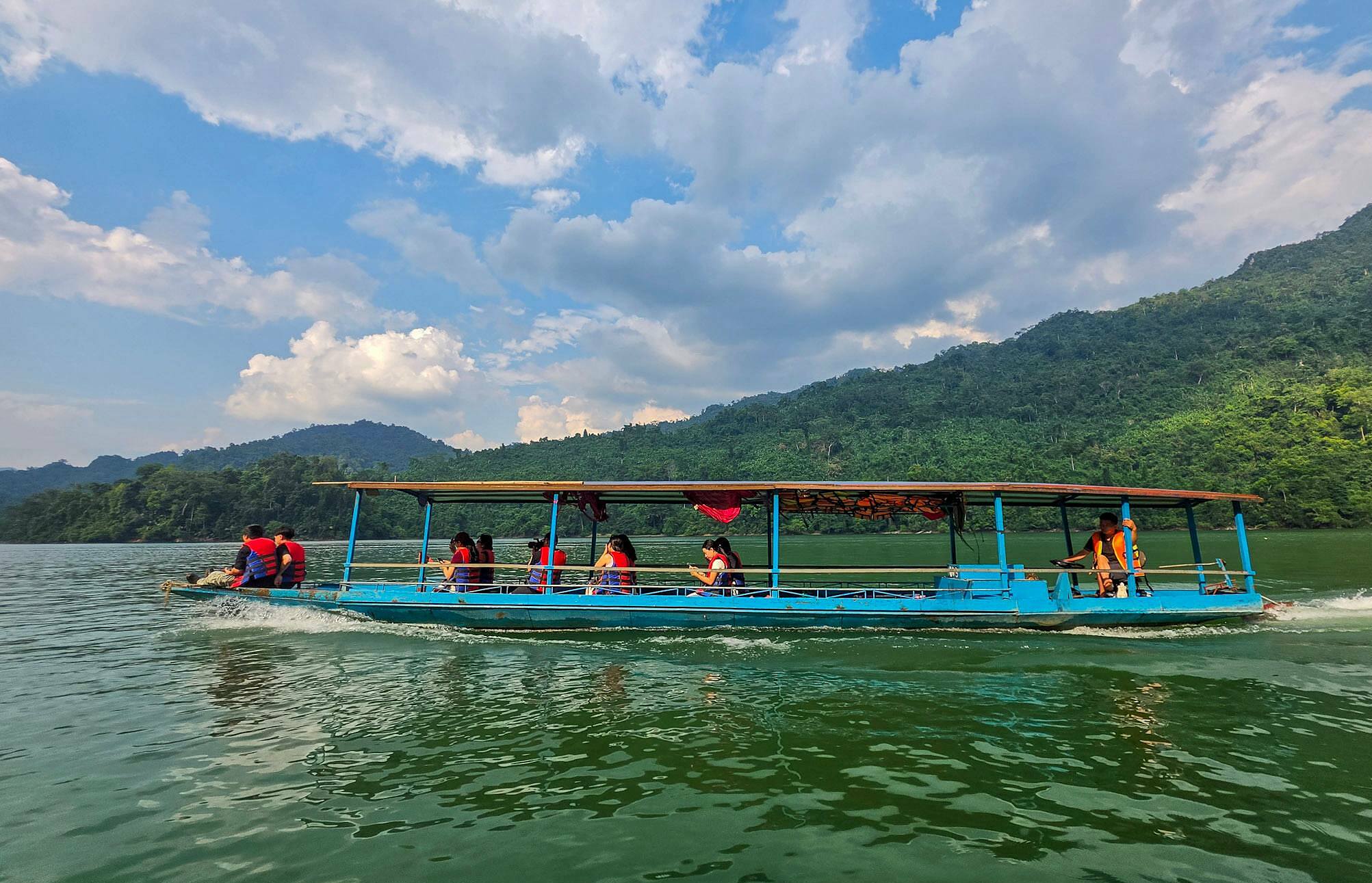 |
Visitors can leisurely glide across the lake by boat, flanked by limestone cliffs covered in lush vegetation. "Amidst the natural green expanse, one feels truly small", Hai An remarked, suggesting this as a must-try experience in Thai Nguyen.
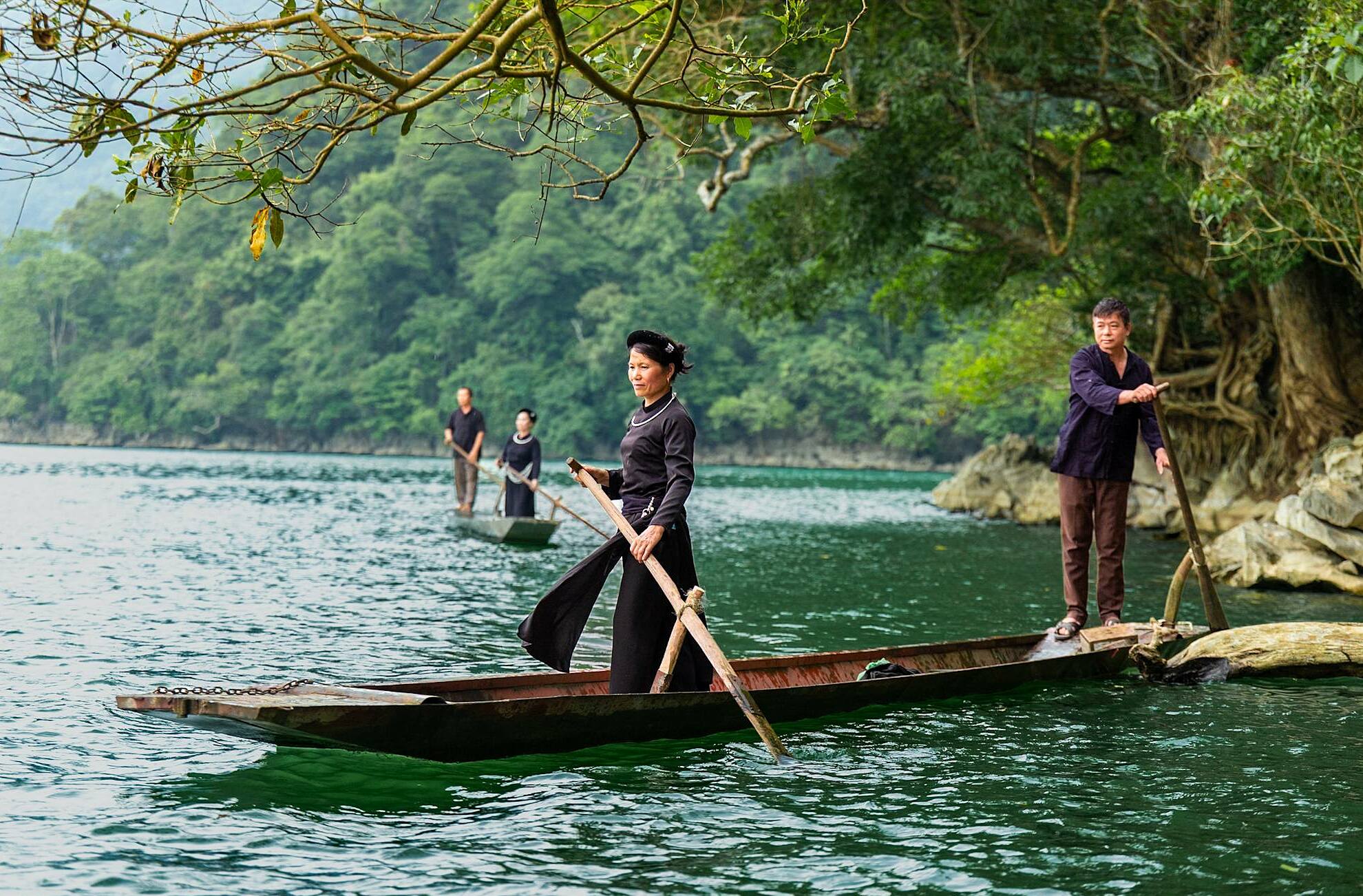
Another unique experience is witnessing traditional canoeing demonstrations on Ba Be lake. Historically, the Tay people used dugout canoes, meticulously carved from a single large log, typically made from light, tough, buoyant, and water-resistant wood.
To reduce deforestation and protect the Ba Be National Park ecosystem, local residents have transitioned to using iron canoes. These canoes feature a long, narrow, flat design without a canopy.
 |
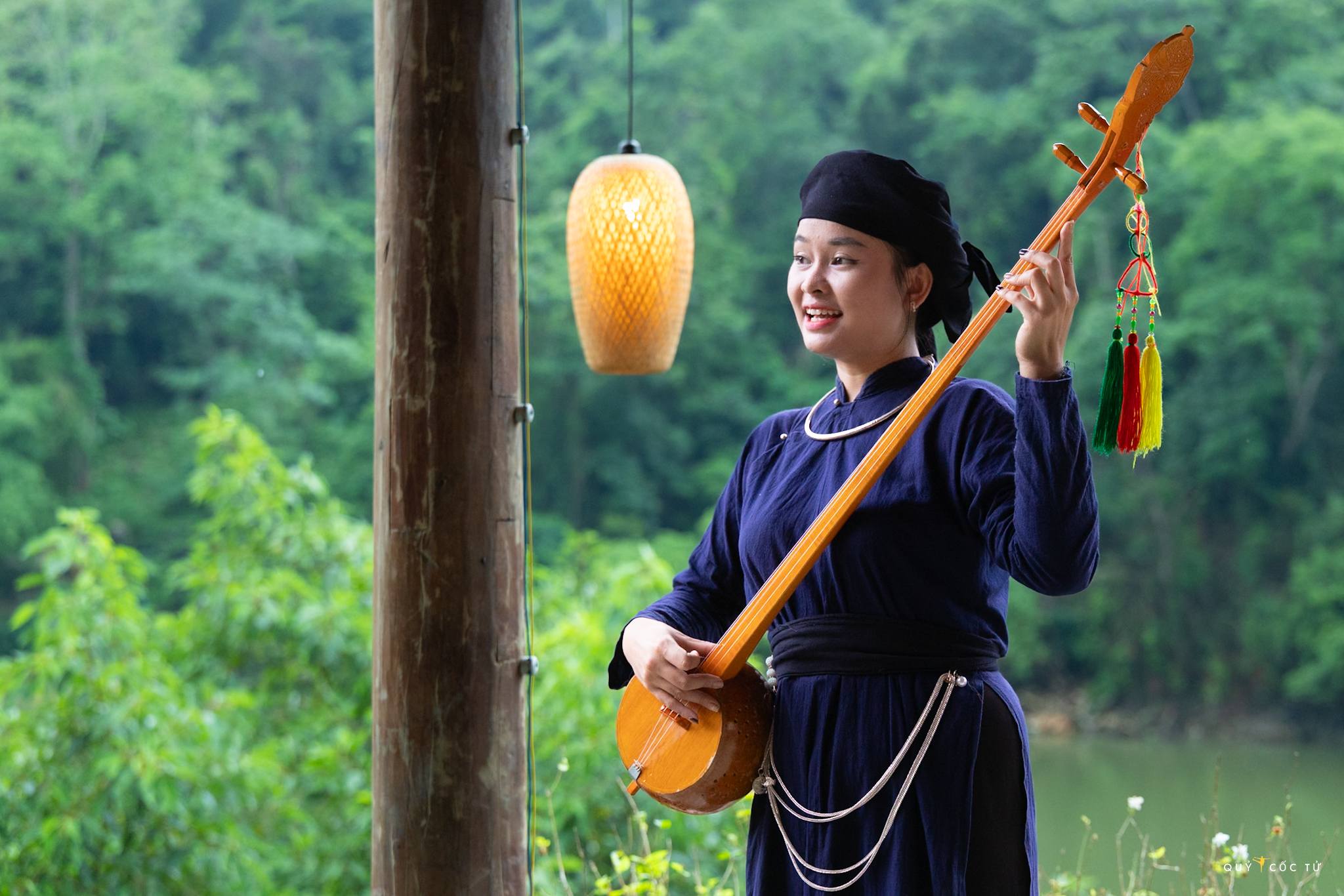
Visitors can also enjoy the sounds of dan tinh amidst the mountains and forests. The dan tinh (or tinh tau) is a musical instrument intrinsically linked to the Then singing art of the Tay people around Ba Be lake. The traditional instrument, with its body made from a dried gourd and a long wooden neck, symbolizes the local community's culture.
The dan tinh is not played in isolation but accompanies Then singing, a folk ritual performance practiced by the Tay, Nung, and Thai ethnic groups. In 2019, UNESCO inscribed Then practices as a Representative Intangible Cultural Heritage of Humanity.
Among the Tay people, Then singing and dan tinh are believed to be a means of communicating with deities, praying for favorable weather and bountiful harvests, and also expressing emotions and courtship in daily life.
 |
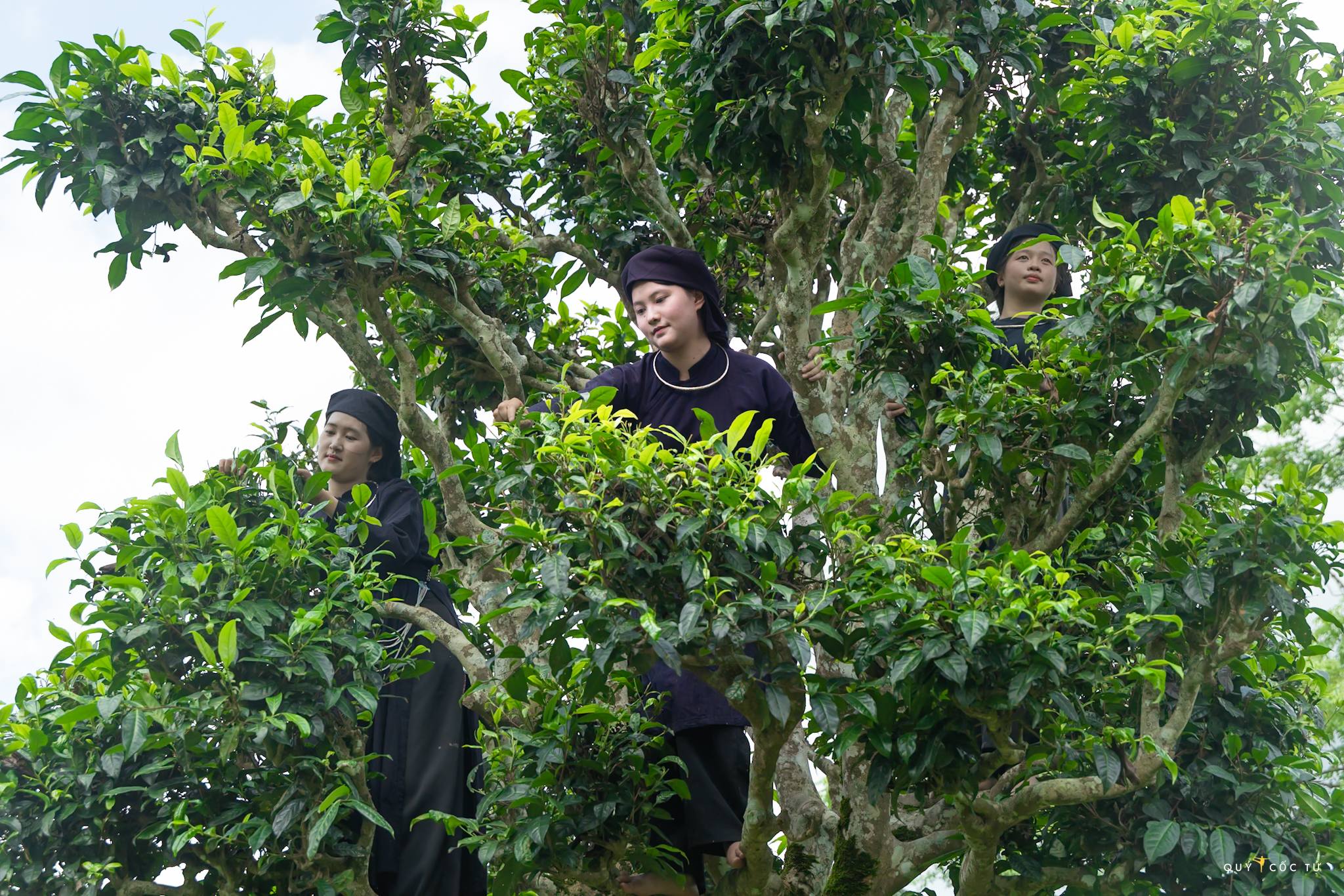
A distinctive activity is harvesting ancient tea. Unlike picking tea from low-lying cultivated rows in Tan Cuong, residents in the Bang Phuc tea region must climb ancient tea trees (often Shan tea or forest tea varieties). These tea trees are large, with high branches covered in moss, requiring pickers to directly cling to branches and ascend to the top to harvest the young tea buds.
Visitors can experience harvesting ancient tea alongside Tay women in Dong Phuc commune, then observe the local processing methods.
The Bang Phuc tea region was recognized as the 5th tea region of Thai Nguyen province in 12/2025.
This area boasts a cluster of naturally growing ancient Shan Tuyet tea trees on high mountain slopes, perpetually shrouded in clouds. The entire commune currently has over 700 ancient tea trees, many aged between 100 and 300 years. Notably, 12 of these ancient tea trees were recognized as Vietnam Heritage Trees by the Vietnam Association for Conservation of Nature and Environment (VACNE) in 12/2025.
 |
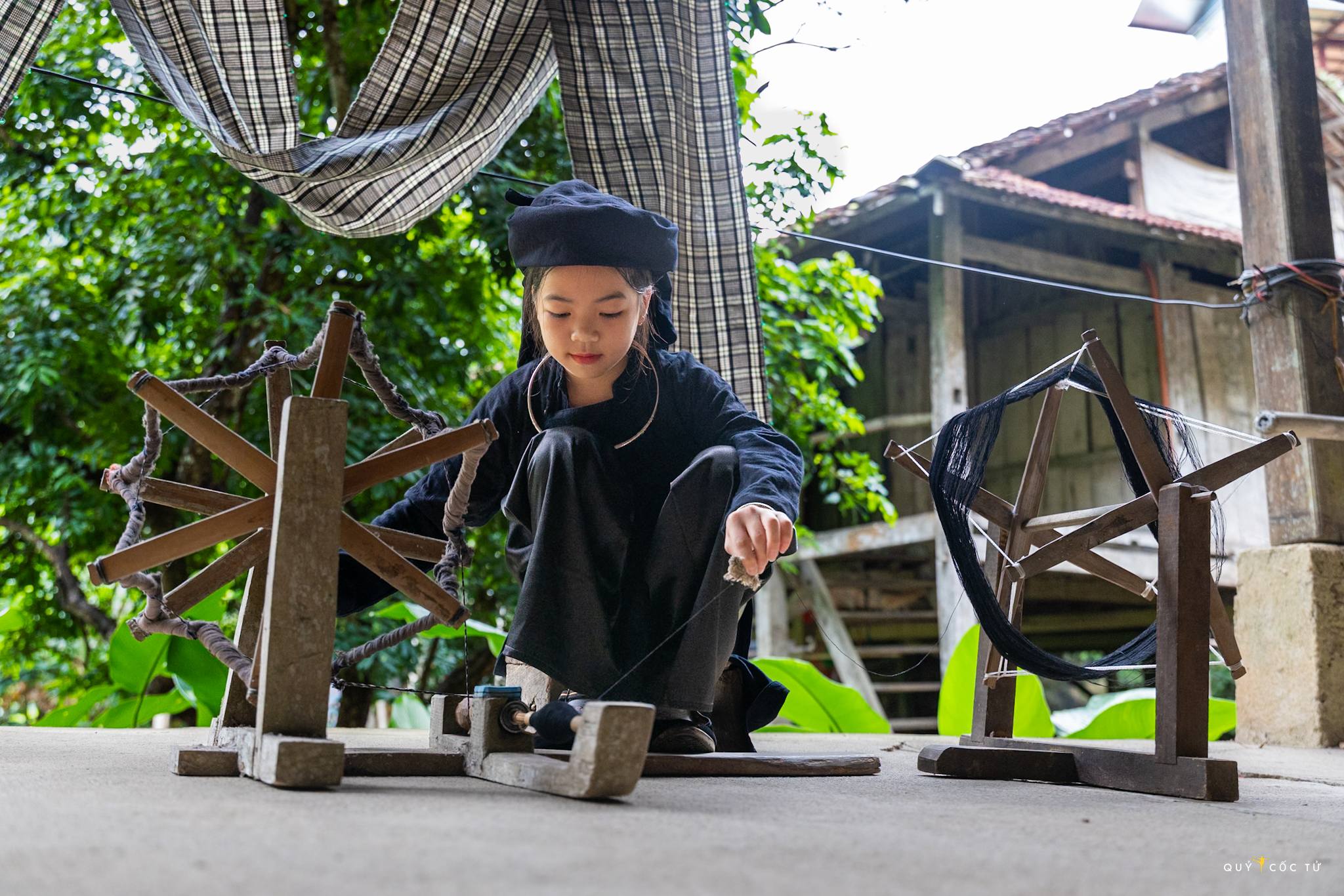
Another cultural insight is observing Tay people spinning yarn at a loom. A young girl, dressed in the distinctive indigo attire and silver necklace of the Tay and Nung people, spins yarn on the porch of a traditional wooden stilt house.
Hand-spinning yarn is a core process in the traditional weaving and indigo dyeing craft of ethnic minorities. In Thai Nguyen, this experience offers a glimpse into daily life and a rich cultural heritage.
Photographer Hai An recounted a story about how the Tay people assess a girl's dexterity by listening to the sound of her loom. "A girl who weaves evenly, with a steady rhythm and tangle-free threads, is considered patient and refined enough to nurture a family", he said.
 |
Finally, visitors can savor banh tro, a traditional cake of the Tay people. To make the cake, rice is soaked in lye water filtered from the ash of certain forest or agricultural plants. The cake is typically wrapped in dong leaves or banana leaves into small pyramids. When unwrapped, the cake has a pale yellowish-brown color and a sticky texture, often served with sugarcane molasses.
Tam Anh
*Photos: Quy Coc Tu