New York, located about 10 km from MetLife stadium in New Jersey, is accustomed to chaos. Its streets are always crowded, hotels perpetually overbooked, queues stretching everywhere, and a constant stream of tourists flowing day and night. This week, however, the city known as "the city that never sleeps" witnessed an unusual scene, grappling with an unprecedented level of overload.
The World Cup final between Spain and Argentina has disrupted New York's usual rhythm. Hotel prices have soared, travel costs escalated, and endless queues have formed. Thousands of fans tirelessly pursue tickets, which for many, has become an almost impossible task. All aspects of life seem to revolve around the final match.
The struggle for tickets is evident in every conversation. "Bringing the entire family to New York was already expensive; buying 4 more last-minute tickets is out of the question. I'm not the owner of Zara," a Spanish tourist said. In hotel lobbies, the common question is no longer about rooms or breakfast, but: "Do you have tickets?"
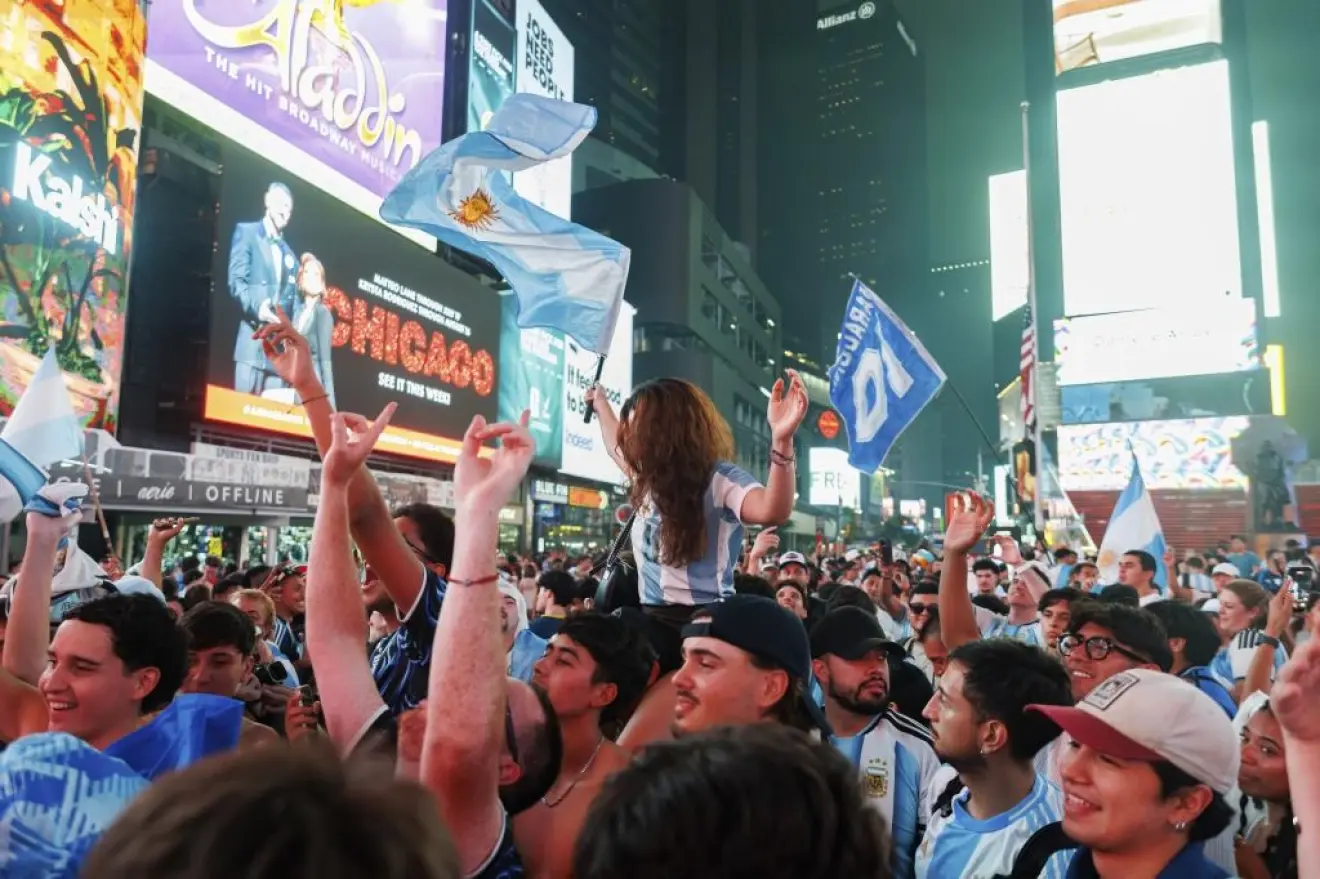 |
Tourists gather in Times Square to cheer for the World Cup. Photo: Marca |
At sports bars, tourists debate Lionel Messi, Lamine Yamal, starting lineups, or which team will lift the trophy. Every discussion ends with the same question: "Have you managed to buy tickets?" On the subway, fans constantly check ticket prices on their phones, as intently as monitoring a stock ticker. In Times Square, Bryant Park, and the World Trade Center area, jerseys of Spain and Argentina are seen everywhere, mixed among crowds of fans from across the globe. Everyone shares one goal: to secure a seat at MetLife stadium on 19/7.
"We are looking for tickets. Price is not an issue. We came here just to see Messi play," said two tourists, a father and son from Hungary. They traveled thousands of kilometers for one player. Not far away, many others have already accepted defeat even before the match. They gave up on entering MetLife stadium days ago and switched to finding alternative plans. "Is there anywhere good to watch the match?" is a question many tourists are asking.
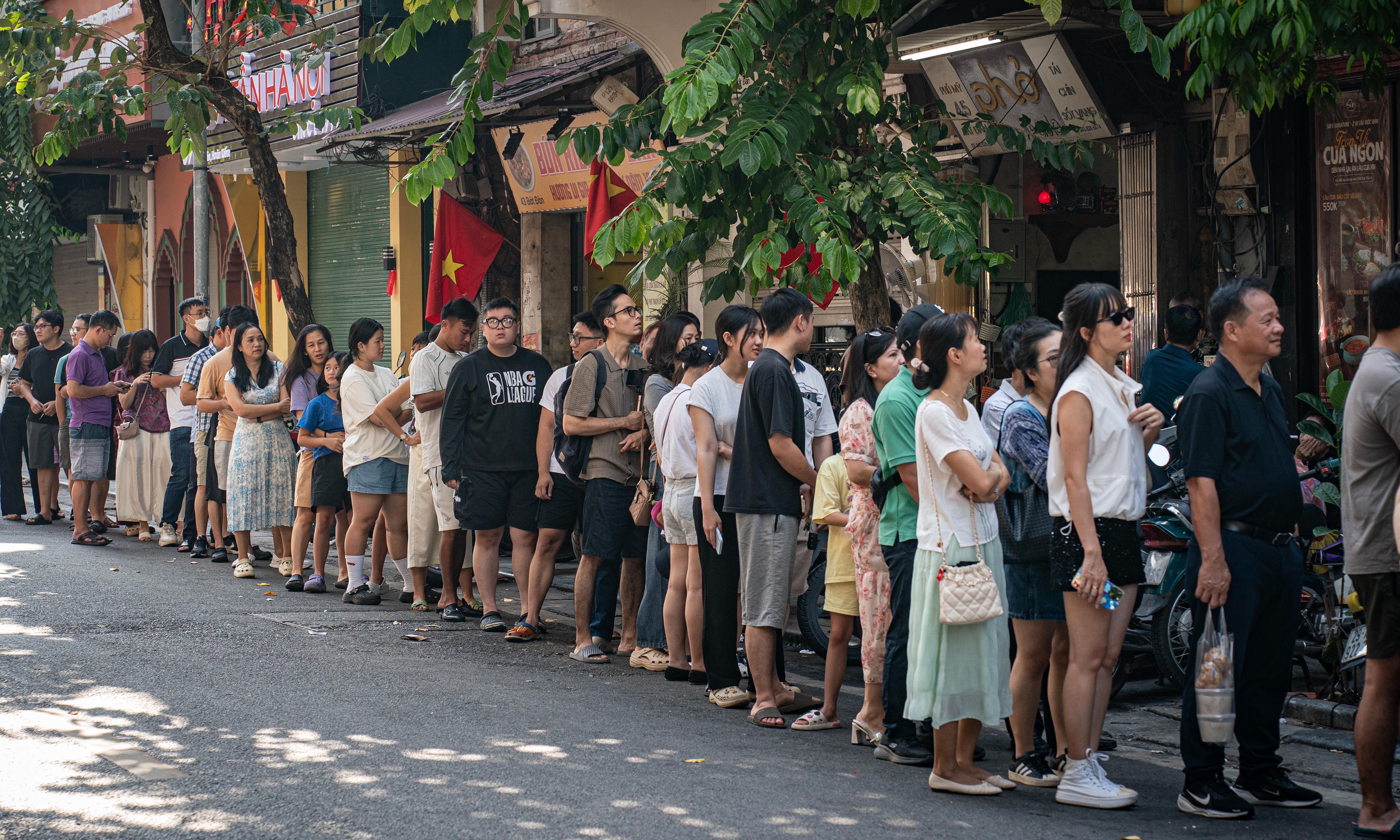
Even the answers offer little hope. Official fan zones, popular sports bars, and giant screens have been full since the start of the tournament, with queues forming hours before each match. The final is expected to be even more crowded. Every few minutes, the same scene repeats: a phone displaying FIFA's official ticket sales page, followed by a frustrated shake of the head as the few tickets that appeared vanish instantly. "I'm no longer looking for tickets; I'm looking for a miracle," a Spanish fan said with a laugh, holding up his phone screen displaying 4-, even 5-digit prices. He happened to be vacationing in New York when he learned Spain reached the final. Now, his entire plan hinges on one ticket. If he buys one, he will change his flight home. "We will try our best, but we don't know how to create a miracle," the male tourist said about his plan to find tickets for the final match.
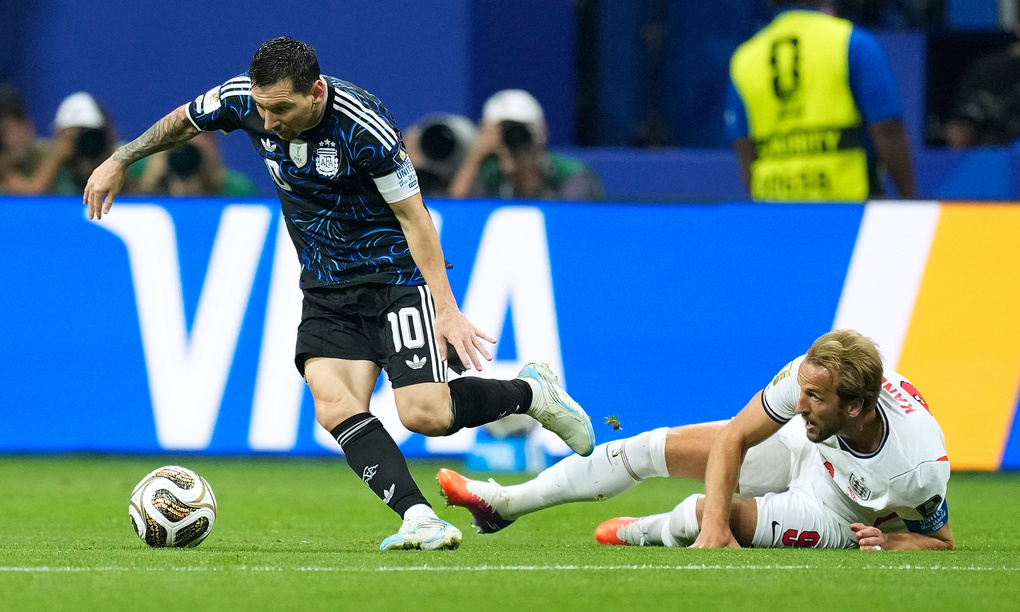 |
Harry Kane (right) vies for the ball with Lionel Messi during England's 1-2 loss to Argentina in the World Cup semi-final at Atlanta, USA on 15/7. Photo: AP |
Beyond match tickets, the final frenzy has caused accommodation and travel costs to skyrocket. A single night's stay near MetLife stadium now costs as much as an entire package holiday in many European destinations. Booking a hotel in Manhattan or the area around the stadium feels like a race against time. Many hotels have raised prices to levels typically only seen on New Year's Eve. Some hotels near MetLife list prices over 2,300 USD per night, while motels typically serving transit guests have increased to nearly 500 USD, and long-stay accommodations exceed 900 USD.
Travel to the stadium is no better. Round-trip NJ Transit tickets from Penn Station to MetLife, originally just 12,9 USD, were listed at up to 150 USD on match days. Following a wave of strong protests, the price dropped to 105 USD, then further to 98 USD. The price reduction occurred only after political pressure and the New Jersey state government sought sponsors to support fans. Taxis are also not a pleasant option. A ride from Manhattan to MetLife stadium easily exceeds 100 USD, becoming even more expensive after the match ends. Furthermore, due to tightened security, passengers still have to walk about 30 minutes from the closest drop-off point allowed for taxis.
Fan zones are also nearly overwhelmed, preparing to welcome the largest predicted audience since the start of the tournament. In previous matches, people queued for hours to enter. For the final, observers believe this scene will be even more intense. An estimated tens of thousands of people will watch the match outside MetLife stadium, simply because the chance to obtain tickets has long been out of reach. The irony is that now, owning a ticket no longer depends solely on financial capacity. Buyers also need patience, extremely quick reflexes, and a good deal of luck. The cheapest ticket still available on FIFA's official platform costs around 7,380 USD. Prime seats exceed 30,000 USD. Meanwhile, on the black market, there were reports of 4 seats being offered for over 9 million USD. While this price is unlikely to result in an actual transaction, it illustrates the extreme frenzy for final tickets.
What surprises many is no longer the price, but the fact that whenever FIFA releases a small batch of additional tickets, they disappear within seconds. Some admit to checking the website dozens of times daily; some tourists open multiple screens simultaneously to increase their chances of buying tickets; others set up alert systems to avoid missing any sales. For football lovers, hope is always the last thing to fade.
By Anh Minh (Source: Marca)