Yunnan is known as China's "agricultural hub," famous for products such as flowers, coffee, tea, and olive oil. However, the specialty most associated with this region is its wild mushrooms.
Annually from July to September, seasonal rains blanket the mountains and forests, creating ideal conditions for hundreds of mushroom species to thrive. Mushroom hunters venture into the forests early in the morning, harvesting and transporting their finds to the wholesale market in Kunming for distribution to restaurants across China.
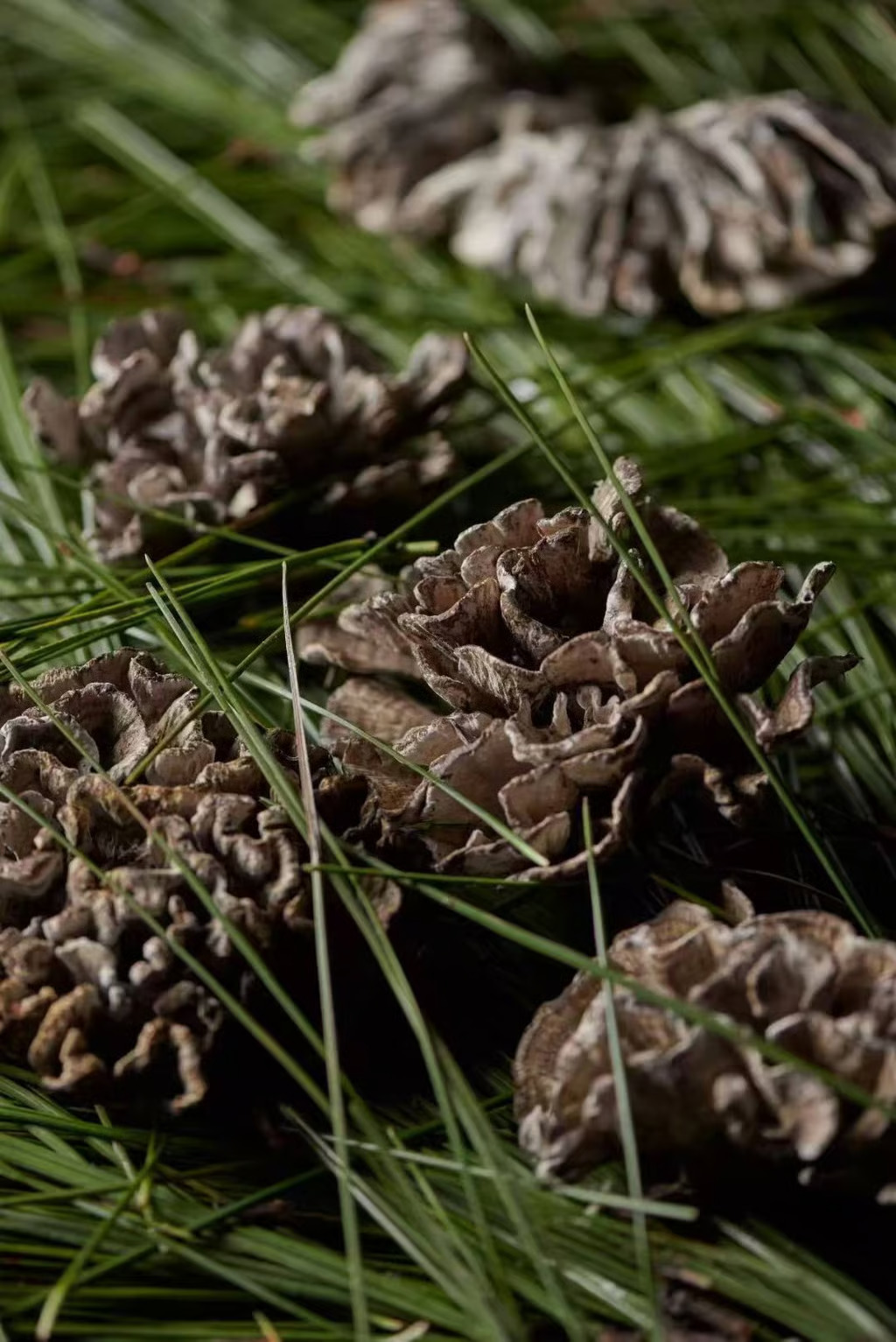 |
Ganbajun mushrooms resemble coral. Photo: Hong 0871 |
Ganbajun mushrooms resemble coral. Photo: Hong 0871
A SCMP survey at the Kunming wholesale market, Asia's largest wild mushroom trading hub, revealed over 1,100 vendors selling more than 260 different mushroom species. During the peak season, daily transactions can reach approximately 600 tons.
Among the hundreds of mushroom species, ganbajun is highly prized by connoisseurs. This coral-shaped mushroom is named after Yunnan's specialty dried beef because it emits a similar aroma when cooked. According to local chefs, Yunnan boasts over 1,000 wild mushroom species, accounting for approximately 91% of all edible mushroom species in China.
Ganbajun mushrooms grow exclusively at elevations between 1,800 and 2,500 meters, forming a symbiotic relationship with the roots of native pine trees, making artificial cultivation impossible. The highest quality specimens typically originate from Xiaoshan village, Yiliang county.
Due to its long growth cycle and low yield, ganbajun mushroom prices can skyrocket to around 7,500 CNY (approximately 1,100 USD) per kilogram at the beginning or end of the season. When supply stabilizes mid-season, prices range from 2,800 to 3,000 CNY (about 400 - 430 USD) per kilogram.
Beyond scarcity, high labor costs and significant spoilage rates also drive up prices. Chef Liu Tan, owner of the Hong 0871 restaurant chain with four branches in Beijing, Shanghai, Shenzhen, and Hangzhou, explained that the mushroom's dense, folded structure makes cleaning difficult. After removing dirt and trimming, one kilogram of raw mushrooms yields only about 300 grams of edible flesh. The short shelf life of this mushroom, with quality deteriorating after 36 hours from harvest, makes transportation outside Yunnan risky and expensive.
At the high-end Dian Voyage Yunnan Cuisine restaurant in Shangri-La Hotel Kunming, ganbajun is prepared in various ways: stir-fried with Canadian geoduck clams, Australian lobster, or tempura-fried with bee pupae and other wild mushrooms.
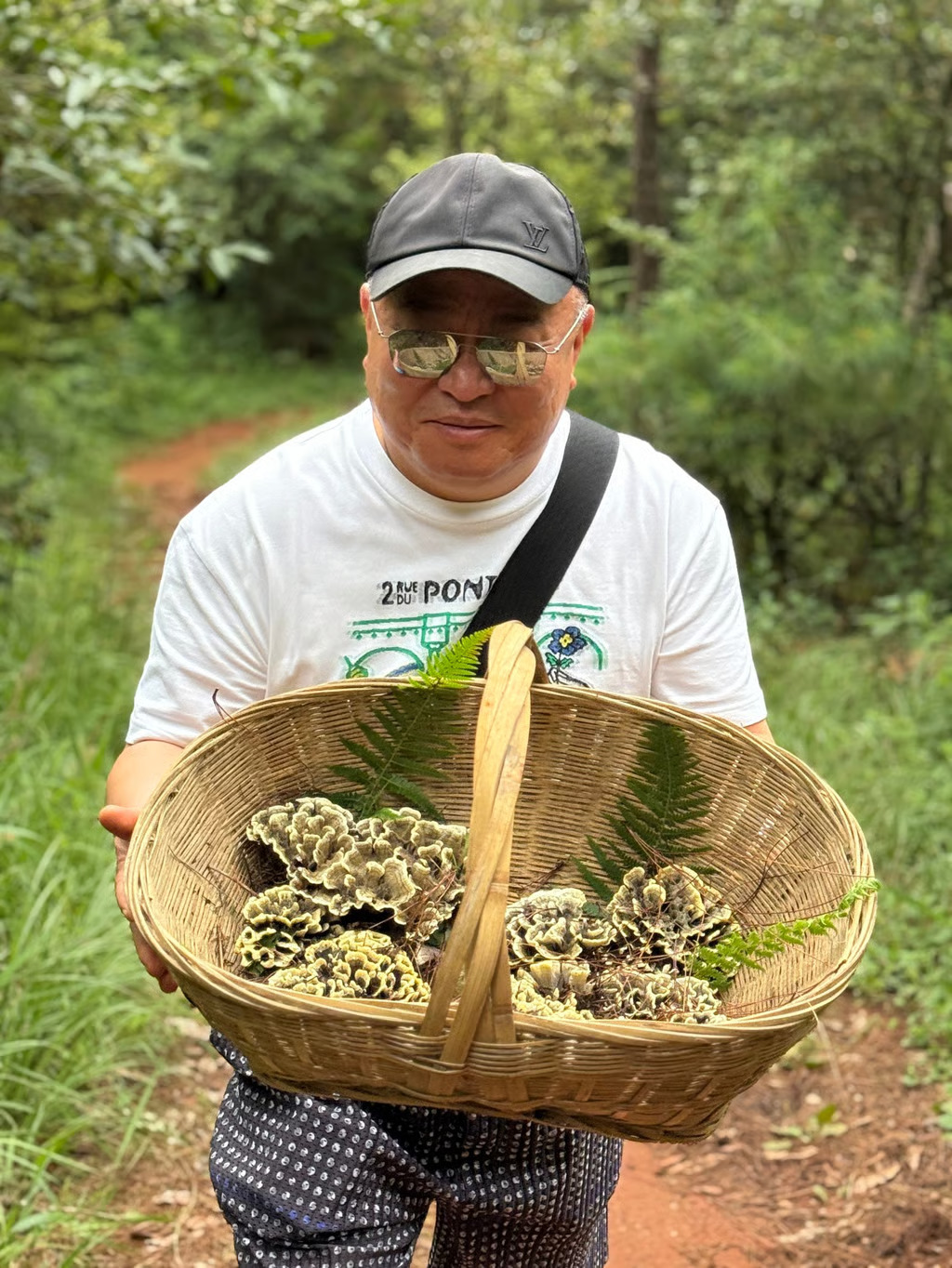 |
Chef Liu Tan with a basket of wild ganbajun mushrooms. Photo: Evelyn Chen |
Chef Liu Tan with a basket of wild ganbajun mushrooms. Photo: Evelyn Chen
Some restaurants offer guests mushroom hunting excursions in the forest. Chef Liu Tan noted that in early July, a group of diners visited a specialized mushroom harvesting forest in Yiliang county, about 55 km from central Kunming, to search for early-season ganbajun.
This prized mushroom is quite recognizable. Harvesters often cover many plants with inverted plastic baskets or tree branches to prevent others from discovering them.
After the harvest, diners immediately prepare the freshly picked mushrooms by stir-frying them with pork fat in a large pan and mixing them with fried rice, a common local way of enjoying them. According to Chef Liu Tan, the best preparation method is stir-frying with Yunnan twisted chili and Dali solo garlic. Ganbajun also tastes delicious when cooked with seafood such as pine leaf crab or sturgeon tendon.
Another mushroom species sought by diners visiting Yunnan during the rainy season is the termite mushroom (nam moi), which lives symbiotically with termites and is almost impossible to cultivate artificially. The best specimens are harvested in Xichjiu village, Fumin county. Locals typically stir-fry or steam them for two to three minutes. These mushrooms are also preserved in oil, used with noodles or cooked off-season.
Another popular variety is hongniuganjun, also known as jianshouqing (red boletus mushroom), noted for its chewy texture and rich flavor. According to chefs, stir-frying this mushroom with Ludian pepper shoots and Dali solo garlic preserves its natural flavor. Though popular, hongniuganjun can cause hallucinations if not prepared correctly.
Chef Liu Tan advises that some mushroom varieties need to be cooked at temperatures above 120 degrees Celsius for at least 15-20 minutes to ensure safety.
Mai Phuong (According to SCMP)