Driving along the road towards Lake Towada and through Shingo village in Aomori prefecture, visitors might spot a small blue sign marked "Tomb of Jesus Christ".
According to local legend, Jesus Christ came to Shingo instead of being crucified, living as a farmer, marrying, having three children, and dying at the age of 106. A mound on a hillside is believed to be his burial site, while an adjacent mound is said to be the resting place of his brother, Isukiri, who was crucified in his stead.
This narrative does not appear in the Bible and is not recognized by the Catholic Church. The legend's origin is linked to the Takenouchi Documents, a mysterious set of manuscripts that religious leader Kiyomaro Takenouchi claimed to have discovered in the 1930s. Researchers later dismissed these documents as inauthentic.
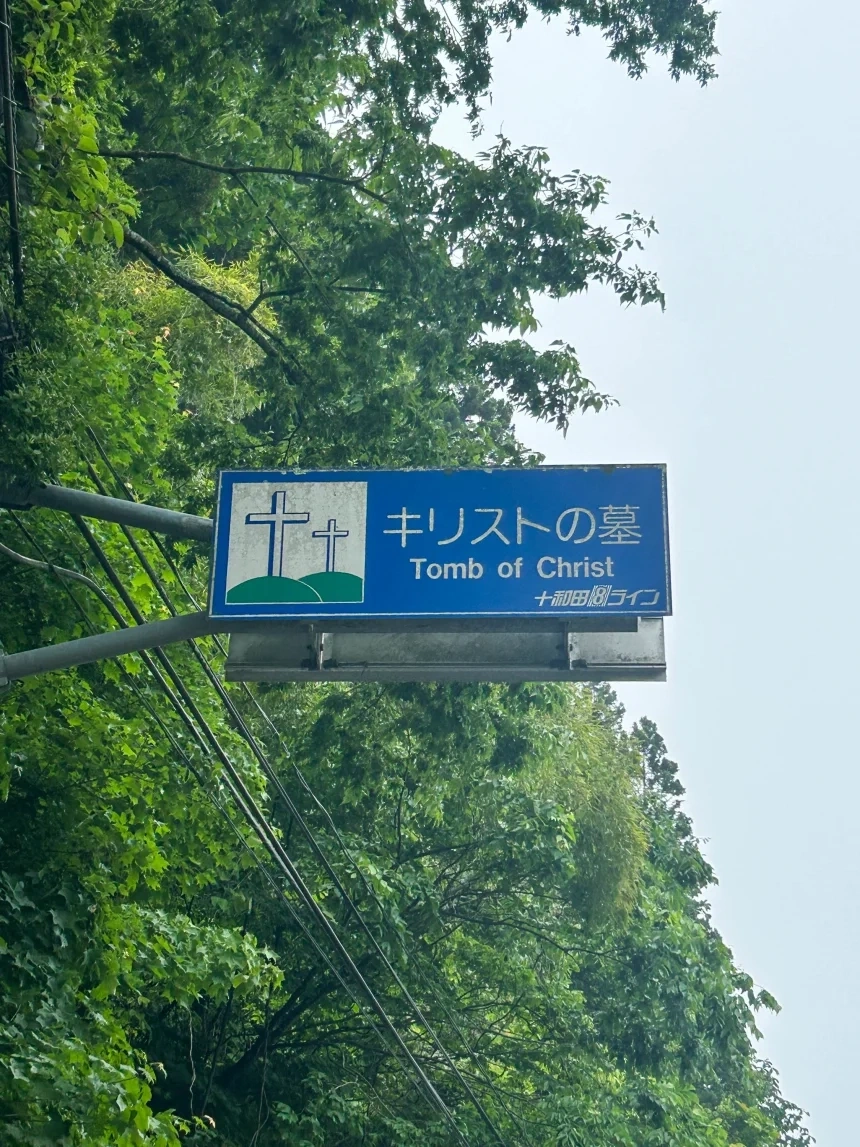 |
A sign directs visitors to the tomb of Jesus Christ. Photo: CNN |
Nevertheless, in Shingo, the story has been preserved as a local tradition for decades.
Central to the legend is Christ Park, featuring two mounds enclosed by white fences and topped with large wooden crosses. Adjacent to the park is the Village of Jesus Christ Tradition Museum, which displays copies of the Takenouchi Documents and related artifacts. The originals are believed to have been destroyed during World War II.
Normally, the museum receives a small number of visitors daily and closes during winter. However, in early summer, the parking lot fills by 9:30 h as crowds of tourists arrive in Shingo to attend Kirisuto Matsuri, also known as the Jesus Christ Festival.
Held on the first Sunday of June since the 1960s, the festival blends religious observance with a community celebration for local residents.
Before the shrine near the burial mounds, a Shinto priest recites prayers and offers sacred tamagushi branches. Local artists perform the shishimai lion dance to traditional music.
Next, women in kimono perform the Nanyadoyara folk dance around the burial mounds. Visitors are also invited to participate, forming a circle in front of the museum.
Around 1,000 people attended the festival this year, equivalent to half of Shingo's population. Following the rituals, visitors enjoyed ramen and other dishes served by local vendors.
According to Mayor Kazutomo Sato, 57, visitor numbers increased this year compared to last. However, most do not come to Shingo seeking definitive answers about whether Jesus Christ is truly buried here.
"The tomb of Jesus Christ has been here for such a long time that no one remembers when it started," said Koshi Nagano, 26, a local resident.
Even Kadogishi advises visitors to view this story as a legend.
Antonio Fernandez, a Spanish tourist, stated that the festive atmosphere of the event was what attracted him. Paulina Kralka, a Polish tourist, also suggested that instead of debating its veracity, people could simply enjoy the event and experience the local culture.
Mayor Sato believes that visitors do not necessarily need to come to Aomori solely for the purported tomb of Jesus Christ. Shingo can serve as a stop on a journey to explore northern Japan. From here, tourists can combine their visit with Oirase Gorge, Lake Towada, and Hachinohe port city.
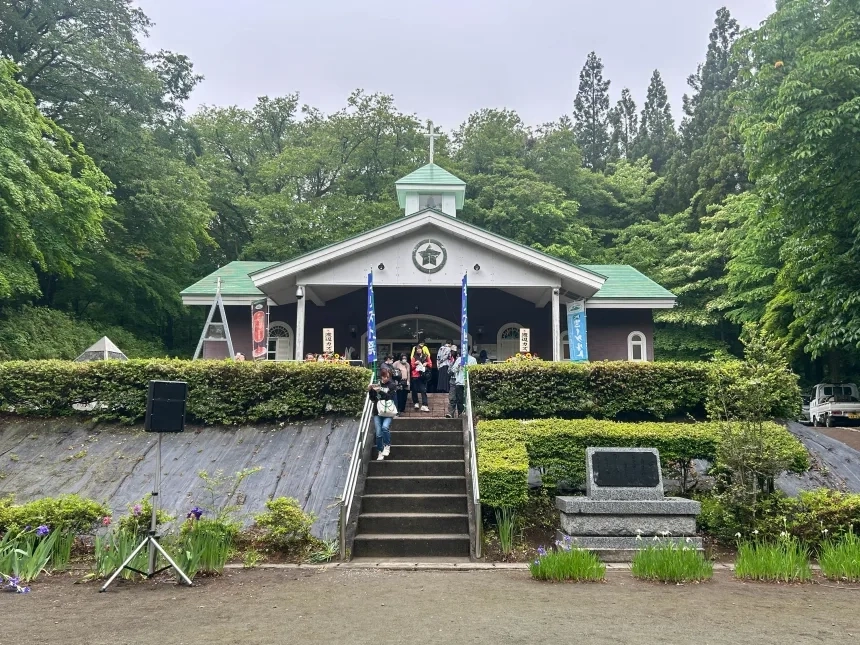 |
The Village of Jesus Christ Tradition Museum in Shingo. Photo: CNN |
Like many other rural areas in Japan, Shingo is facing a declining population. For Mayor Sato, the current priority is to maintain a community where residents can live healthy, fulfilling lives and wish to remain.
He still hopes the story of the mysterious tomb will bring more visitors to the village.
"For anyone seeking an unusual experience in a mysterious village, I truly hope everyone comes here and enjoys all of it," he said.
Anh Minh (According to CNN)