Located in Anuradhapura, Sri Lanka's first ancient capital and a sacred Buddhist site, the stupa draws thousands of white-clad, barefoot pilgrims on full moon days for ceremonies, while monks chant from early morning.
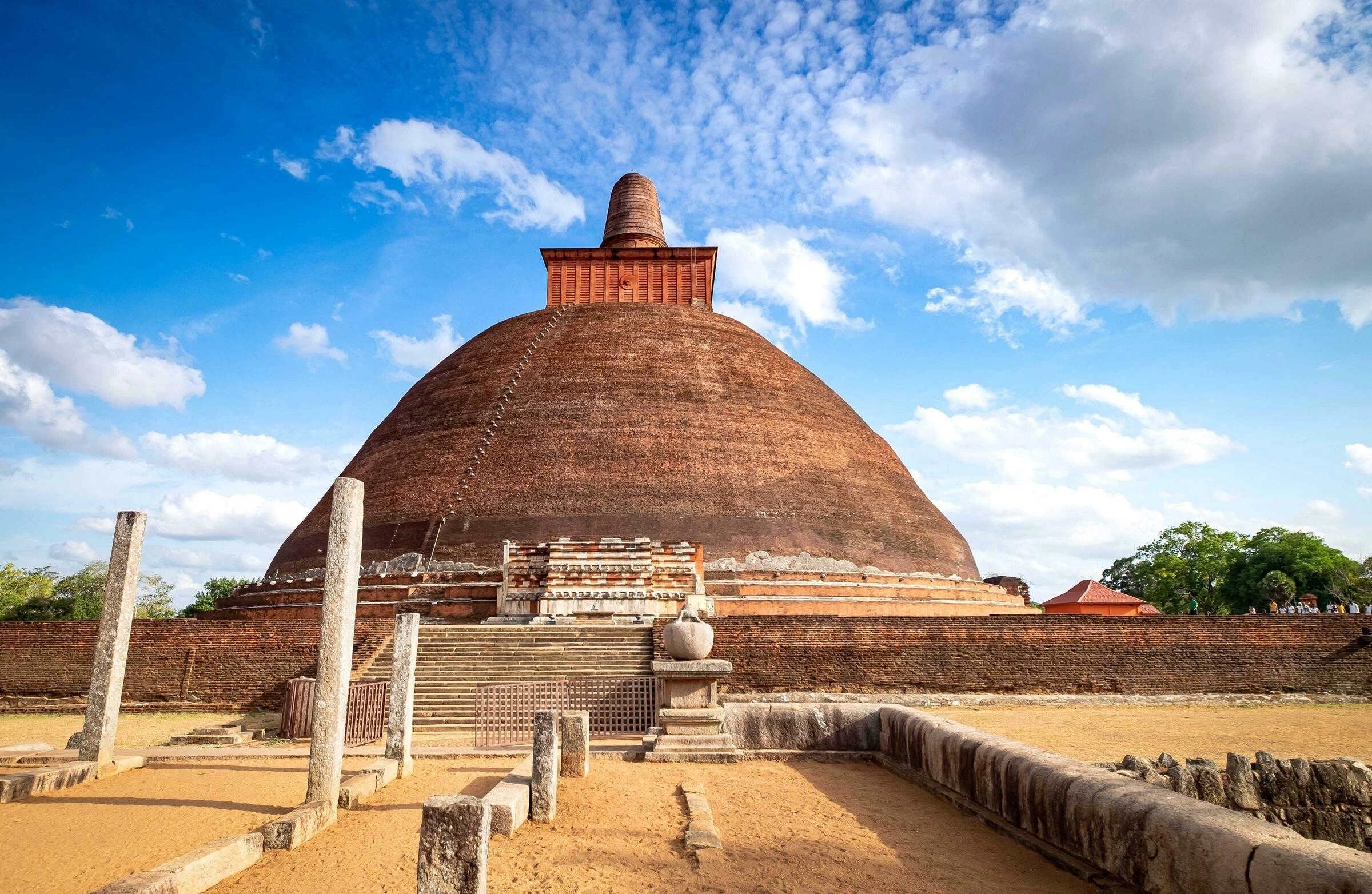 |
The front facade of Jetavanaramaya stupa. *Asian Historical* |
Jetavanaramaya was completed around 301, during the reign of King Mahasena. The structure originally stood at approximately 122 m tall, making it the third tallest man-made edifice of its time, surpassed only by the Giza pyramids.
After centuries of abandonment, collapse, and restoration, the stupa now stands at about 71 m. Despite losing nearly half its original height, Jetavanaramaya is still considered the largest brick structure ever built by volume.
Archaeologists state that constructing the monument required immense manpower and materials. Bricks were produced in kilns around Anuradhapura, then transported by ox carts and possibly elephants. Scaffolding was likely made from bamboo, tied with coir ropes.
The stupa's hemispherical shape helped distribute weight, while its foundation was treated using early soil testing techniques. Archaeologists also discovered numerous relic caskets placed within different layers of the structure.
Jetavanaramaya once served as the heart of Jetavana Vihara, a monastic complex home to approximately 200 monks. The structure also reflects ancient Sri Lankan Buddhist doctrinal debates, as the complex was associated with the Sagalika sect, influenced by Mahayana Buddhism.
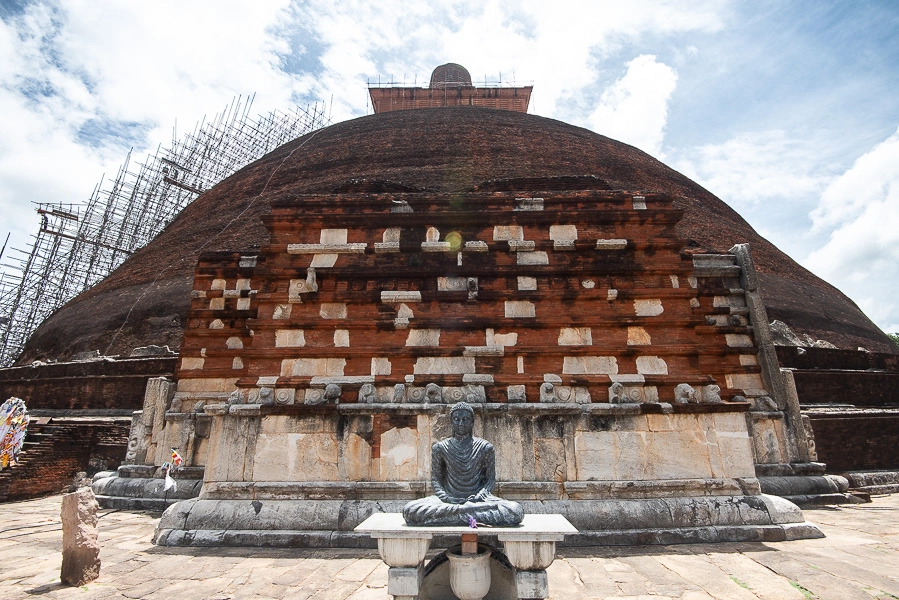 |
A Buddha statue in front of Jetavanaramaya stupa. *Asian Historical* |
Gold plates inscribed with images of Bodhisattvas and excerpts from the Prajnaparamita Sutra were found here and are now preserved at the National Museum Colombo. These artifacts provide evidence of Mahayana thought's presence in ancient Sri Lanka.
The stupa has endured multiple degradations from earthquakes, monsoon rains, and the passage of time. A major restoration occurred in the 12th century during the reign of King Parakramabahu I. Some outer layers were reinforced with cement in recent reconstructions, but this material is believed to accelerate the structure's deterioration. Currently, Jetavanaramaya stands within the Anuradhapura monument complex, alongside famous structures such as Ruwanwelisaya and Sri Maha Bodhi. While Ruwanwelisaya is a significant pilgrimage site for Sri Lankans, Jetavanaramaya impresses with its scale and construction techniques.
| Panoramic view of Jetavanaramaya stupa. *Sri Lanka Tourism* |
According to Professor of Archaeology Anura Manatunga, Jetavanaramaya was the last colossal stupa built in Sri Lanka. Subsequent stupas adopted similar dome shapes but never reached such a monumental scale.
Over 1,700 years after its completion, Jetavanaramaya still stands amidst the ancient city of Anuradhapura, a testament to the remarkable organizational capabilities and engineering prowess of the ancient Sri Lankans.
Tuan Anh (According to CNN)