Cai Chien Island, part of Cai Chien commune, lies approximately 330 km northeast of Hanoi. Covering 27 km2, the island's terrain is predominantly hilly, featuring pristine forests and numerous rocky islets along its coast. Compared to larger tourist islands nearby, such as Co To or Quan Lan, Cai Chien maintains a tranquil and unassuming charm. The island is home to about 150 households, with fewer than 1,000 residents who primarily engage in farming and fishing. Tourism has only recently begun to develop in the last few years.
Cai Chien offers limited services, shops, entertainment activities, or famous check-in spots. It is a natural destination, perfect for relaxing and experiencing "slow living" travel. Unlike many other coastal regions, Cai Chien does not have a bustling fish market or a vibrant fishing village. Instead, locals from the mainland bring fresh vegetables, meat, tofu, and other essential goods to the islanders each morning.
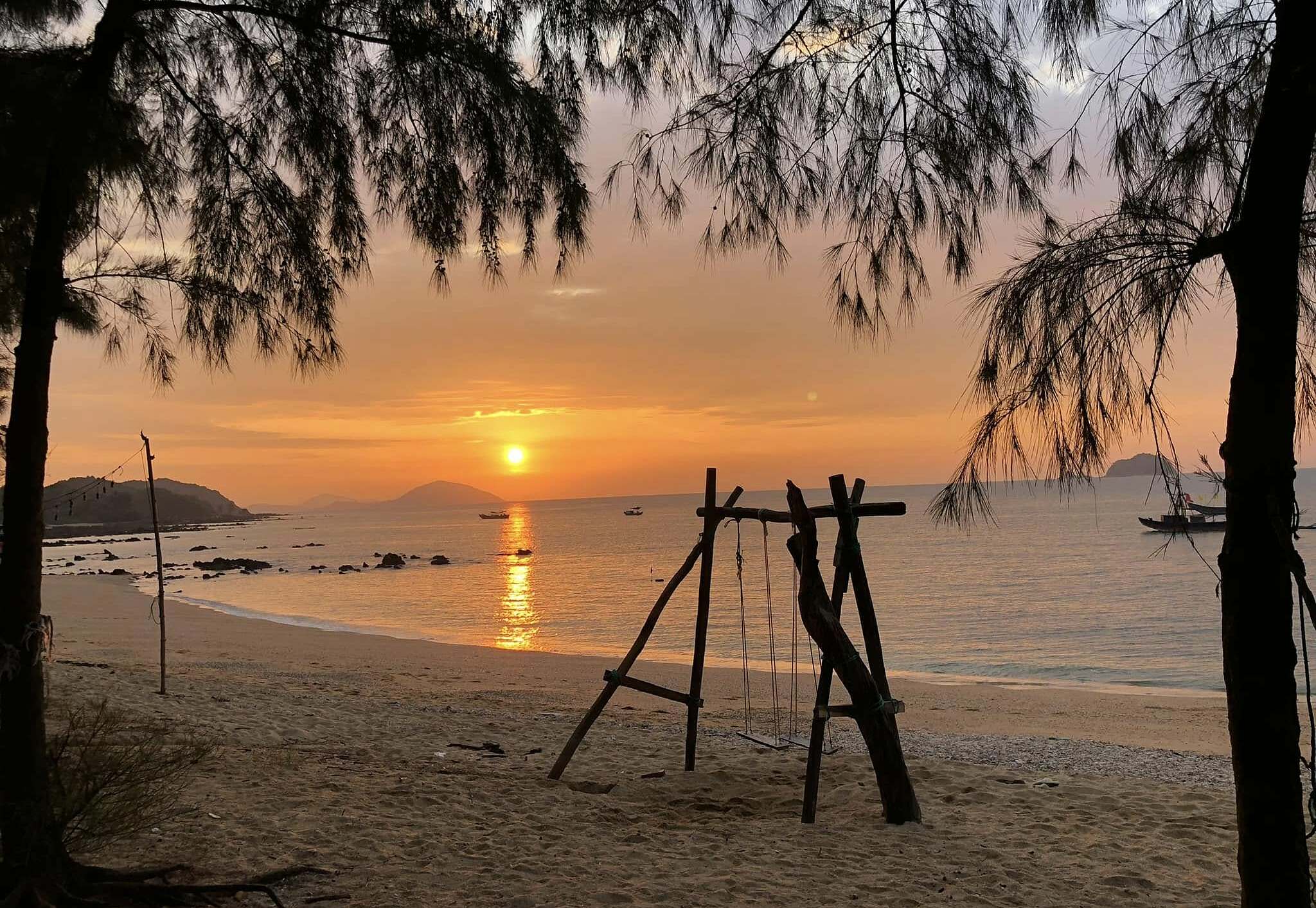 |
Sunrise on Cai Chien Island. Photo: Bui Hoan
Getting there
Visitors from Hanoi and neighboring provinces can reach Ghenh Vo ferry terminal in Quang Ha commune by road, utilizing the Hanoi - Hai Phong (CT04) and Hai Phong - Mong Cai (CT06) expressways. The journey takes approximately 4 hours.
For those traveling from central and southern provinces, flights to Van Don Airport in Quang Ninh or Cat Bi Airport in Hai Phong are available. Alternatively, train travelers can disembark at Hai Phong station, then continue by road to Ghenh Vo ferry terminal.
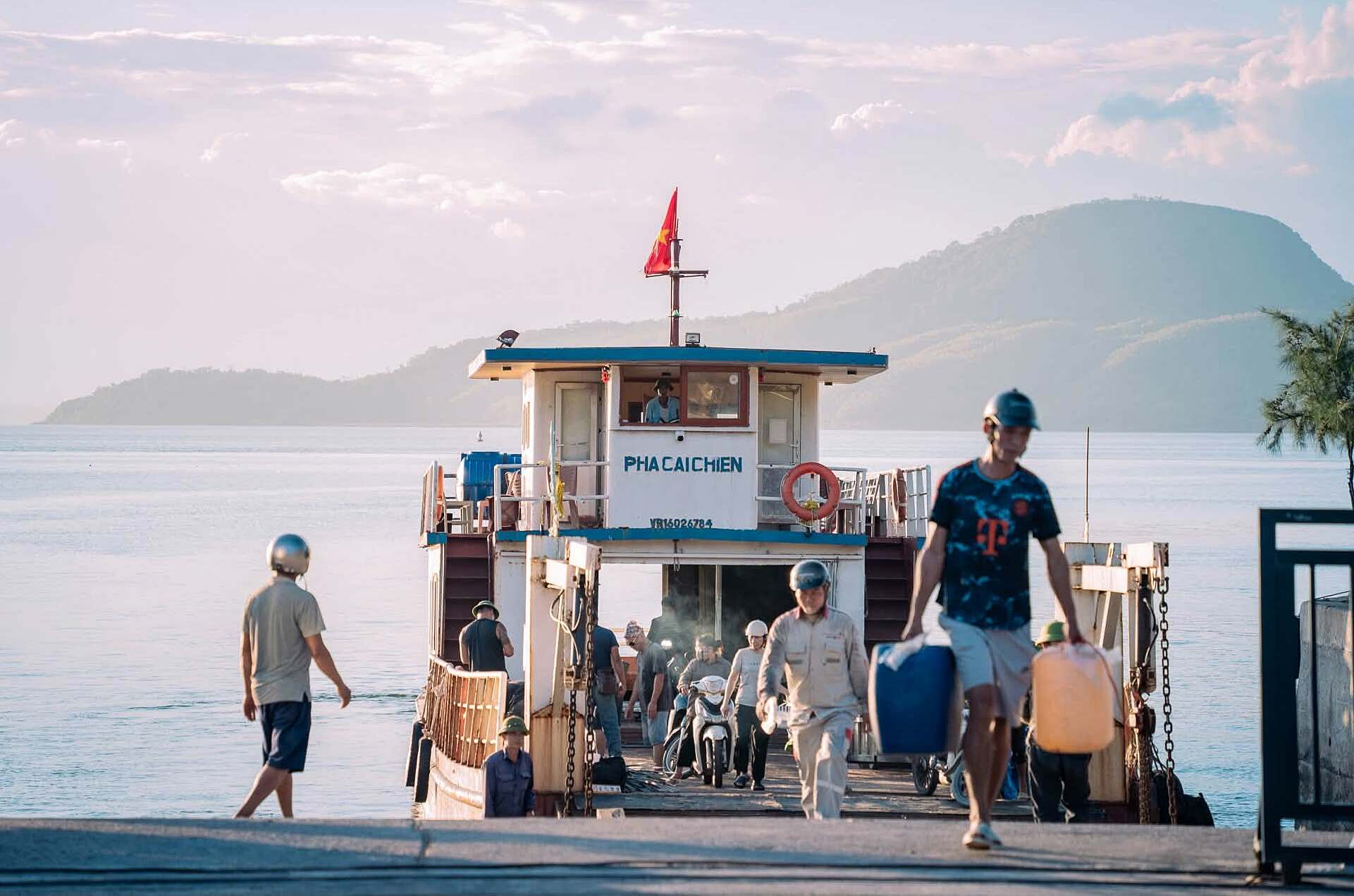 |
Ferry to Cai Chien Island. Photo: Kieu Phuong
From Ghenh Vo terminal, there are two ways to reach the island: canoe or ferry. The ferry transports both people and vehicles, including motorbikes and 4- to 29-seater cars. The ferry journey takes about 45 minutes, offering a smooth ride and scenic views. Canoes are faster, taking around 15 minutes, but may cause seasickness for some passengers. A ferry ticket costs 40,000 VND per trip.
For larger groups, a private canoe can be booked for 3 million VND round trip, accommodating about 20 people. Smaller groups or individual travelers can join a shared canoe for 100,000 VND per person per trip. Tickets can be purchased at the terminal or arranged in advance with homestays. The earliest departure is around 6:30.
Getting around Cai Chien Island
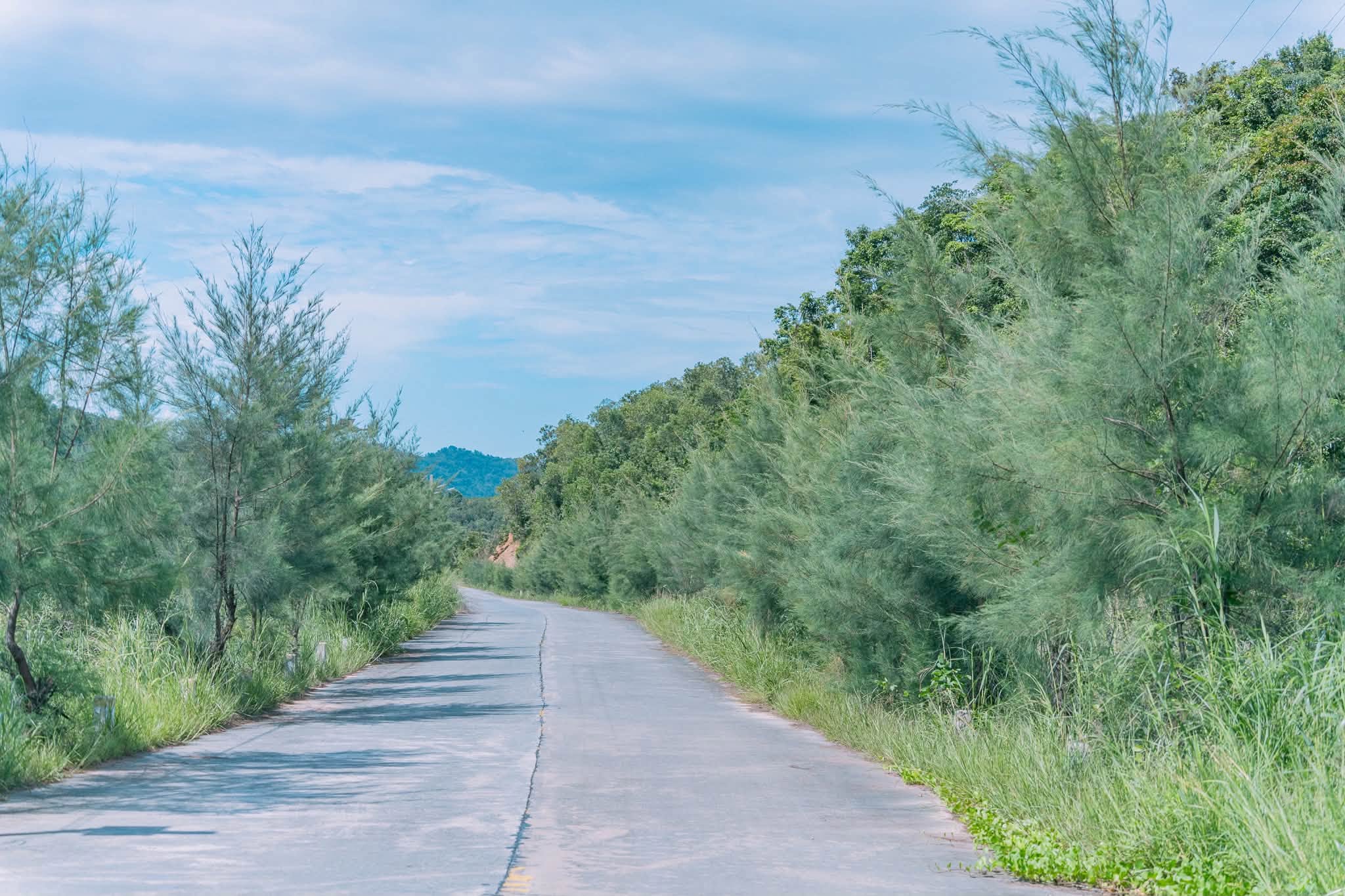 |
Road on Cai Chien Island. Photo: Kieu Phuong
Electric cars are the primary mode of transport on the island, picking up guests from the port and taking them to their homestays. Electric car fares are publicly listed; a ride from the port to the beaches costs around 150,000 VND per car. Renting an electric car for a full day costs 1 million VND on weekends and 800,000 VND on weekdays, accommodating up to 13 passengers.
Alternatively, visitors can rent motorbikes from locals for 250,000 VND per day or 150,000 VND for half a day. Guests may also bring their personal vehicles from the mainland to the island.
Accommodation
Homestays
Most accommodation options on the island are homestays and guesthouses, many located near the beach. Popular choices include Tuan Trung, Ngan Anh, Nhu Quynh, Moc, Sinh Hong, Tung Duong, Nha Go Anh Hoan, Hoang Cuong, Huong Truong, Phi Vung, Hoan Hang, and Dao Ngoc Retreat. Room rates for a double room typically range from 500,000 VND to 800,000 VND per night.
Nha Go Anh Hoan Homestay.
Dau Rong Resort.
Hotels and resorts
For more upscale stays, Huan Khai Hotel offers rooms from 1 million to 1,5 million VND per night, while Dau Rong Resort, the most luxurious option, has prices ranging from 1,8 million to 3,6 million VND per night.
Activities
Natural beaches
Cai Chien 1 and Cai Chien 2 beaches feature natural yellow sand mixed with pebbles of various sizes and colors. These beaches are quite steep, lack lifeguards, and local authorities advise against swimming. If the waves are calm in the morning, swimming is possible. However, when the tide rises, the waves become strong and the water deep, making it unsafe for children to swim. Life jackets are recommended for safety.
Cai Chien 2 is the most active beach on the island, with many homestays and beverage stalls. For those seeking tranquility and pristine nature, Van Ca or Vung Bau beaches are ideal, located about 3 km from the center of Cai Chien.
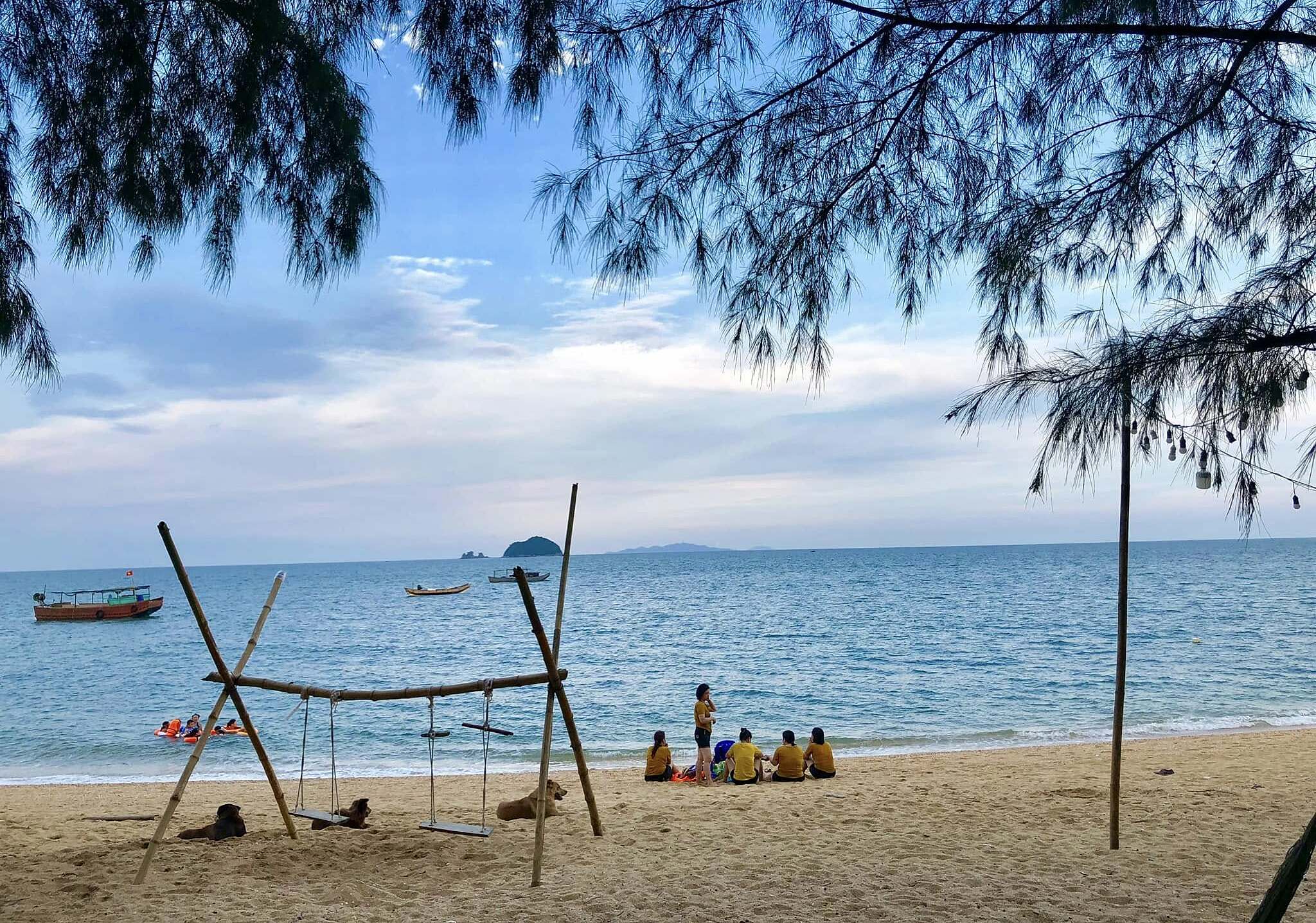 |
Cai Chien 2 beach. Photo: Bui Hoan
Dau Rong Beach
Situated within Dau Rong Resort, this artificial beach boasts fine sand and is considered the longest and most beautiful on the island. The beach is flat and safe for adults, children, and non-swimmers alike. In the morning, visitors can wade up to 150 m from the shore, where the water is only hip-deep. In the afternoon, during high tide, swimming is restricted to the safety buoys set by the resort. On shore, facilities include a lifeguard hut, showers, changing rooms, life jacket rentals, tables, chairs, and storage cabins.
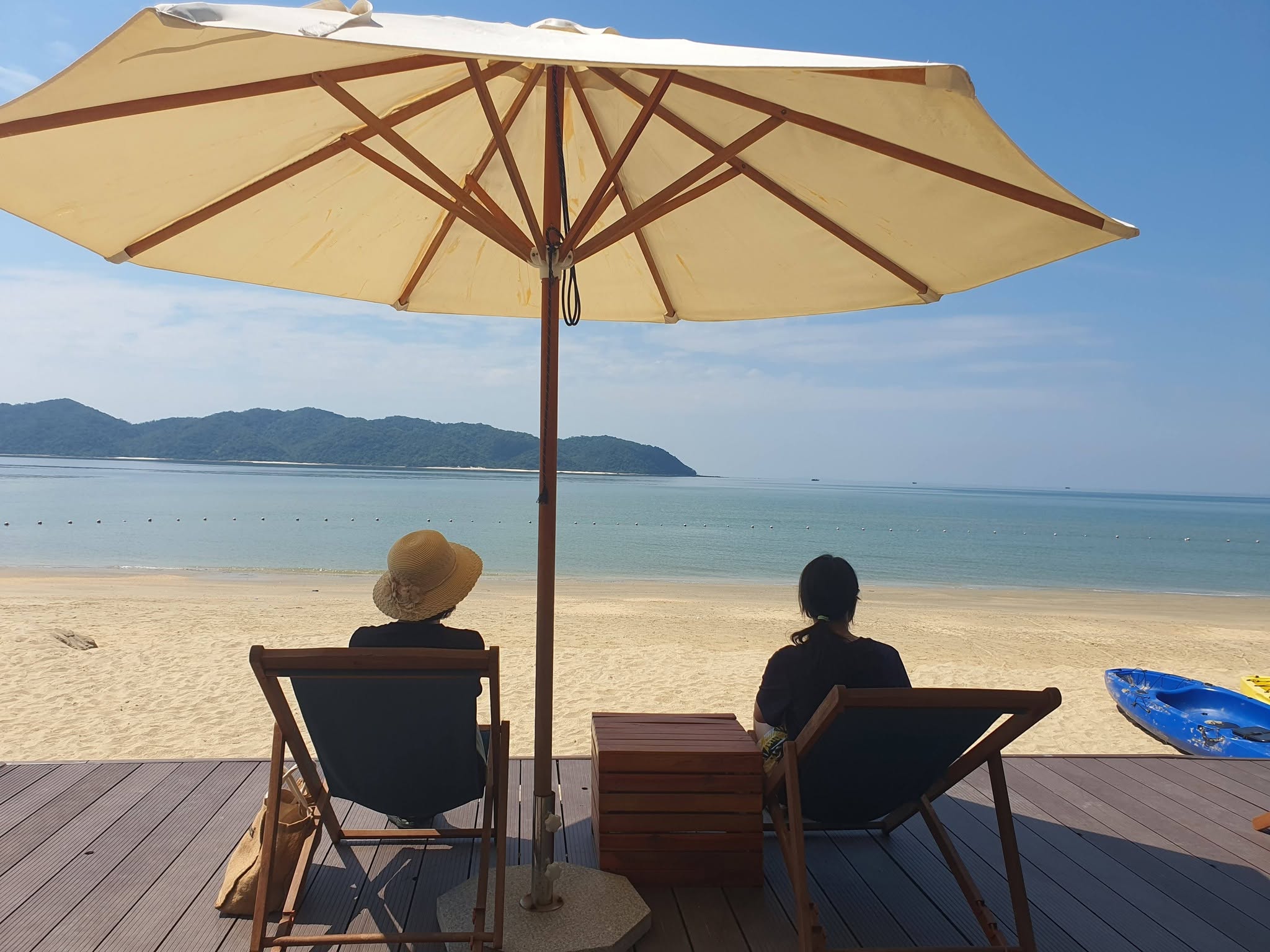 |
Dau Rong beach. Photo: Thanh Huyen
Khe Dau Lake
Khe Dau Lake serves as a freshwater reservoir for the island's residents. The lake is expansive, with clear blue water surrounded by shady trees. It also offers beautiful photo opportunities, especially at sunset, when visitors can admire the captivating view as the sun dips below the horizon.
Squid fishing and snail catching
Depending on the season and daily weather conditions, visitors can join tours for squid fishing, regular fishing, or netting for clams and snails. Guests are welcome to keep their catch, and homestays can prepare a variety of dishes from the freshly caught seafood. Prices are typically calculated per tour or based on the weight of the catch. Each tour usually accommodates five or more people.
Photo opportunities
Popular check-in spots include Vung Cat Cua Dai at the end of the island, Cai Chien pier, and the areas in front of homestays at Cai Chien 2 beach. Along the roads winding around the island and beside its beaches, visitors can stop anywhere to capture beautiful photos.
Check-in spots at Vung Cat Cua Dai and the pier on Cai Chien Island. Photo: Kieu Phuong
Cuisine
Cai Chien does not have as many restaurants or cafes as other tourist destinations. Visitors typically order meals directly from their homestays. It is advisable to order meals one morning in advance to allow homestay owners time to shop for ingredients. Some homestays also serve non-guests. Island specialties include ca chai chao (a type of fish dish) and ga rau (bearded chicken), often prepared simply grilled or steamed.
In the morning, a few local homes open to sell bun, pho, banh da hai san, thap cam, alongside small cafes and general stores that cater to basic needs. Recommended spots include: Bong Coffee, Ngoc Hoang Cafe, Ghenh Dun Cafe, and Tra Sua Bai 2.
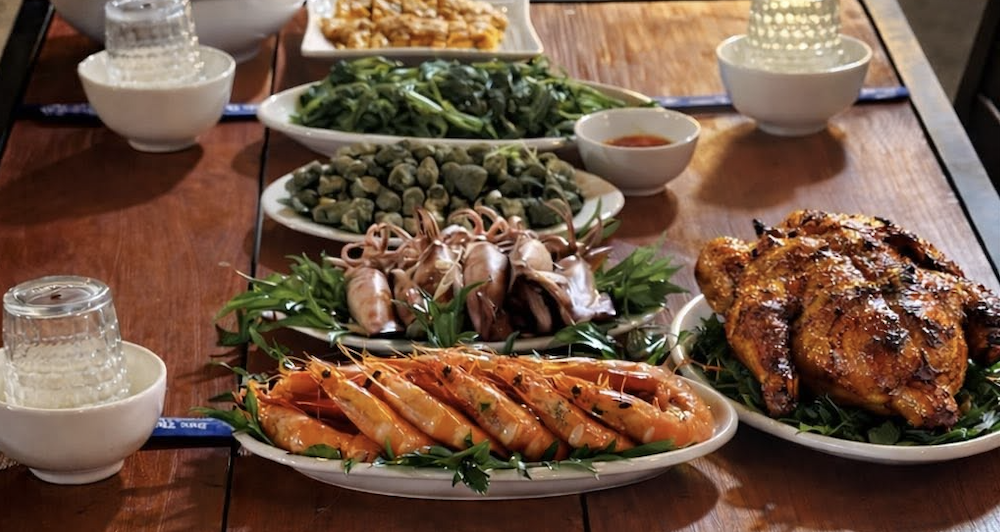 |
Seafood and bearded chicken prepared at a homestay. Photo: Duc Thang Glamping
Important notes
The peak season on Cai Chien Island runs from April to September. During this time, visitors should book accommodation at least two months in advance, especially for weekend stays.
To avoid crowds, consider visiting Cai Chien on weekdays. Most roads on the island lack lighting, except for intersections and the central area, and the population is sparse. Visitors should exercise caution when traveling at night. The estimated all-inclusive cost for one person, traveling from Hanoi for three days and two nights, is approximately 2 million VND.
Tam Anh