|
The north-south railway, stretching approximately 1,726 km, includes a section over Hai Van pass that is more than 21 km long and is widely regarded by many tourists as the most beautiful. The tracks wind along the mountainside, pass through tunnels, and cross viaducts. After curves hugging the cliffs, the train enters Da Nang, revealing views of mountains, forests, and the sea simultaneously through the train windows. |
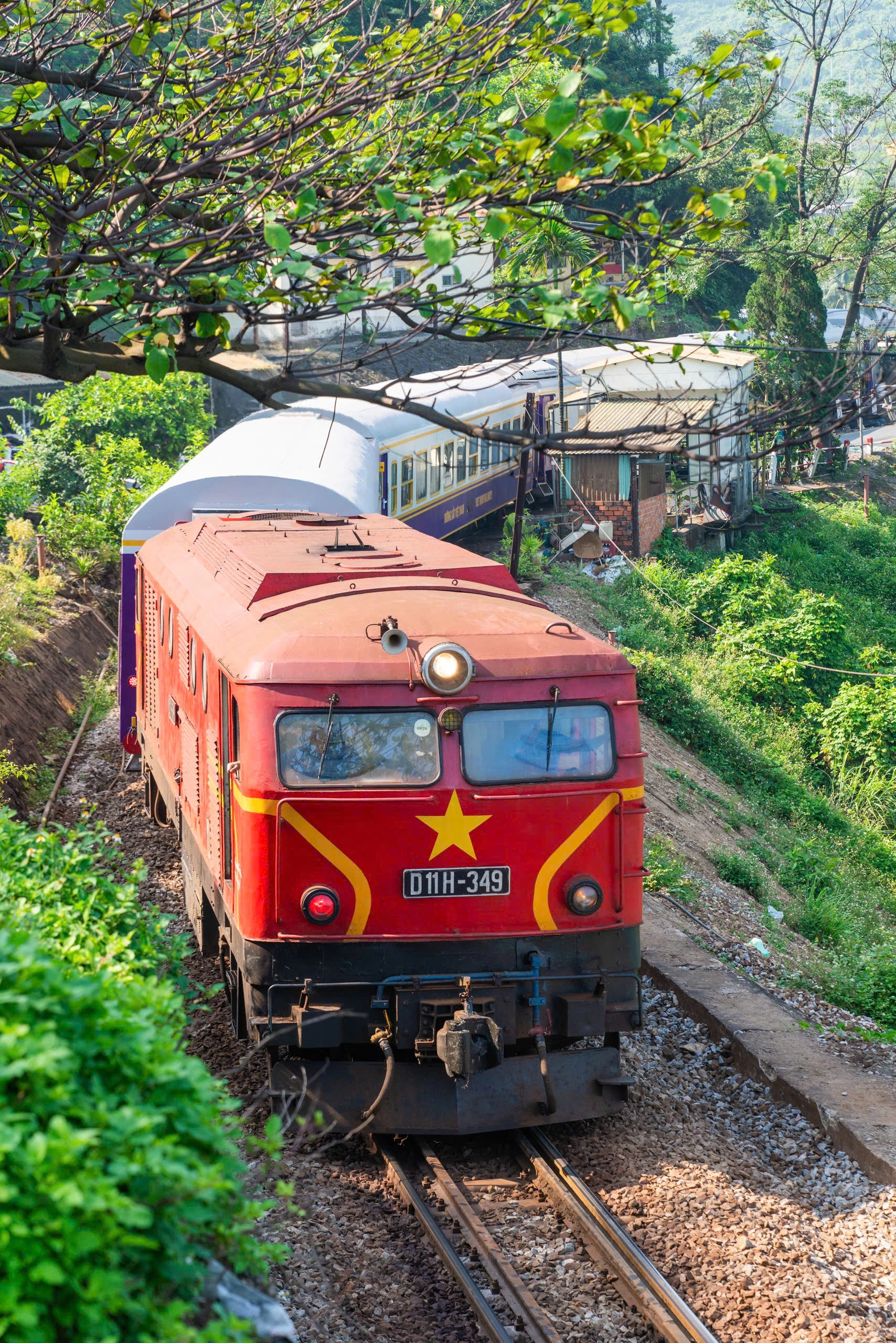 |
Daily, six trains run in both directions along the north-south route, crossing Hai Van pass. Journeys departing from Hue or Da Nang during the day are the most popular choices for tourists to enjoy the scenery. The railway sector also operates the "connecting central heritage" tourist train route, linking Hue with Da Nang, catering to the demand for sightseeing and enjoying the landscapes along this famous coastal route. Photo: Linh Huynh |
Daily, six trains run in both directions along the north-south route, crossing Hai Van pass. Journeys departing from Hue or Da Nang during the day are the most popular choices for tourists to enjoy the scenery. The railway sector also operates the "connecting central heritage" tourist train route, linking Hue with Da Nang, catering to the demand for sightseeing and enjoying the landscapes along this famous coastal route. Photo: Linh Huynh
 |
Hai Van pass is where the Truong Son mountain range extends to the sea, creating a rare natural landscape where mountains, sea, and sky merge. Along the route, primary forests cover the mountainsides. Sheer cliffs follow curves that hug the sea, with the clear blue waters of Lang Co bay and Da Nang bay below. The continuous transition between forest, mountains, sea, and tunnels through the rock makes Hai Van one of Vietnam's most impressive landscapes. |
The photo shows a panoramic view of Lang Co bay from the foot of Hai Van pass.
Lang Co bay, located over 60 km from central Hue and about 20 km from Da Nang, spans approximately 42,5 km. Situated at the foot of Hai Van pass, the bay retains its pristine beauty with a gentle beach, clear blue water, and rich ecosystem. In 2009, the worldbays club recognized Lang Co as one of the most beautiful bays in the world.
Summer is the best time for this route when the sky is clear, visibility is good, and the sea is emerald green. Photo: Linh Huynh
 |
A section of the railway winds through lush green vegetation on Hai Van pass. Photo: Linh Huynh |
The Hue - Da Nang railway line features 12 stations. Nine of these serve passengers, including Hue, Huong Thuy, Truoi, Cau Hai, Thua Luu, Lang Co, Kim Lien, Thanh Khe, and Da Nang. The remaining three stations are located in the Hai Van pass area, primarily serving railway operations.
The train journey between Hue and Da Nang takes about 3,5-4 hours, compared to approximately two hours by road.
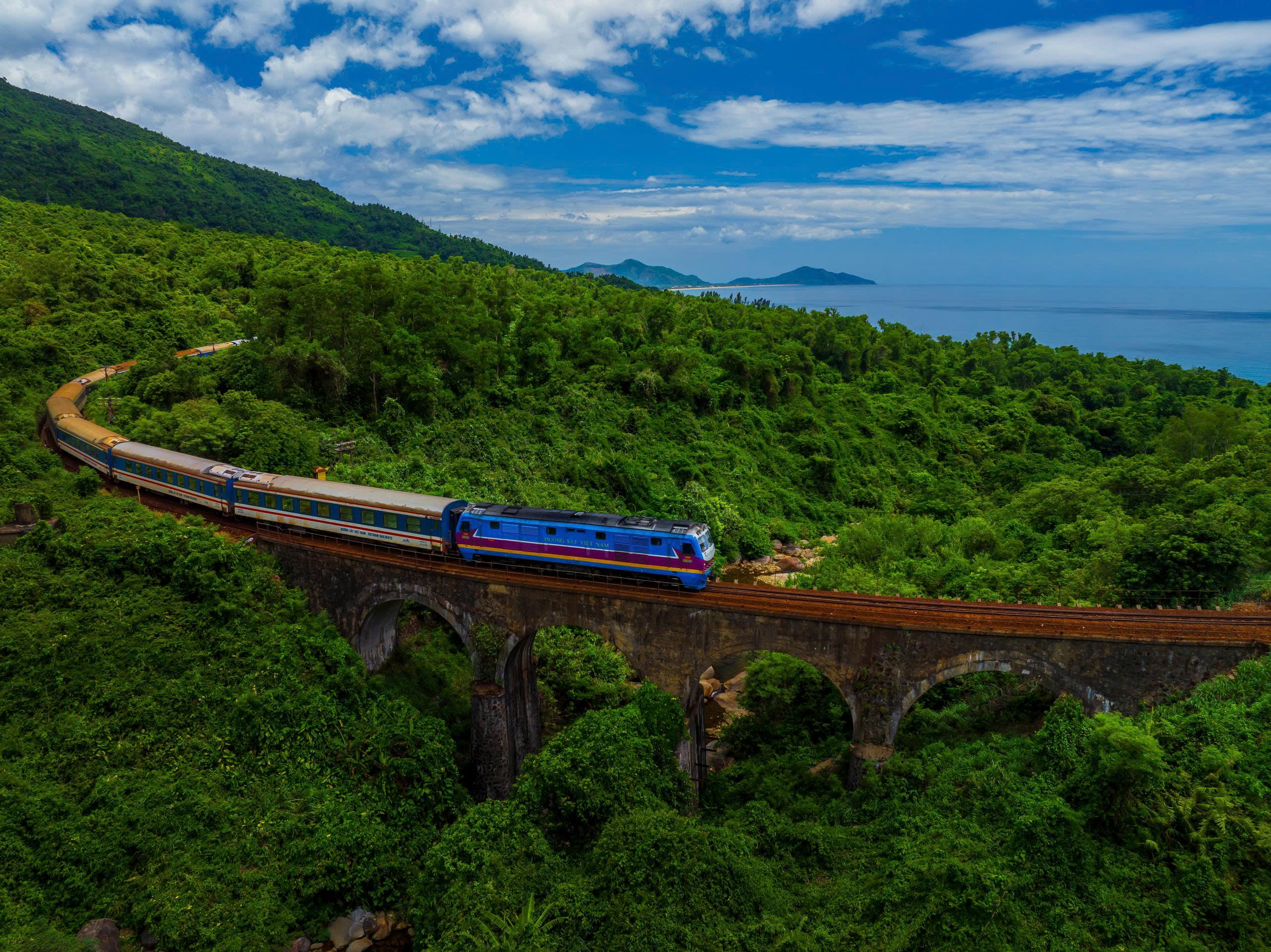 |
The railway over Hai Van pass winds along the mountainside, featuring six tunnels and 18 bridges. The shortest tunnel measures 85 m, while the longest is about 600 m.
The train passes over the Don Ca arch bridge (photo), a structure over 100 years old built alongside the Hue - Da Nang railway line. This bridge features a stone arch design, spans a stream at an altitude of about 20 m, and is nearly 100 m long. It stands as one of the architectural highlights along the Hai Van pass route.
 |
 |
A section of the railway winds through lush green vegetation on Hai Van pass. Photo: Linh Huynh
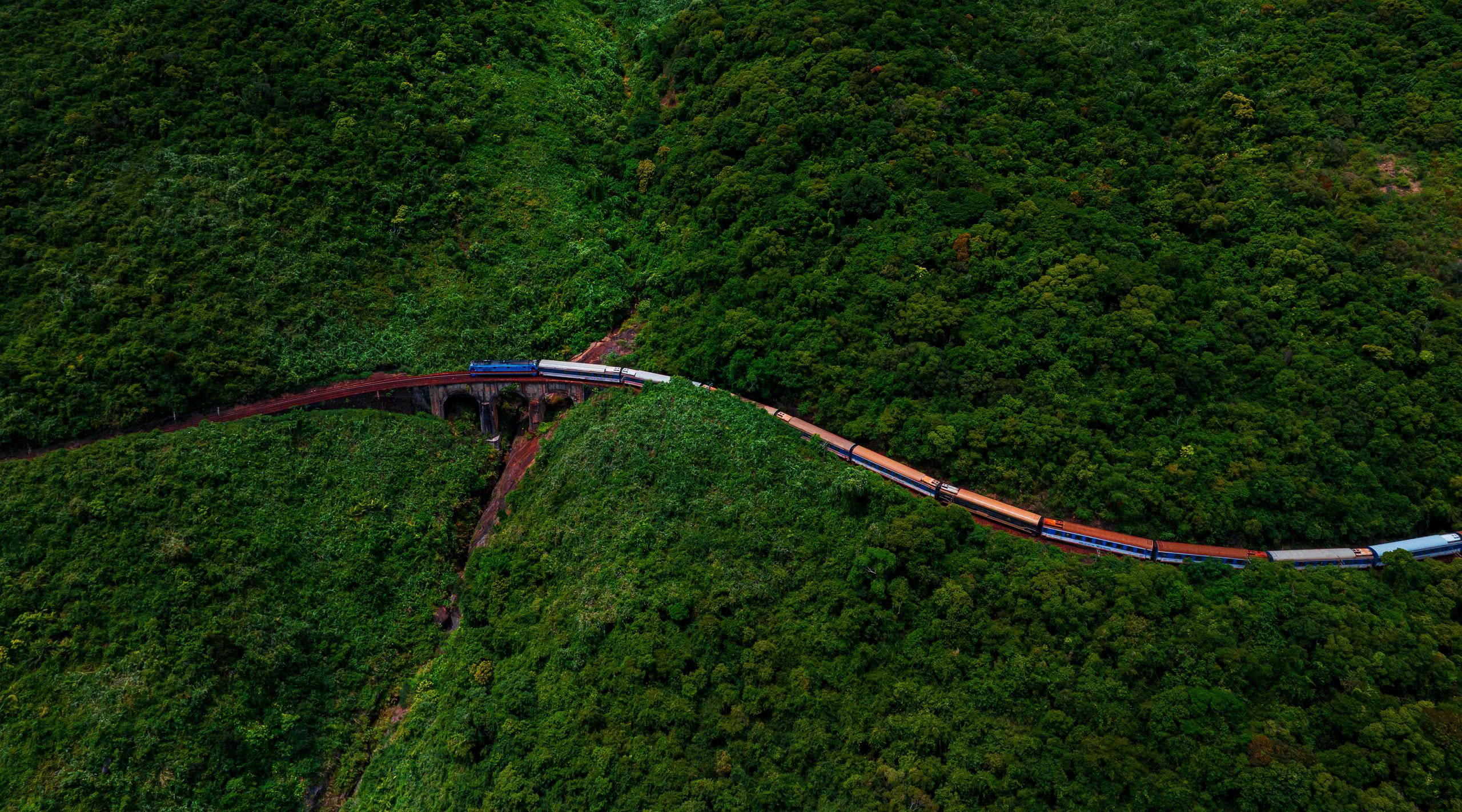 |
On 5/7, travel magazine Travel + Leisure featured Vietnam's north-south railway as one of the world's most beautiful train journeys. The magazine suggested that travelers should not go directly from Hanoi to Ho Chi Minh City but rather divide the trip into several segments to explore destinations along the way.
The magazine highlighted the Hue to Da Nang section as the most beautiful part of the route, as the train traverses Hai Van pass, winding along the mountainside with the sea on one side.
Tuan Anh
Photo: Hoang Duong