According to the National Center for Hydro-Meteorological Forecasting and various tourism platforms, the rainy season in Northwest Vietnam typically begins in May and extends through September, with July and August being the peak rainy period. During this time, the region is often affected by tropical depressions and storms, leading to risks of flash floods, landslides, and falling rocks on mountain passes, causing localized traffic disruptions.
The rainy season also coincides with one of the most beautiful times in Northwest Vietnam, as the terraced rice fields are in their prime, attracting tourists and photographers. Below are safety tips for rainy season travel from Nguyen Thanh Hieu, who lives and operates accommodation services in Mu Cang Chai.
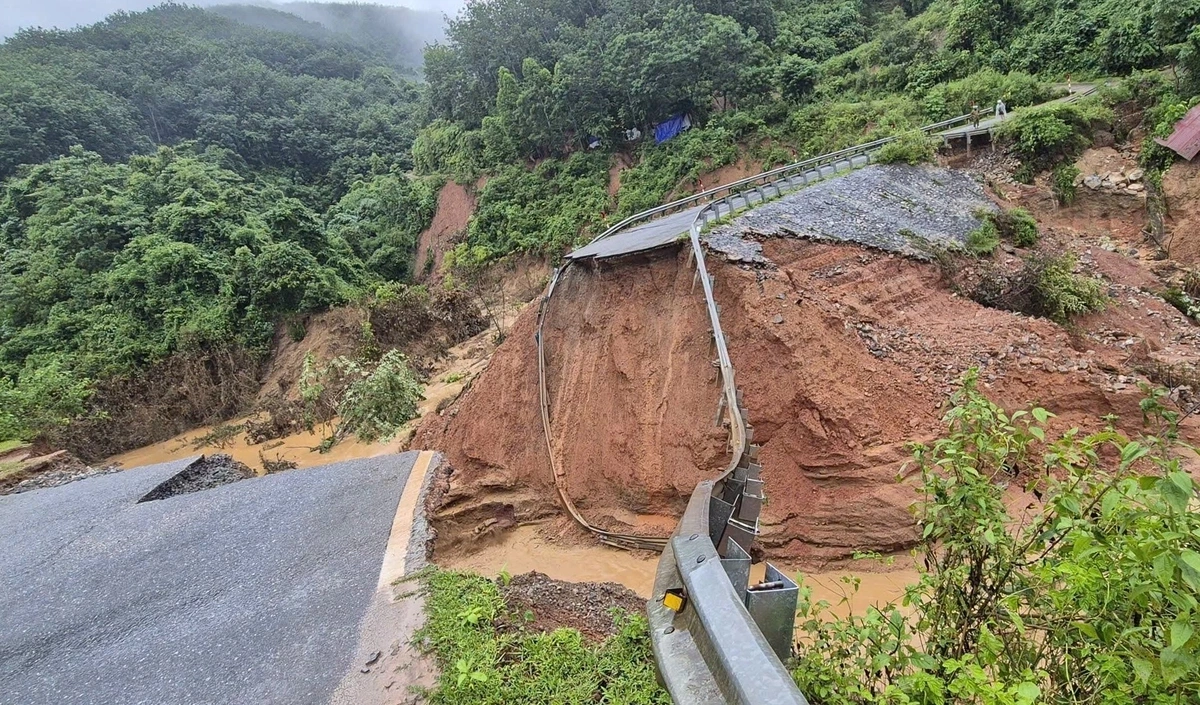 |
National Highway 12 from Lai Chau to Dien Bien province experienced landslides caused by heavy rain on 18/7. *Photo: Lai Chau Provincial Police* |
Monitor weather forecasts
Before and throughout your trip, visitors should continuously update weather forecasts, especially warnings for heavy rain, flash floods, and landslides from meteorological agencies or local authorities. Recommended applications include Windy and AccuWeather. Adjust your itinerary if weather conditions become unstable.
Avoid mountain passes at night or during heavy rain
During the rainy season, when traveling from Hanoi or neighboring provinces to Northwest Vietnam, consider choosing premium sleeper buses or limousines. Many famous routes, such as O Quy Ho, Khau Pha, Pha Din, and Ma Pi Leng passes, feature sharp turns, dense fog, and slippery road surfaces during the rainy season. It is advisable to depart during daylight hours and avoid driving at night or in heavy rain to ensure clear visibility.
Inspect your vehicle before the trip
For those driving oto or moto, it is essential to check the brakes, tires, headlights, and windshield wipers before setting off. Moto should have tires with good grip, and it is wise to carry a basic repair kit, as many highland roads are far from residential areas. At tourist destinations, visitors unfamiliar with steep mountain terrain should prioritize taxis or xe om (motorbike taxis) over personal moto.
Choose appropriate accommodation
Visitors should prioritize hotels and homestays located in central areas like Sa Pa, Mu Cang Chai, Ha Giang, and Dien Bien. These locations generally have better infrastructure, are less prone to flooding, are easily accessible, and convenient for travel during heavy rain. Avoid choosing accommodation near pine forests, streams, steep embankments, hillsides, or construction sites, as these areas pose risks of landslides or slippery access roads.
 |
A resort in Lao Cai. *Photo: Le Champ* |
When booking, check reviews from previous guests on reputable platforms, filtering by keywords such as "rainy season", "flooding", or "convenient transportation" to assess actual quality.
Prepare rain gear
Raincoats, waterproof jackets, shoes with good grip, and waterproof bags for phones and cameras are essential items. Visitors should also bring dry clothes to change into after traveling in the rain.
Do not stop in areas prone to landslides
During the rainy season, rocks and soil on mountain slopes can slide down at any moment. Visitors should not stop their vehicles at the base of embankments, cliffs, or camp near streams and ravines. If you observe falling rocks, cracked road surfaces, or strong water flow from mountain slopes, quickly leave the area.
Heavy rain can cause some roads to become blocked or temporarily closed for landslide clearance. Instead of a packed schedule, visitors should allow extra buffer time to avoid being caught off guard if their itinerary needs to change.
Carry cash and a power bank
In many highland communes, mobile signals and Internet connectivity are unstable, making electronic payments difficult. Carrying some cash, a portable power bank, and pre-downloaded offline maps will make your trip more convenient.
Heed local advice
Local residents and authorities are often well-informed about weather and road conditions. If advised not to travel a certain route or visit a particular attraction, visitors must comply. When encountering heavy rain, strong winds, or rising water levels at overflowing streams, stop moving and wait for safe conditions rather than attempting to cross.
Tuan Anh