The 2026 World Cup concluded with Spain's victory over Argentina after extra time at MetLife Stadium in New Jersey, US. With 104 matches held across 16 cities in the US, Mexico, and Canada, the largest tournament in football history also became the biggest World Cup in terms of commercial scale and viewership.
Before the tournament, a study by FIFA in collaboration with Oxford Economics estimated that the 2026 World Cup could generate approximately 40,9 billion USD in economic value for the three co-hosting nations. FIFA also projected revenue for the 2023-2026 financial cycle to exceed 13 billion USD, nearly double the previous four-year cycle, thanks to the expanded tournament scale and increased revenue from television rights, sponsorships, and ticket sales.
 |
Captain Rodri lifts the championship trophy as Spain celebrates its victory over Argentina in the 2026 World Cup final in East Rutherford, New Jersey, US, on 19/7/2026. *Photo: AP*
The 2026 World Cup demonstrated its appeal by attracting around 6,5 million live spectators to stadiums, nearly double the attendance of the 2022 World Cup in Qatar. Stadium occupancy averaged 99,7%, while FIFA Fan Festivals welcomed approximately 7,7 million participants.
The record attendance boosted the tourism and service industries. Instead of an immediate surge from the opening matches, tourism demand significantly increased as the tournament entered the knockout rounds, when many fans decided to travel to the US after their national teams advanced.
According to an analysis of transaction data by the Bank of America Institute, card spending in US host cities rose by approximately 5% between 10/6 and 5/7 compared to the same period last year. Restaurants and bars were the clearest beneficiaries as fans gathered to watch matches.
The accommodation market also saw growth in the later stages of the tournament. According to analytics firm CoStar, revenue per room in Kansas City increased by nearly 50% year-on-year, while Philadelphia saw an increase of over 74% due to the World Cup coinciding with the US Independence Day holiday and the America 250 series of events.
AirDNA data indicated that short-term rental bookings in Newark and Jersey City, two areas serving spectators attending the final at MetLife Stadium, increased by about 45% compared to the previous year, partly due to short-term rental restrictions in New York City. Meanwhile, travel management company Navan reported that the average hotel room price in New York exceeded 1.800 USD per night even before the World Cup began.
The trend of last-minute service bookings was also evident in the airline market. According to data from RateGain Travel Technologies, total flight bookings to World Cup host cities increased by nearly 4% year-on-year and by nearly 75% immediately after the opening week.
In Argentina alone, flight bookings to the US increased by approximately 46% since the tournament started. The Buenos Aires - Atlanta route, where the Argentine team played their round of 16 and semi-final matches, saw bookings surge by 108%. According to Bhanu Chopra, founder of RateGain, this demonstrates a new trend in sports tourism, where many fans only decide to book flights and hotels after their national team advances.
Some experts suggest that the economic impact of World Cup tourism should be viewed with more caution.
Michael Edwards, a professor specializing in sports finance at North Carolina State University, US, noted that FIFA is the biggest beneficiary, controlling high-value revenue streams such as television rights, sponsorships, and ticket sales. In contrast, host city governments must spend hundreds of millions of USD on security, transportation, healthcare, infrastructure operation, and organizing fan activities.
He estimated that organizing costs for US cities ranged from 100 to 200 million USD per location. Some areas, such as Seattle, New York, and New Jersey, had to scale back their Fan Festivals due to high operating costs and disproportionate direct revenue.
Edwards also pointed out that cities which are already popular tourist destinations, like New York, Los Angeles, or Miami, consistently attract large numbers of visitors year-round. Therefore, full hotels or crowded restaurants during the World Cup are not enough to prove that the tournament generated genuine economic value.
"A portion of the spending is simply a shift from existing tourism activities," Edwards explained.
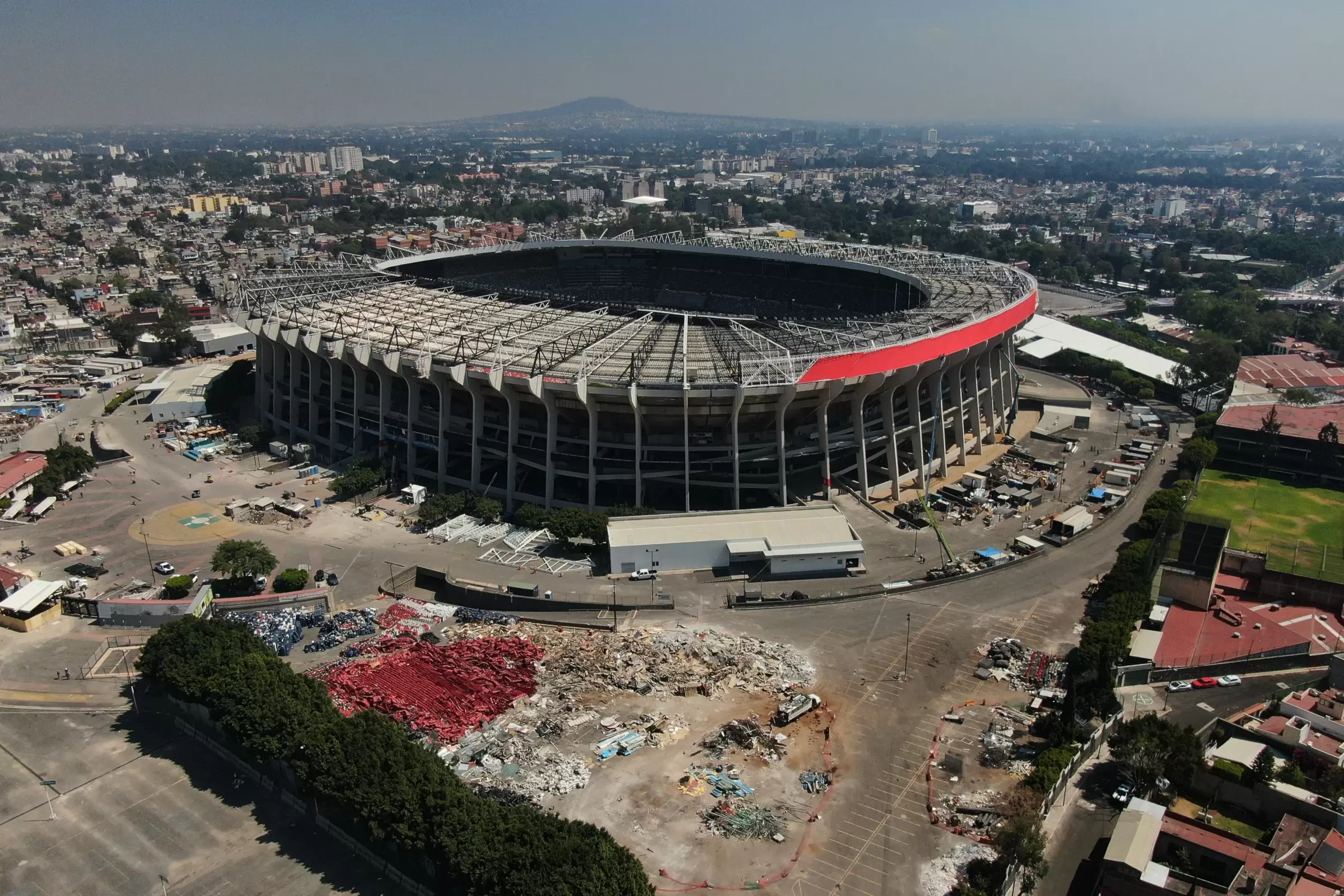 |
Azteca Stadium, Mexico, during its completion process before the World Cup, on 3/3. *Photo: AP*
The disparity in benefits was evident in Mexico. Although Azteca Stadium attracted over 404.000 spectators across 5 matches, the highest among all 2026 World Cup venues, the country's economy did not experience the expected boost.
According to Deloitte, the World Cup created approximately 100.000 temporary jobs, about 10% lower than initial forecasts. BBVA's consumer index showed that in June, hotel spending decreased by 10,5%, restaurant spending by 4,9%, while entertainment spending increased by 16,5%.
Banorte Bank also lowered its forecast for the World Cup's contribution to Mexico's GDP growth to approximately 0,4-0,5%, lower than previous estimates. Analysts suggest that factors such as slow growth prospects, inflation, and the review process of the US-Mexico-Canada Agreement (USMCA) still have a much greater impact than the tournament's effect.
According to Professor Michael Edwards, the World Cup can be "a worthwhile shared experience," bringing pride and connection to communities, but it should not be automatically considered an effective economic development strategy.
Mai Phuong (According to FIFA, NC State University, Reuters)