Pham Xuan Thanh, vice head of the Culture - Information Department of Vinh Hai commune, reported that uncontrolled tourist visits to My Tan and My Hiep beaches are damaging the coral reefs. Local authorities have issued reminders and are educating residents and visitors to avoid stepping on coral or illegally harvesting marine products.
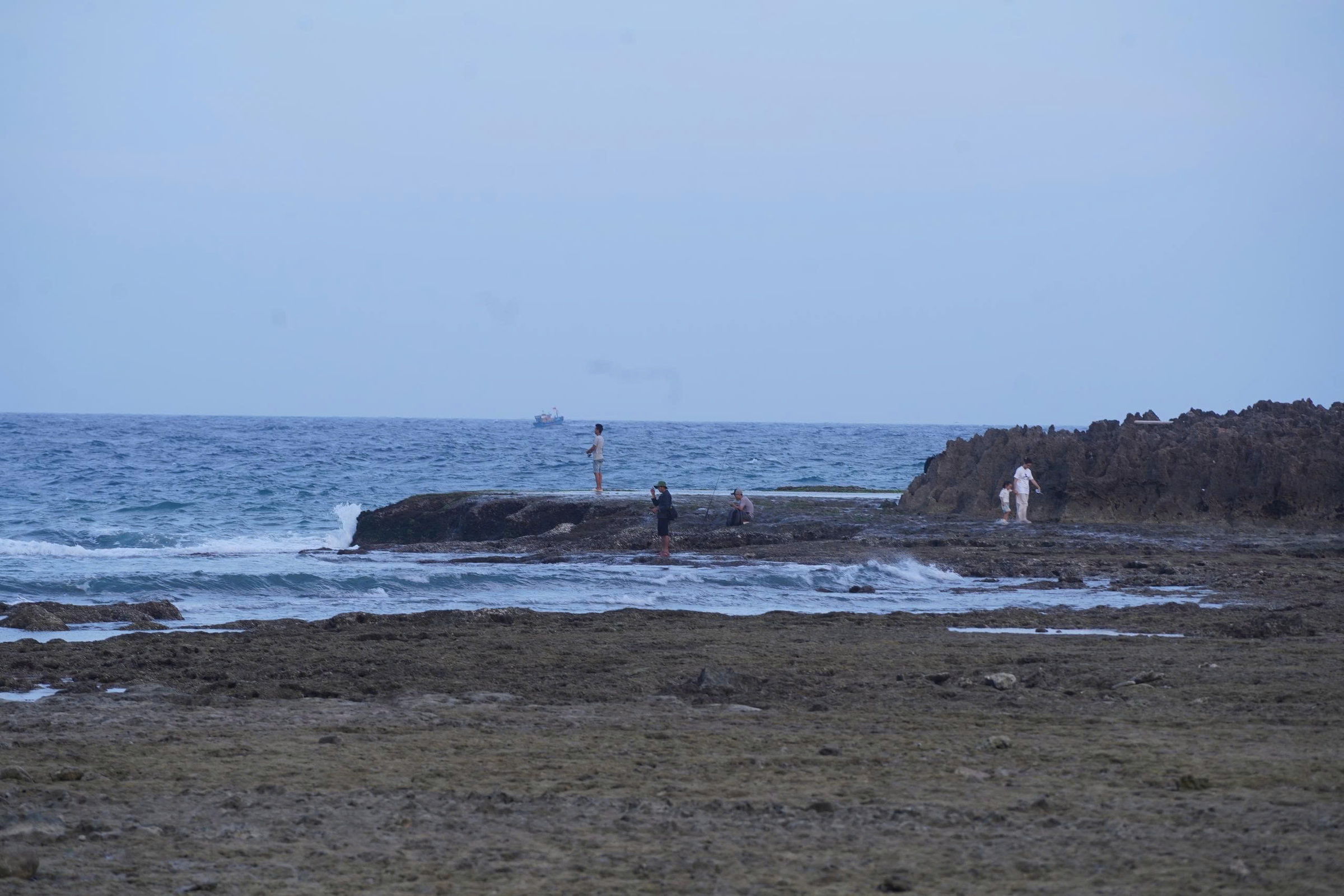 |
Tourists walk on coral reefs for photos at My Hiep beach. Photo: Thien Thao
My Tan - My Hiep beach stretches along the coastal road from Phan Rang ward to Vinh Hy Bay. It is known for its fossilized coral reefs and moss-covered rock formations. The coral becomes visible during low tide, typically between 5 PM and 8 PM on the 1st and 15th of the lunar month. From march to may, green moss covers the coastal rocks, creating a unique landscape that attracts visitors for sightseeing and photography.
According to the Vinh Hai Commune People's Committee, the coastal area of My Tan - My Hiep is home to diverse marine life. However, a comprehensive survey by specialized agencies is needed to fully assess species composition, area, biodiversity levels, and the current state of the coral reefs.
Pham Van Xiem, head of the Resource Management and Biosphere Reserve Department at Nui Chua National Park, stated that the My Tan - My Hiep sea area contains more than 100 coral species, primarily branching and soft corals. Near the shore, many reefs have long been dead, but living coral clusters are interspersed among them.
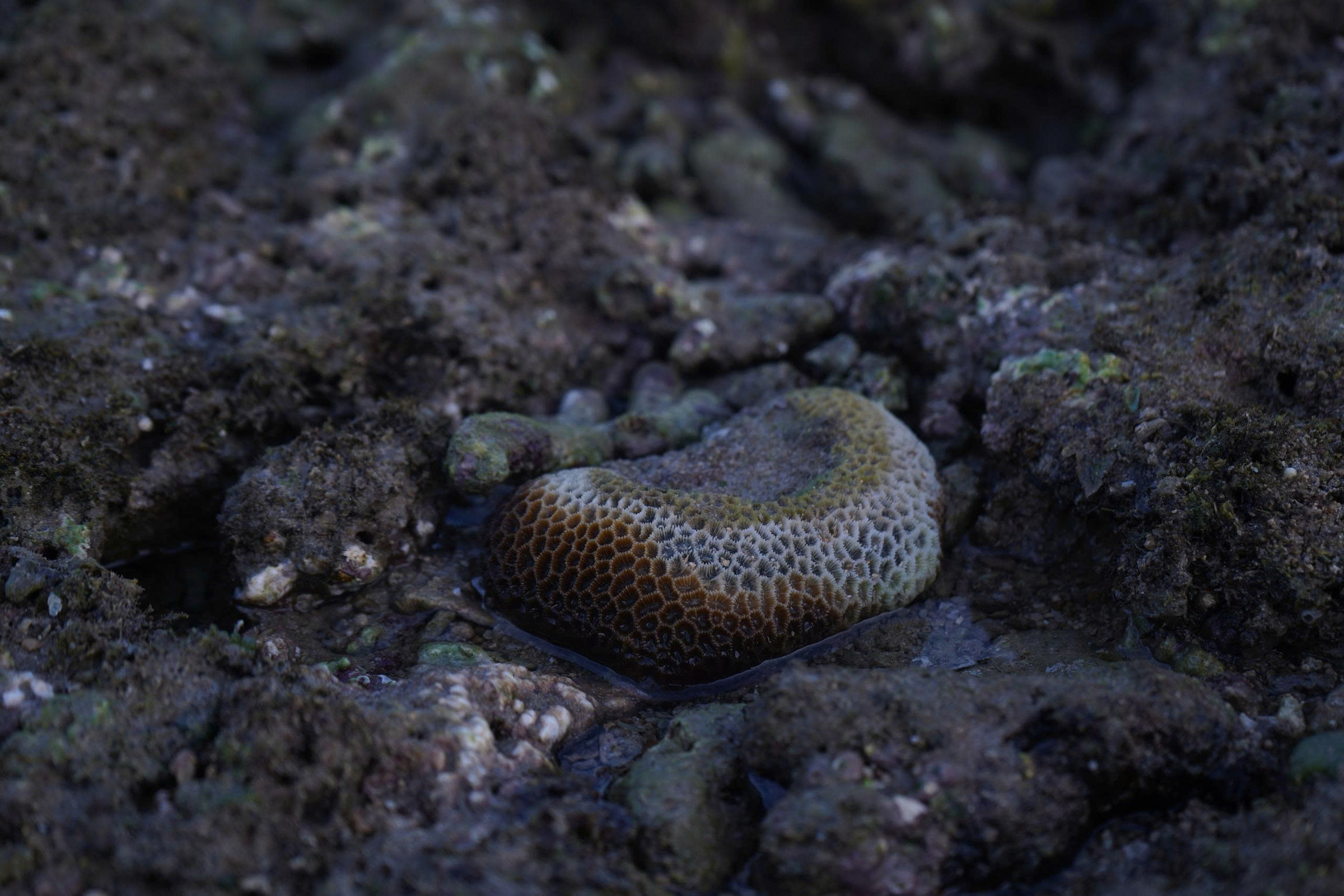 |
Coral reefs on My Hiep beach. Photo: Thien Thao
Xiem explained that while tourists collecting crabs and snails in hard coral areas does not significantly impact the ecosystem, their movement can inadvertently lead to stepping on or colliding with living coral clusters. If uncontrolled tourist activities continue frequently, the coral reefs face continued damage.
Xiem suggested that the area could develop eco-tourism tours with guides who provide education on coral reef protection. Organizers and guides should also receive training in knowledge and skills to both serve tourists and minimize impact on the marine ecosystem.
"Utilizing the scenic value must go hand-in-hand with conservation, especially in nearshore coral reef areas, which are easily accessible and susceptible to human impact," Xiem said.
Bui Toan - Tuan Anh