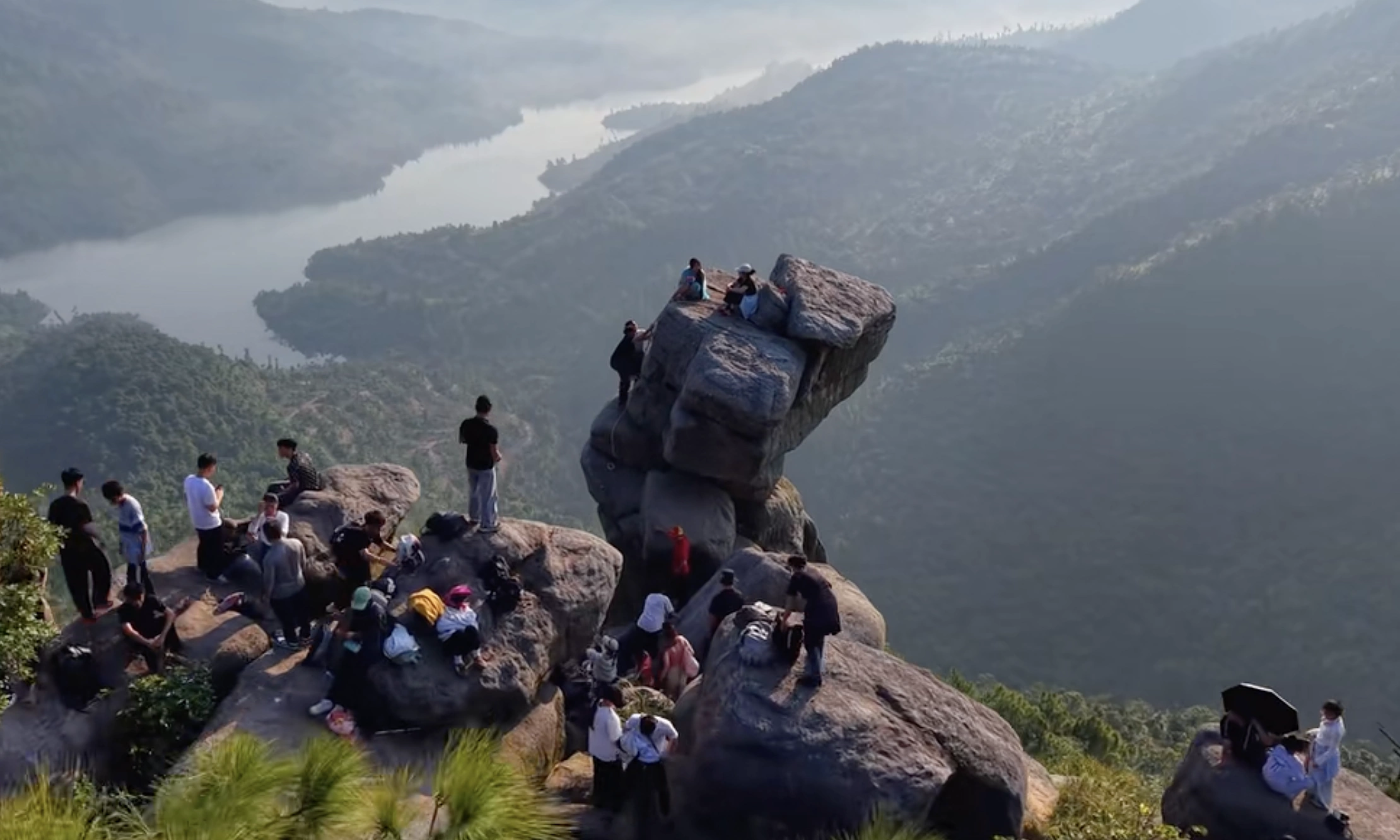
North Sentinel Island, part of India's Andaman and Nicobar Islands, is home to the Sentinelese people, whom scientists consider "the world's most isolated community." This group maintains a Stone Age hunter-gatherer lifestyle, using bows and arrows, spears, and remains almost entirely secluded from the modern world. Their language, customs, and knowledge system remain a mystery to anthropological researchers.
Nature Portfolio, a Springer Nature publishing division that releases significant scientific research in natural and social sciences, has documented over 25 key events concerning contact with the Sentinelese throughout history. Below are some important milestones.
The 1970s-1980s
Indian survey teams attempted to approach North Sentinel Island but met resistance from the indigenous people. Although expeditions persistently left supplies like coconuts, pigs, red cloth, and agricultural tools, the Sentinelese frequently responded with arrows. These gift-dropping activities were part of anthropological surveys and documentary filming co-sponsored by the Anthropological Survey of India and the Andaman & Nicobar Administration.
In the early years (1970-1974), anthropologist T.N. Pandit's team was repelled multiple times. In March 1974, director Prem Vaidya was hit by an arrow while filming. The archer laughed as he rested under a tree, but the film crew still left meat, cloth, and fruit as a friendly gesture.
From 1981 to 1985, the islanders' attitude fluctuated. They gathered in large numbers but did not shoot arrows. However, in 1982, when Pandit approached the island's south side, 11 Sentinelese appeared and shot arrows at Police Chief P.V. Sinari. They then allowed the team to place gifts on the beach.
 |
North Sentinel Island from above. Photo: AP |
In January 1983, about 32 Sentinelese, including women and children, became agitated and brandished arrows, threatening to attack when the team brought machetes, sickles, cups, and buckets as gifts. In December 1985, a survey team accompanied by Deputy Governor T.S. Oberoi, bringing 400 coconuts, again faced 26 people (comprising 13 men, nine women, four children, including two pregnant women) who showed hostile signs.
A sign of appeasement emerged in May 1986 when nearly 100 Sentinelese accepted gifts from the team of Anstice Justin, Deputy Director of the Anthropological Survey of India, and allowed them to plant coconuts. However, tension recurred in 1987, forcing security accompanying Deputy Governor T.S. Oberoi to fire warning shots to disperse the crowd. By February 1988, M.K. Raha's team recorded a friendly attitude from a group of 20 people on the west coast.
1990-2003 Phase
The Sentinelese became more open to approaching teams. In March 1990, about 72 people appeared, happily receiving gifts when a documentary film crew visited the south shore, overlooking an incident where a coconut was accidentally thrown near a group of women.
This openness continued during two subsequent surveys in November 1990 and January 1991. Tension arose only one time in February 1991 when a team member deliberately lingered on the beach to observe. This careless act made the indigenous people wary; a young man drew a knife and gestured a throat-slitting motion, and another threw coral to drive them away.
 |
Friendly contact in January 1991. Photo: Dr Madhumala Chattopadhyay |
During periodic visits in 1993, 1994, and 2003, groups ranging from 38 to 95 Sentinelese consistently made contact in a non-hostile state, happily receiving supplies.
2004-2005 Phase
Following the historic Indian Ocean tsunami disaster in December 2004, a survey team approached the island and found 25 indigenous people at Allen Point. This group was friendly and happily accepted gifts. In March 2005, the gift-dropping mission concluded with a visit by the survey team to the northeast coast. 13 Sentinelese swam out to neck-deep water to receive the final gifts of coconuts and bananas.
2006-2023 Phase
North Sentinel Island recorded several illegal incursions leading to fatalities. In January 2006, two fishermen, Sunder Raj and Pundit Tewari, died from strangulation near the coast. Authorities recovered one body. This event made the tribe hostile towards modern vehicles like helicopters.
Indian authorities continue to conduct periodic monitoring. An aerial and maritime survey in April 2014 confirmed that the Sentinelese remained safe after rumors of a forest fire, maintaining a stable population structure with a balanced male-female ratio and many children.
 |
Sentinelese threatening with bows in 1974. Photo: Nat Geo Image Collection |
In November 2018, American missionary John Allen Chau bribed fishermen to secretly go ashore and was killed by the tribe with arrows. The victim's diary provided additional data on language sounds, an estimated population of about 250 people, and the custom of burying outsiders on a separate beach.
By December 2022, three South Andaman fishermen went missing while offshore fishing. The group's boat drifting to North Sentinel highlighted the life-threatening risks of approaching the island.
Hoai Anh (Source: Nature)