As cold air masses swept across northern China early this year, most residents opted to stay indoors. Conversely, an increasing number of tourists, particularly those from southern China, flocked to the northeastern provinces in search of winter experiences. On the Chinese social media platform Xiaohongshu (RedNote), videos quickly went viral showing tourists riding horse-drawn sleighs through snowy forests, their heads and shoulders covered in white snow within minutes. Netizens likened these images to a modern version of exile to Ningguta, sparking widespread discussion and attracting interest from tourists in some Southeast Asian countries.
Historically, Ningguta, located in Heilongjiang province in northeastern China, was a region associated with exile and hardship. According to Professor Qi Zhongming, Dean of the School of Literature at Mudanjiang Normal University, Ningguta was established in the mid-17th century as a vital military and administrative center during the Qing dynasty.
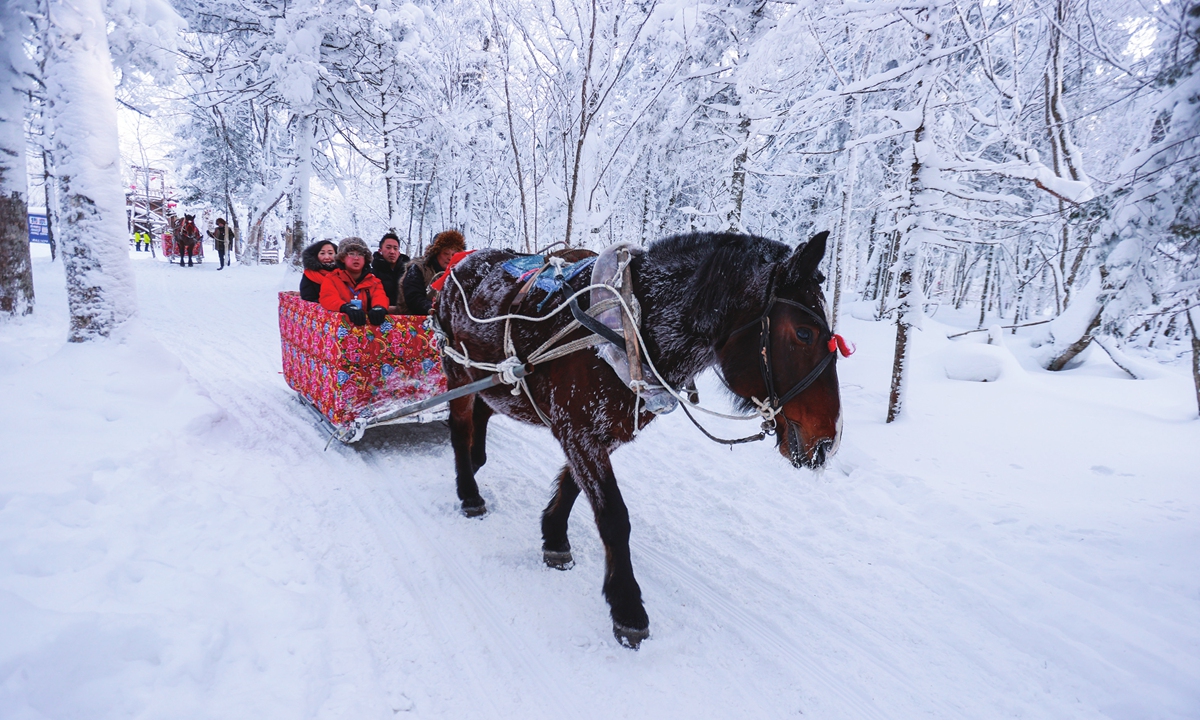 |
Tourists experience a horse-drawn sleigh ride in Jilin province, northeastern China, on 17/1.
From 1655, it became a notorious destination for exiles, known for its harsh climate and isolated location. The name Ningguta originates from the Manchu language, meaning "six residences," referring to the indigenous tribes. Professor Qi believes that these exiles played a role in fostering economic and cultural development and bringing knowledge from the Central Plains to this remote region.
Today, beyond the area around Jingpo Lake, many destinations in Heilongjiang, Jilin, and even Shandong are labeled "Ningguta," referring to places with deep snow, frigid temperatures, and experiences challenging enough for tourists. This shift from painful historical memory to recreational tourism is evident in how local areas structure their tours.
Qi Qi, a local tour guide, stated that winter temperatures in the Heilongjiang region often drop to around -20 degrees C, and most tourists come from southern China. A popular experience is a sleigh ride, lasting about 10 minutes, but long enough for "the cold to seep into one's bones." Horse-drawn sleighs were once an essential mode of transport for residents of snow-covered regions. The guide often recommends this activity for children over 4 years old. After the sleigh ride, tourists are taken to heated huts to warm up.
At some tourist spots, visitors pay 50-100 CNY (approximately 190,000-380,000 VND) to ride a sleigh across snow more than 1 meter deep. Some locations enhance the immersive experience by having tourists wear "prisoner" shirts and symbolic shackles.
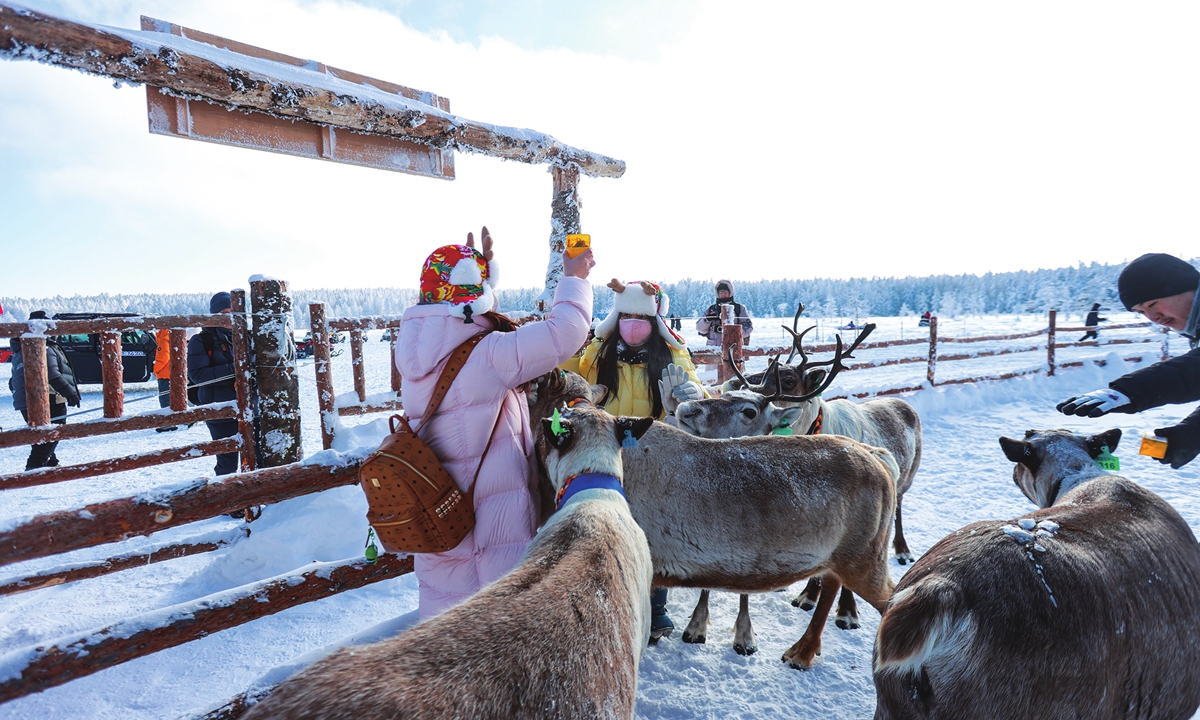 |
Tourists interact with reindeer. *Photo: VCG*
Beyond entertainment, many tourist areas integrate educational content, featuring stories of exiled literati such as Wu Zhaoqian, a renowned poet and scholar from the early Qing dynasty. On social media, this trend has drawn numerous comments.
"In the past, exile was hell; now we pay to shiver and cheer," one tourist remarked. Some believe that combining play with learning history, along with experiences like sleigh rides, hot spring baths, and cast-iron hotpot, makes it all worthwhile.
Xiao Xian, who experienced the "exile to Ningguta" tour in late December 2025, said she felt as if she had stepped into the exile scenes from the famous palace drama *Empresses in the Palace*.
In Mudanjiang, when temperatures drop to around -10 degrees C, tourists change into Qing dynasty attire and interact with actors portraying historical figures amidst reconstructed ancient architecture and snowy landscapes.
"The most surprising aspect was the nighttime 'snow dance floor,' where actors pulled the 'exiles' out to dance," Xiao Xian said.
According to experts, beyond its novelty, this trend reflects how local areas are transforming their cold climate into an economic advantage. These tourism projects, primarily operated by local authorities with fixed itineraries and safety measures, are helping to attract both domestic and international visitors.
Du Jinlong, a culture critic in Beijing, suggested that the trend is linked to a shift in consumption habits, with young people prioritizing unique experiences and emotions over traditional material values.
Mai Phuong (According to Global Times, China Daily)