On 26/7, Russian officials announced that a 7-member climbing team encountered an accident while attempting to summit Mount Elbrus due to a snowstorm. Five members of the team have been confirmed dead; however, the bodies of three victims have not yet been recovered from the mountain due to extreme weather conditions.
Russia's Ministry of Emergency Situations reported that rescue forces brought down the bodies of two climbers from an altitude of 5,350 m. They also successfully rescued the remaining two members and transferred them to a medical facility for special care.
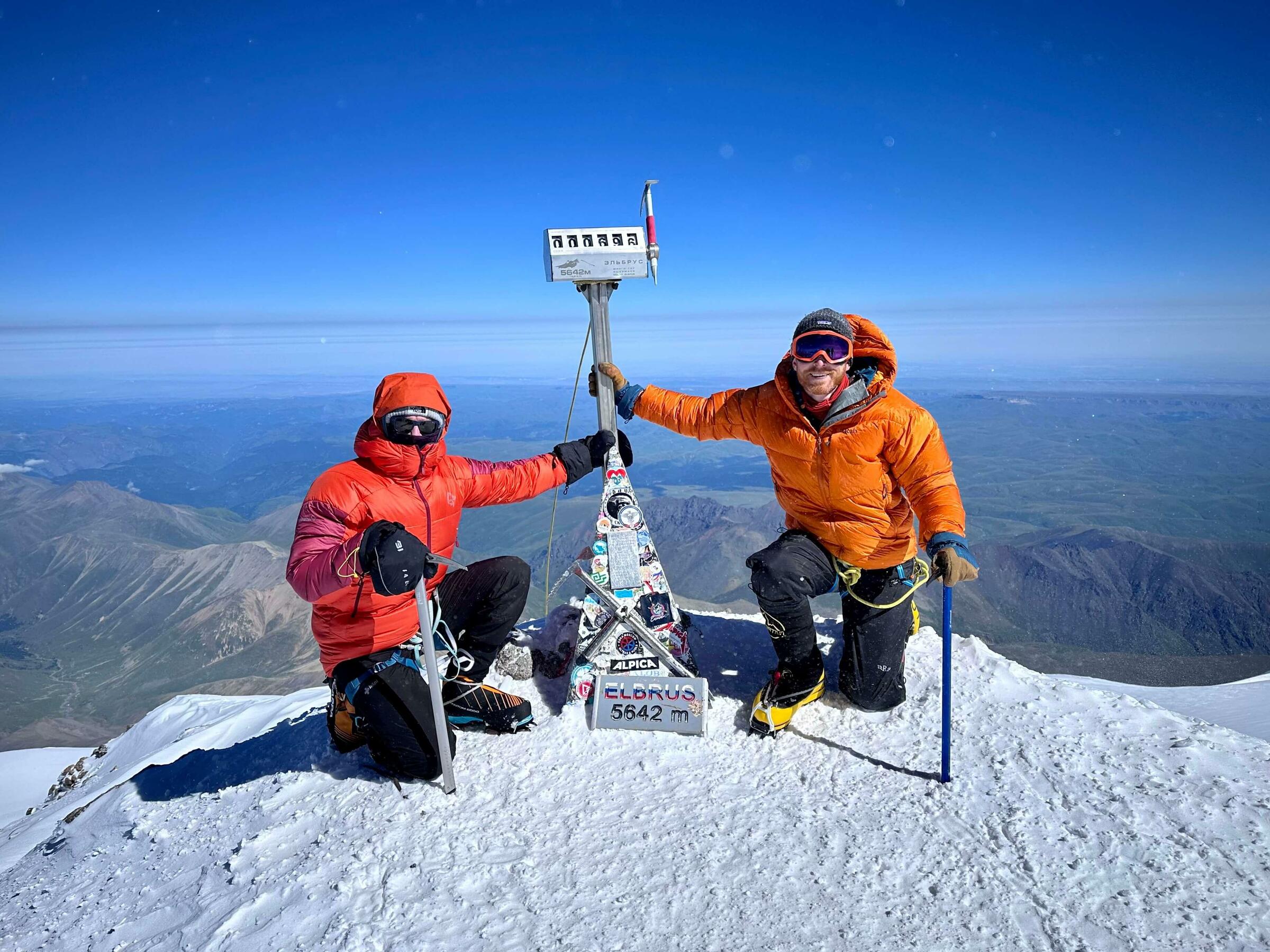 |
Two climbers on Mount Elbrus in 2024. Photo: Mahony
According to Bosnia and Herzegovina media, the 7 climbers were from the city of Zenica, including a married couple and a female doctor working at a local hospital.
Mount Elbrus, standing at 5,642 m, is located north of the border between Russia and Georgia. As Europe's highest mountain, it is known for its treacherous, unpredictable weather and sudden snowstorms. Situated at the junction of the Black Sea and the Caspian Sea, temperatures can drop suddenly from -30 degrees C to -40 degrees C in minutes, accompanied by strong winds gusting over 100 km/h.
While Elbrus's climbing routes are not as technically complex as those on Everest or K2, the annual death toll remains high, ranging from 15 to 30 people.
The greatest risks stem from extreme weather and acute mountain sickness (AMS). Because a cable car system transports climbers to an altitude of 3,800 m, many climbing teams often become complacent, skipping the necessary acclimatization process. This oversight can lead to acute mountain sickness, cerebral edema, or pulmonary edema.
Tuan Anh (According to CNN)