Eva Sandoval, a travel writer for the BBC, recently shared an anecdote about her American friend seeking advice on what to wear for her first flight to Europe, aiming for both comfort and style. Sandoval herself often travels in one of two modes: working with hiking boots and a backpack, or moving lightly with a minimalist wardrobe of 5 neutral-colored items, leaving ample space for souvenirs.
Many tourists, however, opt for floral dresses, summer white outfits, or comfortable clothes resembling pajamas. This contrast highlights a common phenomenon: why do so many people completely change their personal style when they travel, as if transforming into a different person?
The concept of a dedicated travel wardrobe emerged with the advent of leisure tourism in the 19th century, according to Marta Franceschini, head of communications at the European Fashion Heritage Association. "Before this period, travel attire was primarily practical, associated with migrations, pilgrimages, military movements, or trade," she explained.
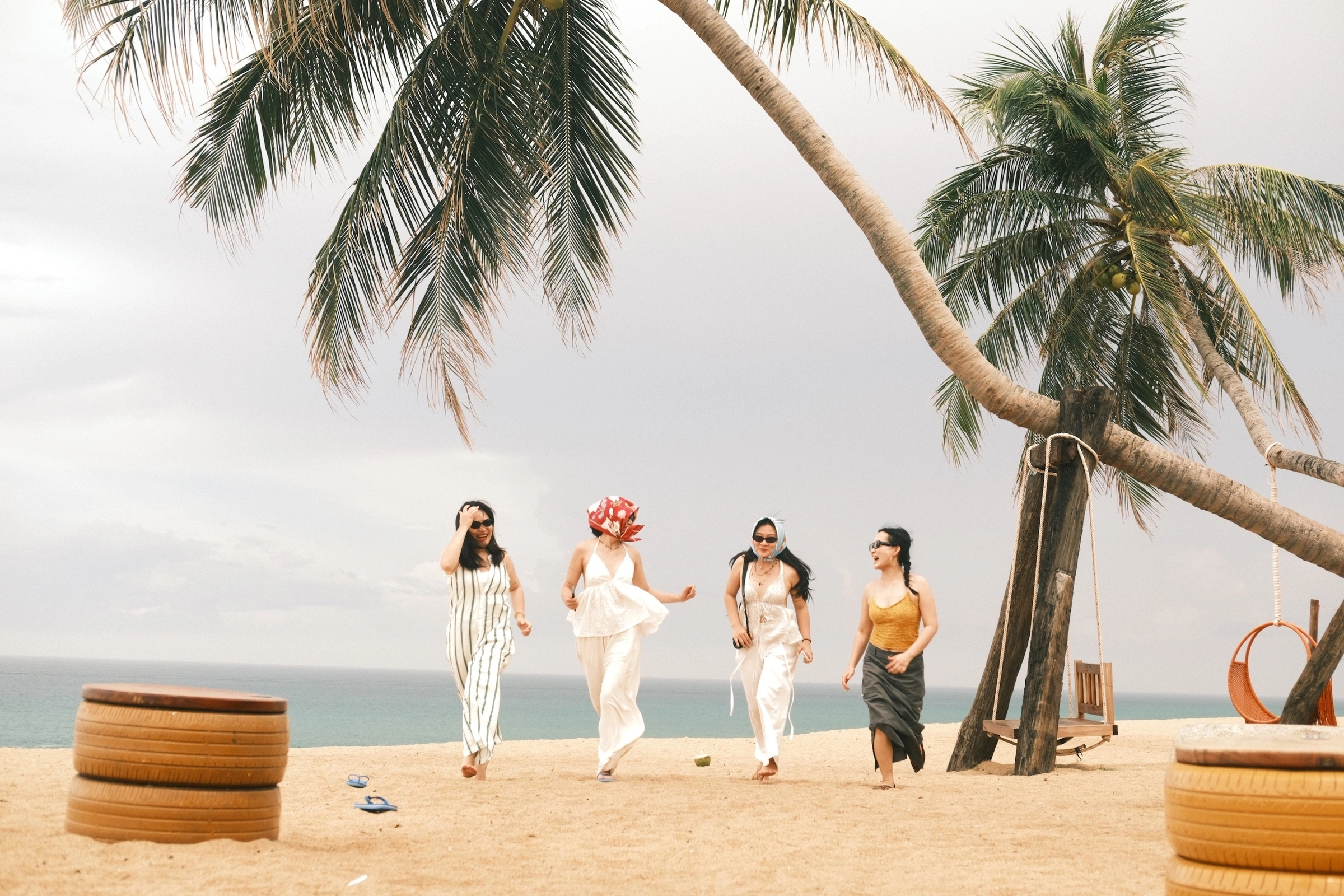 |
Travelers check in at Lo village beach, Phu Yen. *Photo: Tu Nguyen* |
The rise of the middle class and the expansion of Europe's railway network in the mid-19th century transformed coastal towns into popular holiday destinations. This development spurred the creation of travel wardrobes that blended elegance and comfort. Warm climates necessitated light, breathable materials like silk and linen. By the interwar period, designers such as Coco Chanel championed a free-spirited style, introducing simple knitwear, wide-leg trousers, and swimwear.
The post-World War II economic boom and the advent of commercial aviation democratized travel. From the 1950s to the 1970s, resort wear evolved into a distinct fashion segment, featuring Capri pants, resort prints, kaftans, and cruise collections. Dressing appropriately for unfamiliar climates also allowed travelers to relax conventional social dress codes, fostering a sense of liberation.
A significant motivation for changing travel attire is the desire to avoid looking like a stereotypical tourist. Lifestyle magazines frequently publish articles advising against formulaic outfits of t-shirts, backpacks, and baseball caps, instead suggesting minimalist wardrobes inspired by the destination itself. Doctor Charlotte Russell, founder of The Travel Psychologist, observed that the concept of a tourist often carries negative stereotypes such as naivety, inexperience, cultural clumsiness, or susceptibility to price gouging. Therefore, it is understandable that travelers want to distance themselves from this image by altering their clothing choices.
Vanessa Friedman, fashion director and critic for The New York Times, stated that when asked how to avoid looking like a tourist, she often consults with locals. "I think people dress to belong to a place; when traveling, they don't want to feel out of place or too conspicuous," she shared. This desire to assimilate or symbolically participate in the local culture is a phenomenon Marta Franceschini calls "dress mimicry." Items like Bermuda shorts or Hawaiian print shirts, while sometimes stereotypical, express a cultural aspiration and a wish to blend in.
However, there can be a disconnect between what tourists wear and what they believe locals wear. In season two of the series The White Lotus, set in Sicily, Italy, the character Tanya McQuoid wore a flowing pink dress, a silk scarf, and oversized sunglasses to emulate Italian star Monica Vitti while riding a Vespa. Yet, the local hotel manager humorously compared her to the cartoon character Peppa Pig. Many residents in southern Italy assert that those wearing flowing maxi dresses and wide-brimmed hats on the streets are almost always tourists.
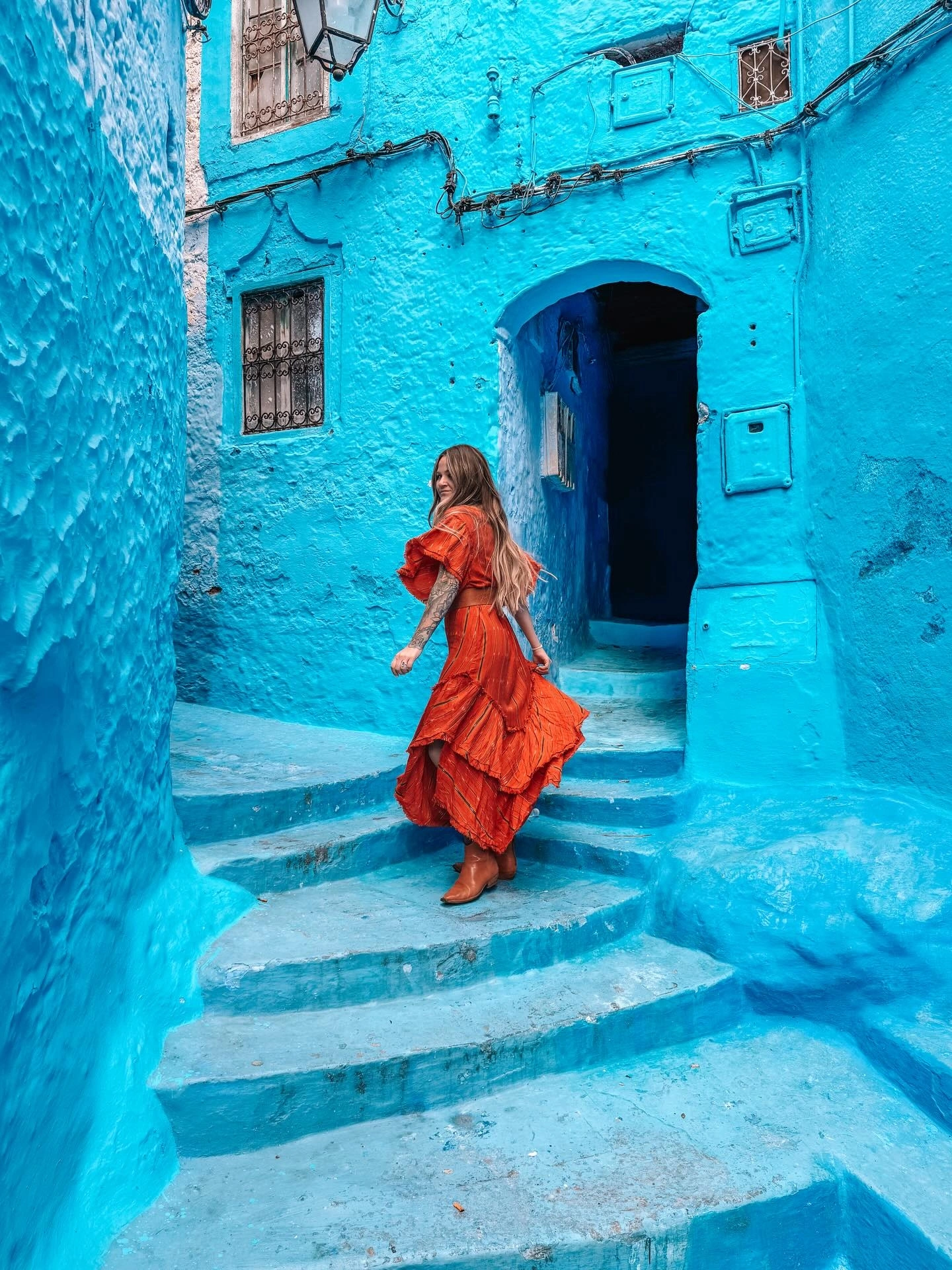 |
Travelers check in in Marrakech, Morocco. *Photo: radi_cal_jewelryco* |
The rise of social media also shapes travel attire. The internet is filled with images of influencers dressed elaborately in front of world wonders or natural landmarks. Doctor Andrew Stevenson, author of The Psychology of Travel, observed that people previously traveled to photograph landscapes and objects. "Now, many photograph themselves, with the landscape merely serving as a backdrop," Doctor Andrew Stevenson said. Consequently, destinations become backdrops, and attire functions as a tool for shaping a traveler's personal brand.
On a positive note, arriving in a new place brings excitement, and clothing is a way to reflect that joy. Franceschini analyzed that travel attire serves as a temporary liberation from everyday norms. On vacation, people allow themselves to wear outfits that might be considered excessive or impractical in their daily work environment. This act expresses a spirit of freedom and self-indulgence.
Doctor Russell suggests that most people work all day at computers or wear fixed uniforms, prioritizing functionality and practicality. A vacation offers an opportunity to explore a different aspect of themselves, a more relaxed and free version. "If you want to wear a beautiful dress or a vibrant shirt and feel comfortable in it, that's perfectly fine; life is too short to worry about others' judgments," Doctor Russell concluded.
Mai Phuong (According to BBC)