The incident took place on 30/5, caused by a shortage of ground staff that led to extended passenger wait times, The Sun reported on 3/6.
A woman traveling with Ryanair to London Stansted Airport, UK, described the scene as "very chaotic", noting "no coordinators at the airport" and continuous pushing and shoving. Many passengers could not reach their departure gates in time. Although she eventually boarded her flight, the captain later announced that 150 passengers had been stranded.
Her flight and three others, bound for Marrakech, Morocco; Tunisia; and two other flights to London, UK, were all boarding around the same time. Reports indicated that approximately 500 people were stranded, including passengers with young children.
A Ryanair spokesperson confirmed the incident to The Independent, stating, "The delays occurred due to a shortage of control staff at Toulouse-Blagnac Airport; some passengers who had booked flights from Toulouse to London Stansted were unable to reach the boarding gate area and missed their flights."
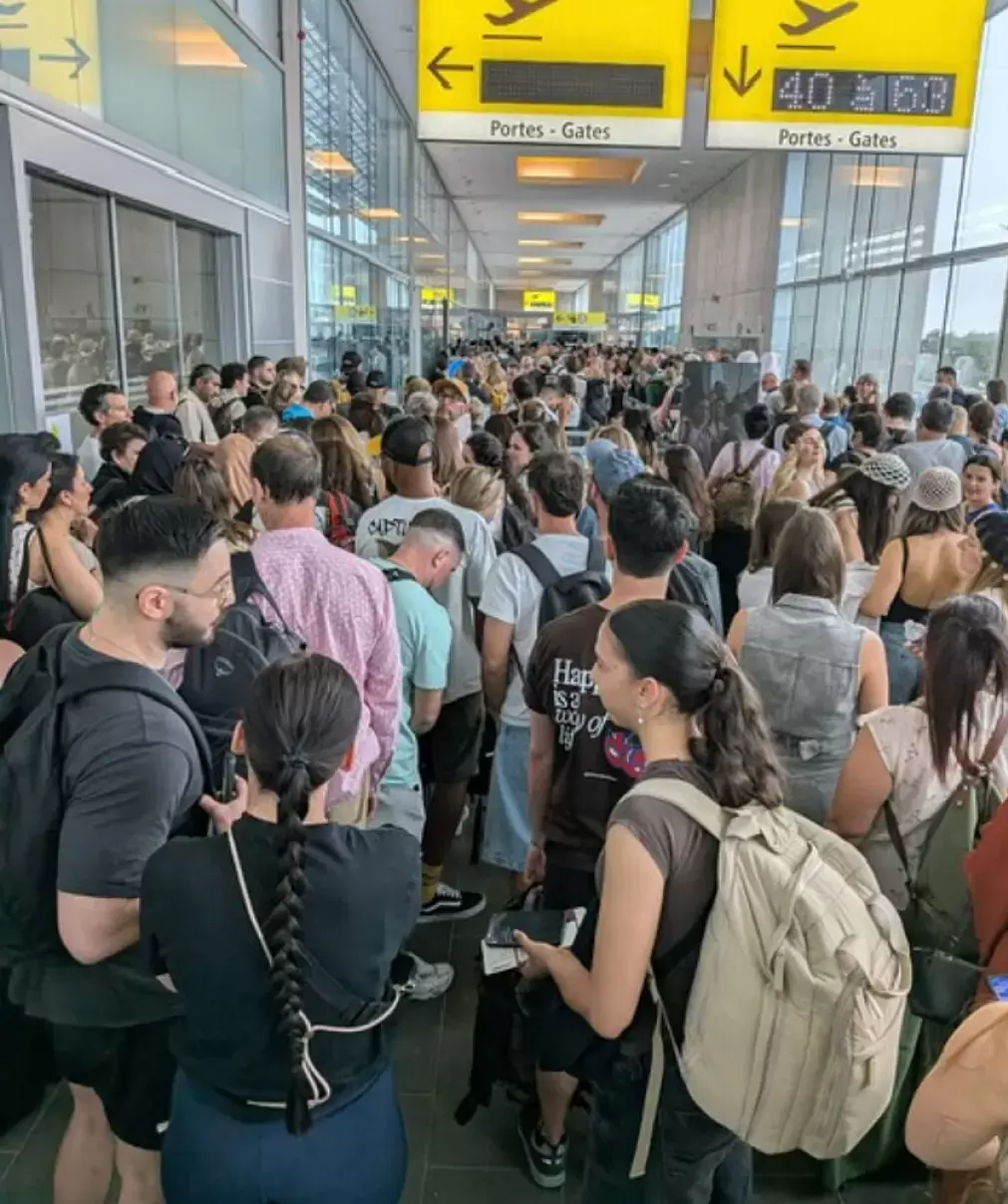 |
Passengers queuing at Toulouse Airport. *Photo: Connexion* |
The UK Civil Aviation Authority states that airports are responsible for ensuring smooth operations, though incidents can still arise. Passengers are typically not entitled to compensation for airport delays, such as those at security checks or passport control.
Airlines are generally not obligated to provide free alternative flights when the cause does not stem from their fault. However, some carriers may voluntarily assist with rebooking or finding alternative solutions.
"Passengers should contact their travel agent or airline for assistance in booking alternative flights, but additional fees may apply. If travel insurance has been purchased, passengers should contact their provider to check coverage terms for this situation, and retain all relevant receipts and documents," the UK Civil Aviation Authority website advised.
The new entry/exit system (EES) is considered a primary cause of long queues at border control areas. Consequently, many airlines advise passengers to arrive at the airport at least three hours before their scheduled departure.
EES replaces manual passport stamping for most non-EU travelers entering or exiting through the external borders of 29 European countries for short stays. This system electronically records passport information, fingerprints, and facial images each time an individual enters or exits the Schengen area.
During its implementation, many airports currently maintain manual passport checks alongside the electronic system to mitigate congestion and delays.
By Tam Anh