 |
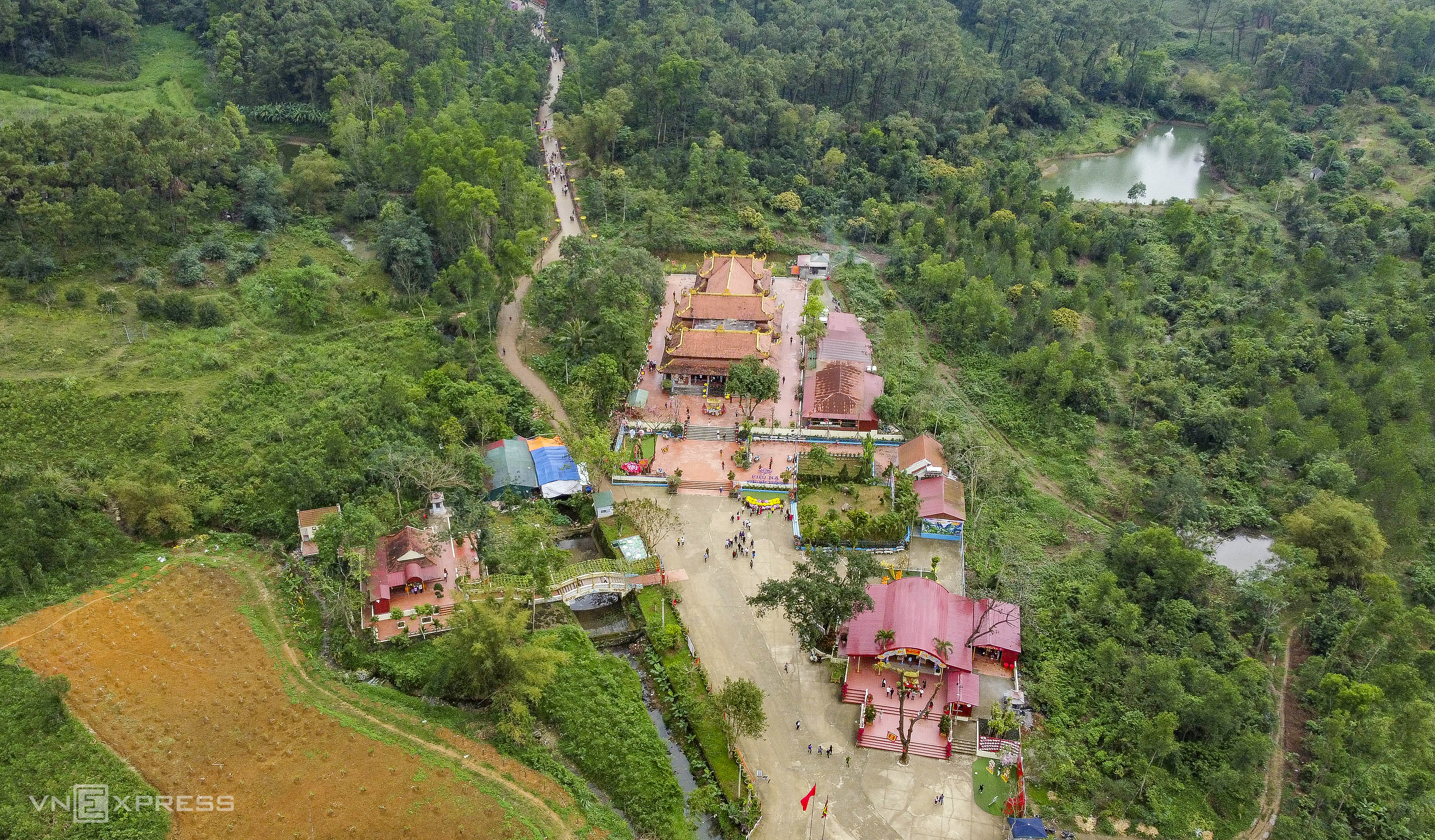
Phu Na, a revered spiritual destination in Xuan Du commune, nestled at the foot of the Ngan Nua mountain range, has witnessed a record surge in visitors this year. Tens of thousands of pilgrims are flocking to the site, particularly drawn to the long-standing custom of collecting "holy water" from a small stream adjacent to the temple, believed to bring good luck and peace. Xuan Du commune leaders reported that Phu Na welcomed over 50,000 visitors at the beginning of the year, marking the highest number ever recorded. During the peak days following Tet, crowds stretched from early morning until late afternoon, eager to offer incense and partake in the holy water ritual.
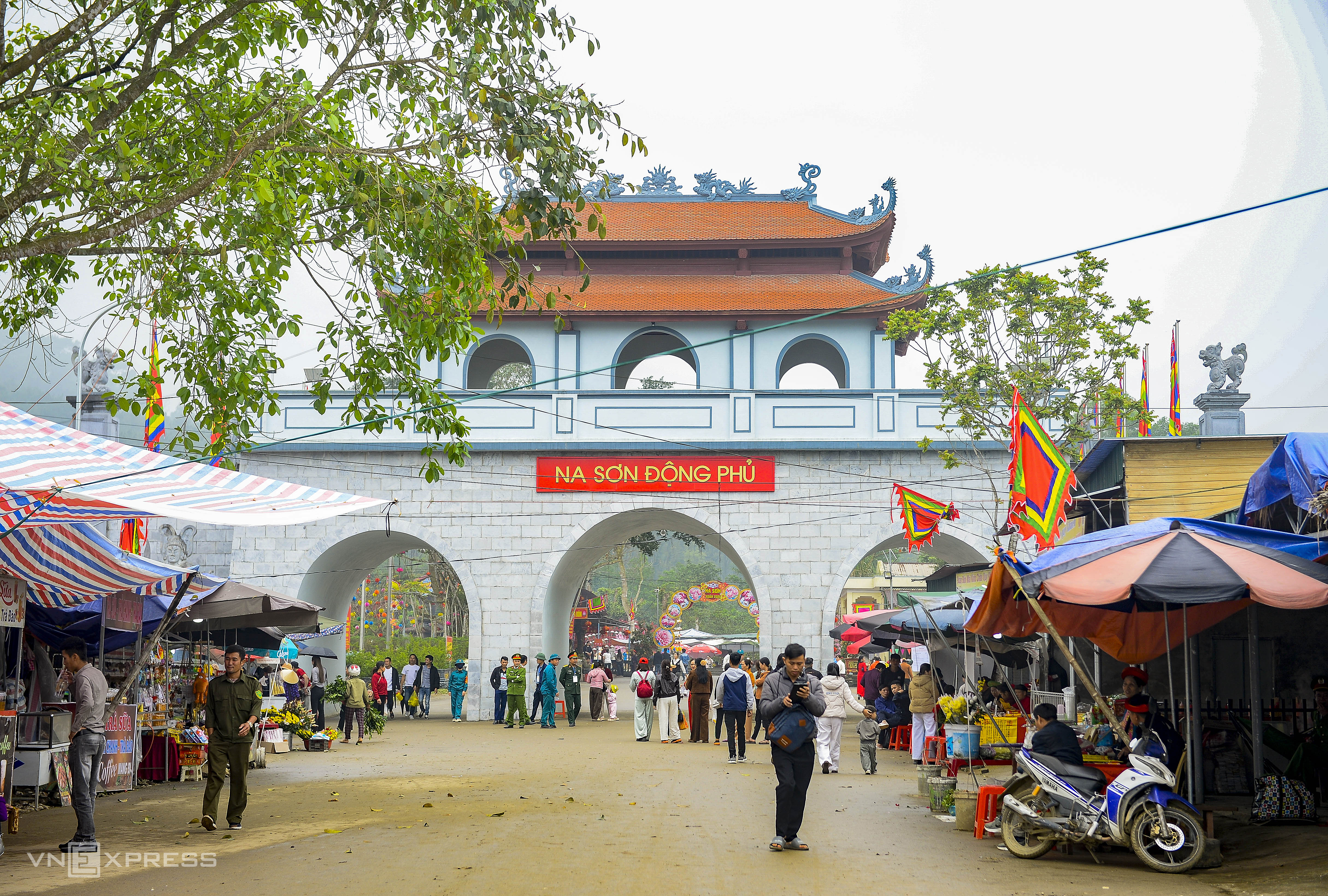 |
The three-arched gate leading to Phu Na.
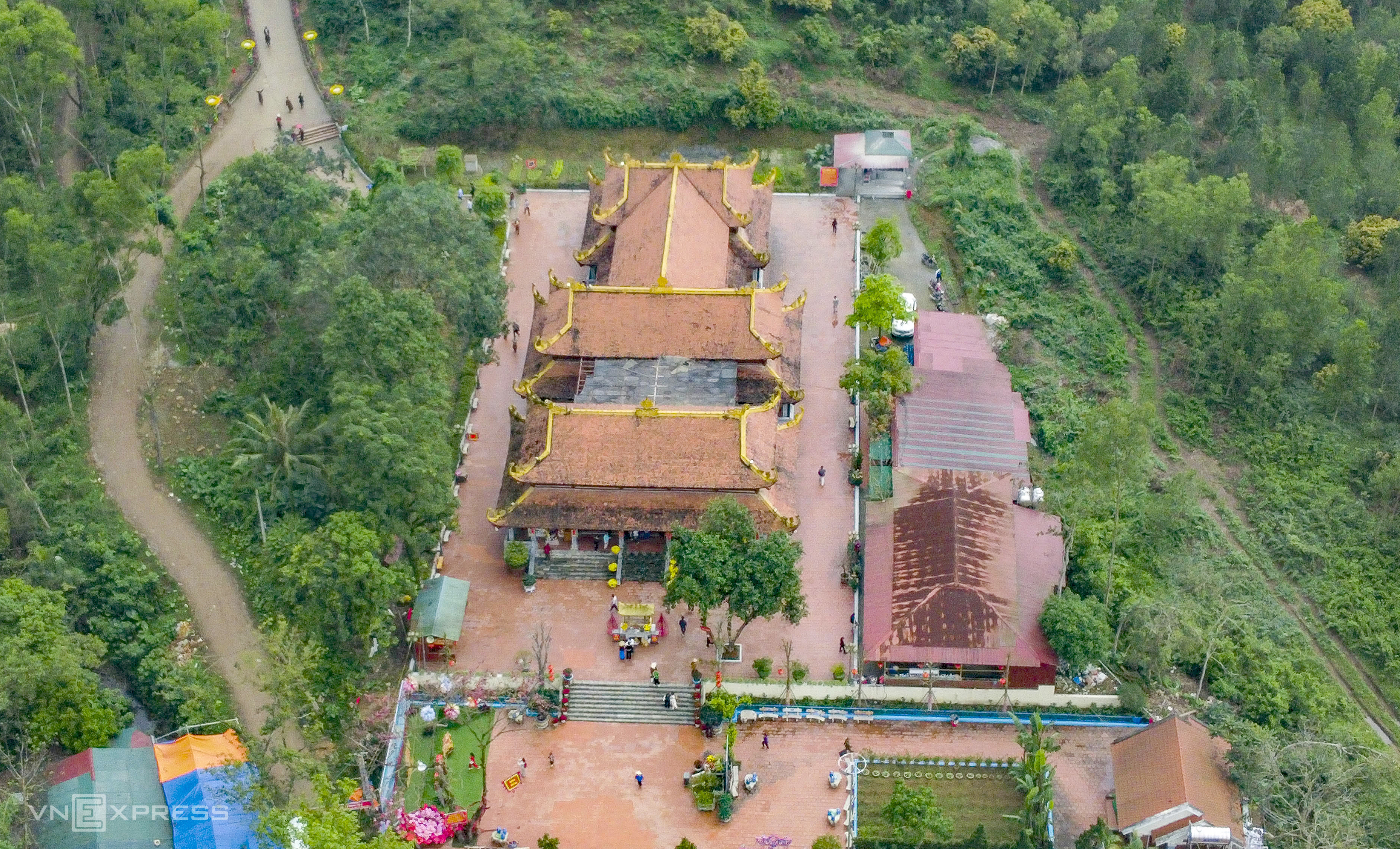
This historical relic complex, also known as Na Son Dong Phu, is situated amidst lush mountains and forests, approximately 30 km from Thanh Hoa city center. According to historical records and folk legends, the Nua mountain area is closely associated with the 248 uprising led by Ba Trieu against the Eastern Wu army. It served as a strategic location where the Queen trained her troops and stockpiled provisions before launching her rebellion.
 |
The relic complex features the Mother Goddess worship and other figures in the folk pantheon such as Mau Lieu Hanh, Chau Ba, Quan Hoang, Co Chin.
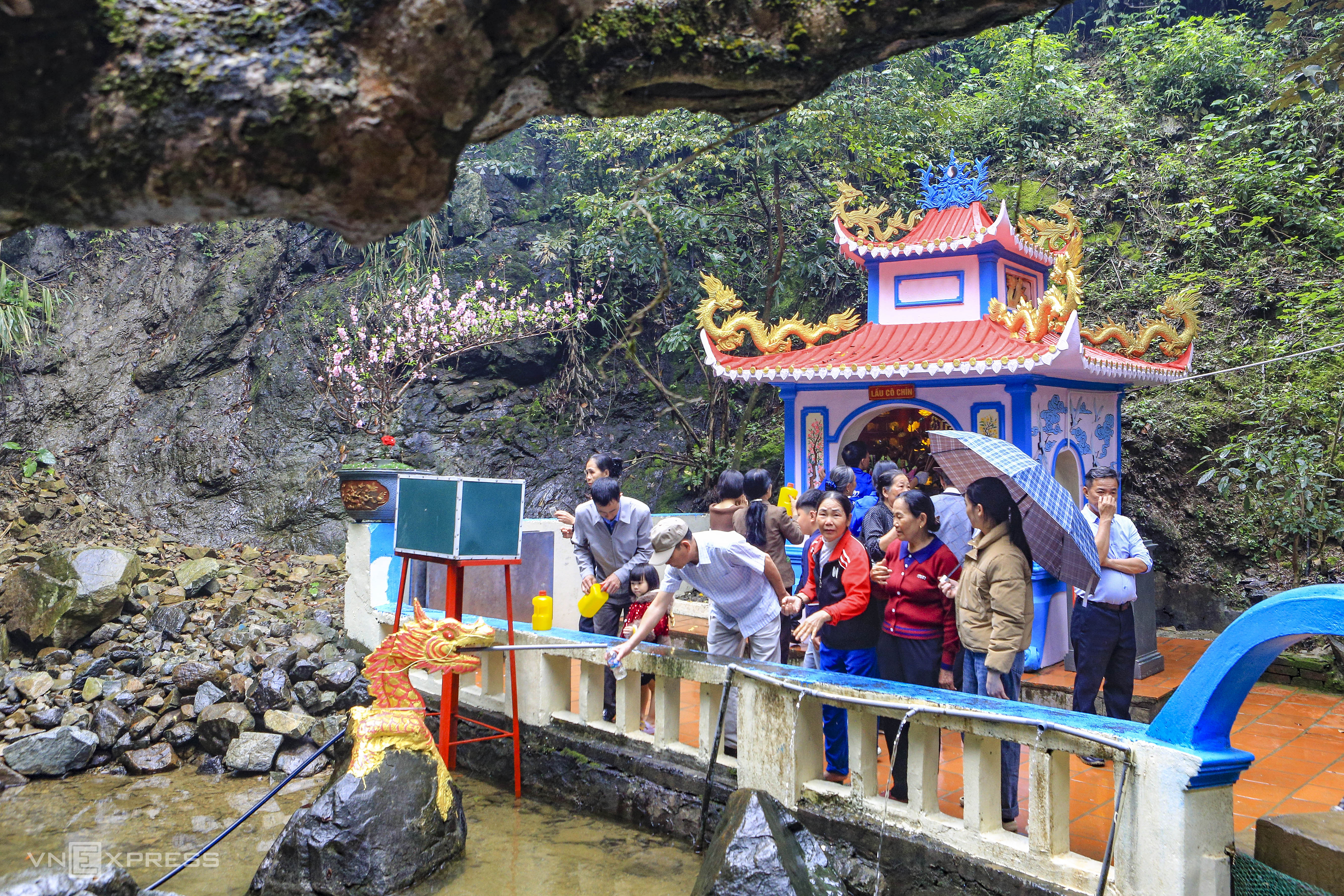 |
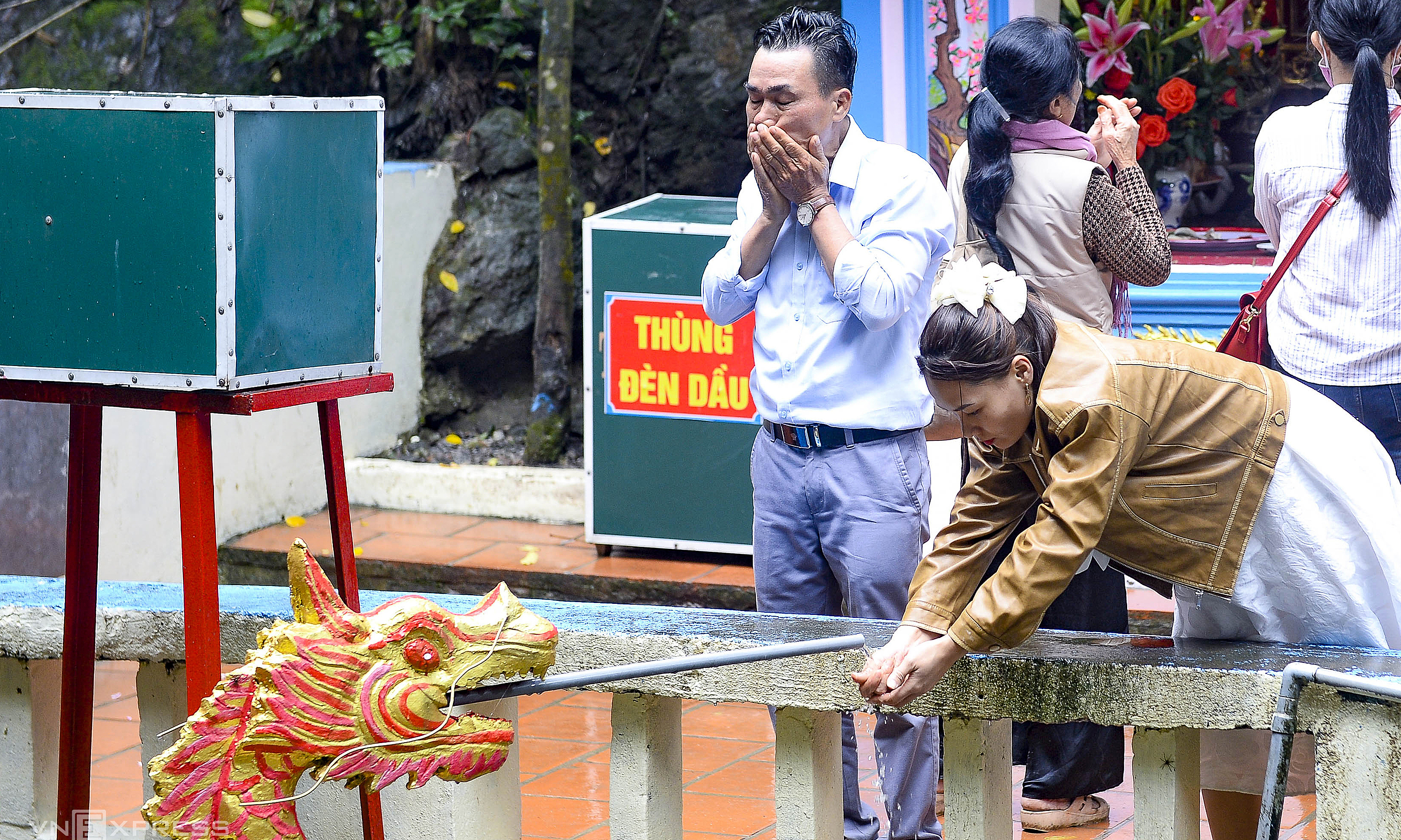
The small stream area next to Co Chin temple has become the most frequented spot. The water flowing from the rock crevice, which never dries up throughout the year, is revered by locals as "holy water" or "sacred water".
 |
Many people bring plastic bottles and containers, queuing from early morning to collect water. Some wash their hands and faces directly at the stream, believing it washes away the misfortunes of the old year and welcomes new vitality.
 |
Le Thi Mai, a visitor from Dong Son ward, shared that her family comes to Phu Na every year for one bottle of water at the beginning of the year. "I bring it home to place on the altar, and use a little to make tea for good luck," she explained. "It's a spiritual belief, a prayer for my family's health and prosperity."
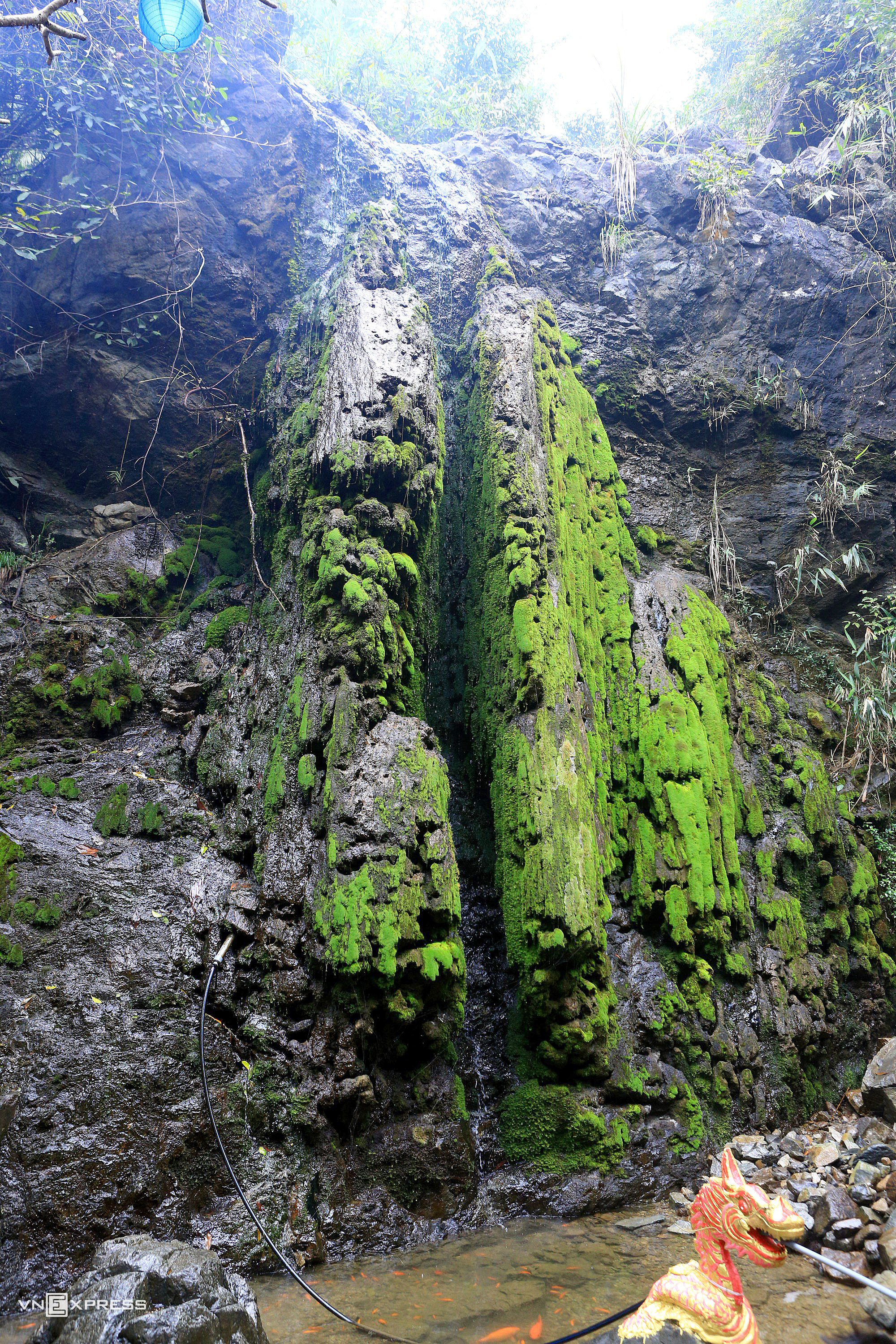 |
Next to the ancient temple, a spring flows from a small, moss-covered rock crevice. This crevice is part of the Nua mountain range, composed of many peaks, 300-500 meters high, spanning across the former three districts of Trieu Son, Nong Cong, and Nhu Thanh.
According to folk belief, the spring water originating from Nua mountain carries the inherent energy of the mountains and forests. Consequently, collecting this water at the beginning of the year is seen as a way to receive heavenly blessings and to express wishes for peace and prosperity throughout the year.
To ensure order, the relic management board deploys staff to guide visitors, reminding them to collect only a moderate amount of water and maintain general hygiene.
 |
 |
This year, the Phu Na relic management board decorated with various spring miniatures and hung colorful lanterns and conical hats along the pathways.
 |
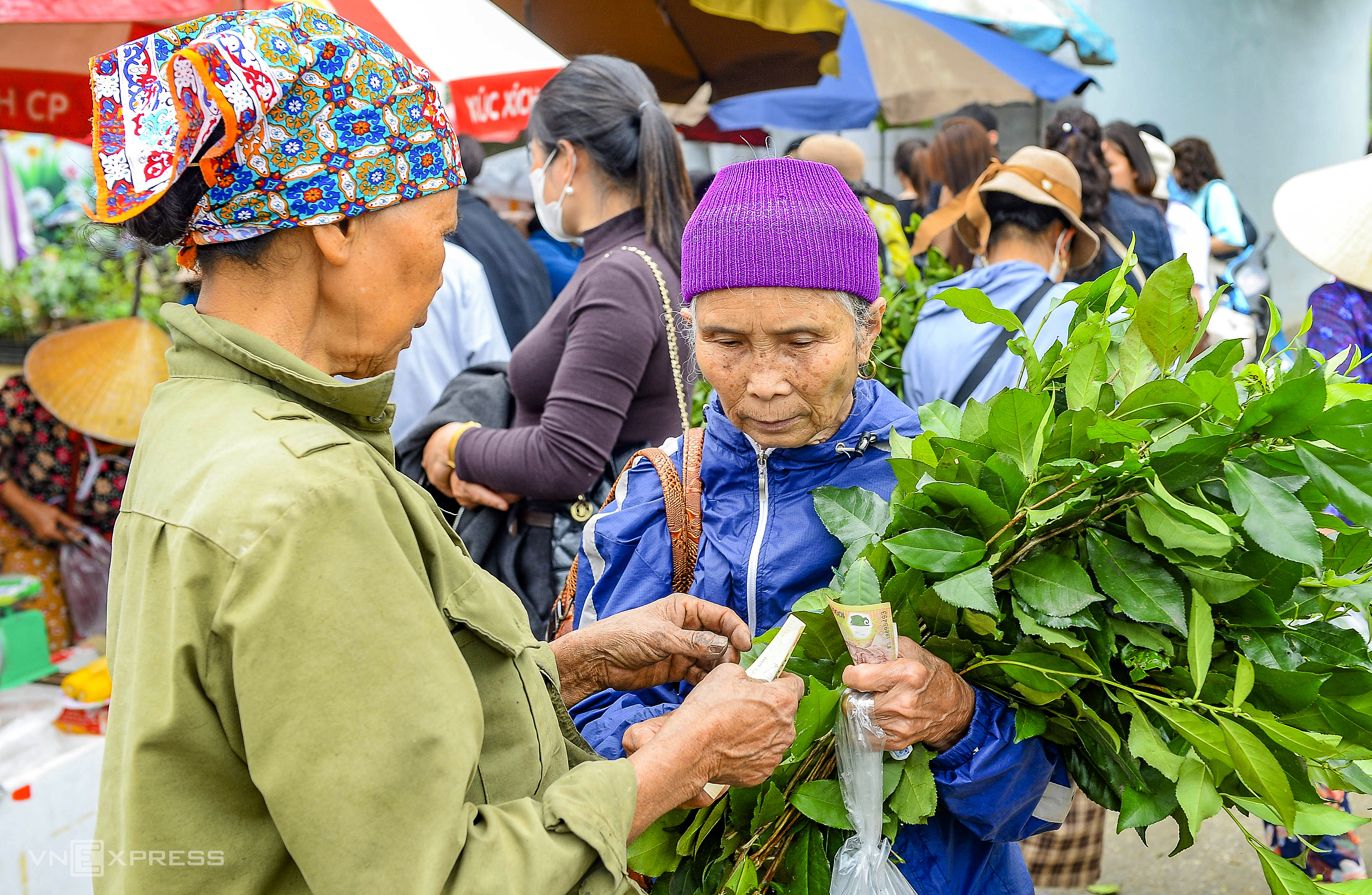
Beyond seeking peace and enjoying the scenery, visitors to Phu Na can purchase diverse plants and saplings, such as tea plants, bitter leaves, and young peach trees, which are considered new year's spring blessings. They can also savor local delicacies like boiled arrowroot, galangal, yam, and white arrowroot, prepared and sold by local residents.
 |
Phu Na was established in the early 20th century, featuring architecture in the Nguyen dynasty style. In 1993, this historical site was recognized as a national historical-cultural relic and scenic spot.
The annual festival season at Phu Na typically extends until the end of the first lunar month.