A 110 kV Ha Tien - Phu Quoc submarine cable was damaged on 29/11 when a coastal road construction unit drove piles, causing widespread power loss. Areas including Duong Dong, Cua Can, Cua Duong, Ham Ninh, and the entire northern part of the island were affected. Over 30,000 households and numerous tourism establishments experienced disruptions, alongside an interruption to the clean water supply.
Many foreign tourists, expecting a tropical paradise, instead faced a challenging reality, struggling with basic living necessities.
Tina Compton, a British tourist, and her husband arrived in Phu Quoc on the evening the incident occurred. Their 15-day stay in the Duong Dong area began with climbing 100 steps to their room in darkness, as the elevator was inoperable. They relied on a phone flashlight for light, with the hotel's lighting system completely out.
"The hotel provided limited information. We did not know when the power would return; everything was vague", Tina shared.
Beyond the lack of light, the power outage led to a loss of running water. Although the hotel announced a rotating power schedule, it often did not adhere to the timings. Power was frequently cut earlier and restored later than expected, disrupting guests' personal hygiene and meal plans. On 2/12, Tina's husband slipped and fell on the stairs in the dark while trying to go out for dinner.
 |
Tina and her husband in Phu Quoc. Photo: NVCC |
For digital nomads combining leisure with remote work, this incident resulted in a double setback. Ewa, another British tourist, who came to Phu Quoc with her wife to rent a house for one month and create vlogs, found herself in a dilemma. Their rented house was not in a priority power supply zone, rendering Wi-Fi and electronic devices useless.
"We came here for creative inspiration by the beach, but it has been a series of days grappling with heat, darkness, and silent tech devices", Ewa stated.
To continue working, Ewa had to travel to a friend's hotel to charge devices and work during the limited hours of available electricity. Their initial excitement turned into a struggle for survival, using camping flashlights as their main light source and anxiously awaiting news on the problem's resolution.
"Everything became more difficult, far from what I initially imagined, but Phu Quoc is still beautiful, and I do not think things are too bad", she remarked.
 |
Ellina takes a photo outside her bungalow. Photo: NVCC |
The stories of Tina and Ewa highlight the vulnerability of the tourism sector when infrastructure issues arise. Tina reported that she and her husband spent approximately 2,300 USD (over 56 million dong) on flights and hotel accommodation for this trip, excluding dining expenses. This was money they had saved for a long time, expecting corresponding service quality.
"Paying 40 USD per night for a hotel is not excessively high, but guests have a right to expect basic amenities like electricity and water", the tourist commented.
By 3/12, unable to endure the inconvenience, Tina requested a refund from her hotel and moved to a resort in the southern part of the island.
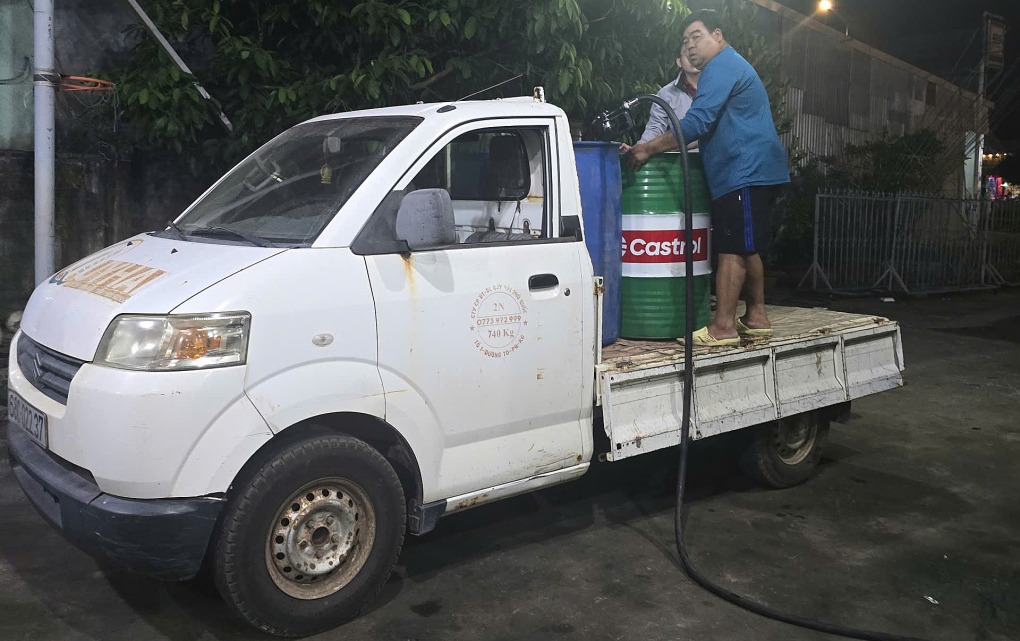 |
A hotel employee purchases fuel for a generator. Photo: Thuy Trang |
While tourists adjusted to inconvenient conditions, accommodation businesses in Phu Quoc also faced significant challenges. A survey revealed that generator operating costs were eroding the profits of small and medium-sized enterprises. A 30-room hotel in Duong Dong reported spending 15 to 20 million dong daily on diesel fuel to run generators, ensuring power during evenings and peak hours for guests.
Many business owners worry that if the issue is not resolved before the Christmas and New Year peak season, Phu Quoc's tourism image will suffer among international visitors, who are sensitive to service quality and safety.
Ellina, a tourist from Kazakhstan staying at a bungalow in Duong To, reacted more calmly but acknowledged the significant inconvenience. She had to change her daily routine, seeking cafes for work and limiting nighttime outings due to security concerns in areas lacking streetlights.
"Although Phu Quoc remains very beautiful, this situation truly tests tourists' patience", Ellina stated.
For temporary relief, An Giang Power Company reallocated the load, shifting power from the southern region of the island to maintain supply for residential areas. They also mobilized 20 diesel generators from member companies to the island, adding approximately 2,5 MW of generation capacity.
The power industry assessed that repairing the submarine cable is complex, requiring extensive personnel and time, potentially extending for months. While awaiting the permanent fix, the power utility is coordinating with provincial departments to urgently erect a temporary 110 kV overhead line, consisting of about 5 poles, running from the Ha Tien shoreline connection point to the fault location to ensure power supply for the island.
Tran Huu Hiep, Vice Chairman of the Mekong Delta Tourism Association, noted that the recent power outage serves as an important warning for Phu Quoc, an island developing rapidly but remaining vulnerable to infrastructure shocks.
He emphasized that the island cannot rely on 70% of its power capacity from a single submarine cable and needs to find a solution soon. Phu Quoc must develop a renewable energy strategy, including solar and wind power, suitable for its natural conditions. Large accommodation facilities should implement mandatory backup power standards, ensuring operation for a minimum of 48-72 hours, similar to the Hawaii model.