On 16/12, Thailand's Department of Livestock Development announced that its quarantine unit and service dog team found a suitcase containing various pork products, including pork sausage, marinated pork, and ground pork, at Suvarnabhumi Airport in Bangkok. These items were discovered in the luggage of a Vietnamese passenger.
The products are strictly prohibited from entering Thailand under regulations designed to prevent African swine fever (ASF). Following the detection, all products were confiscated and processed according to established procedures.
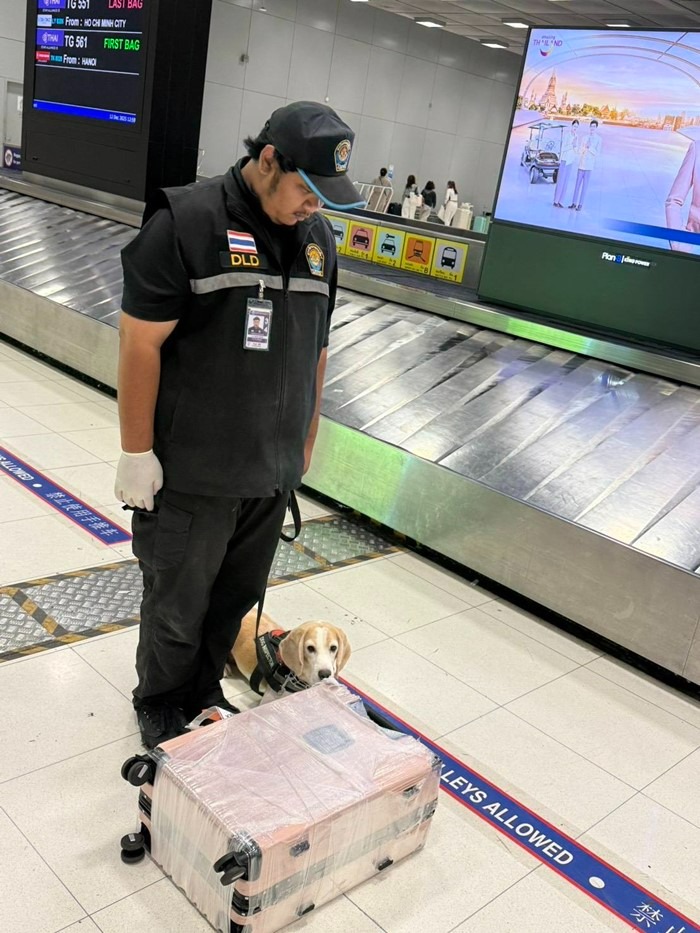 |
A service dog sniffing a suspicious suitcase at Suvarnabhumi Airport. *Kapook* |
The incident garnered significant attention from many Thais. Public reactions varied, with some suggesting the diligent service dogs deserved sausage as a reward. Others used the opportunity to warn travelers about the importance of thoroughly researching permitted food items when entering Thailand to avoid severe penalties.
Thai regulations explicitly forbid passengers from bringing pork or pork products into the country. This prohibition, enacted under the Animal Epidemic Act, aims to prevent the spread of dangerous animal diseases like ASF. The list of banned items is comprehensive, covering fresh, frozen, and processed pork products such as pork sausage, sausages, Chinese sausages, bacon, and pate.
Violators face serious consequences, including the confiscation of all prohibited goods. Penalties can range up to 200,000 baht or imprisonment for up to two years, or both. To enforce these regulations effectively, Thailand deploys specialized service dogs at international airports, specifically trained to detect animal products in passenger luggage.
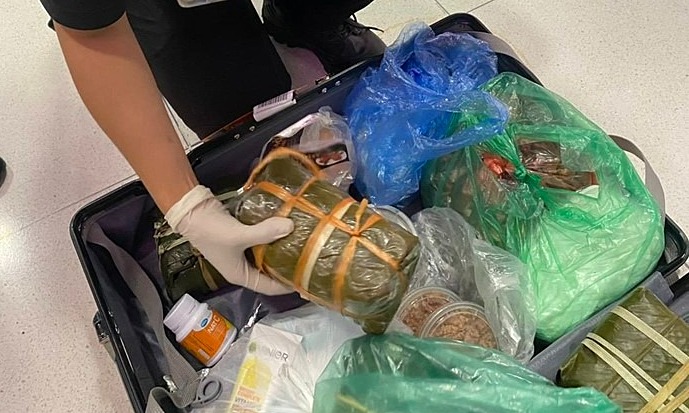 |
Inside the suitcase discovered on 16/12. *Kapook* |
This is not an isolated incident. Vietnamese travelers have previously had their luggage inspected for carrying prohibited food items in Thailand. For example, in 2022, the quarantine service dog team at Suvarnabhumi Airport also discovered 9 kg of pork sausage in the suitcase of a passenger flying from Hanoi.
Beagle dogs are the breed of choice for this critical task due to their keen sense of smell and trainability. Their primary role is to identify animal carcasses, fresh meat, and processed meat products cleverly concealed within passenger luggage.
Authorities stated that most violations involve Asian travelers attempting to carry meat products, either for personal consumption or for commercial purposes. These items pose a substantial risk of introducing dangerous pathogens or emerging infectious diseases, including African swine fever and avian influenza, thereby threatening Thailand's livestock industry and public health.
Hoai Anh (*Khaosod, Kapook*)