At border crossings, security personnel routinely inspect passports for unauthorized alterations or stamps. Therefore, a souvenir stamp from Machu Picchu, a popular choice, might no longer be considered a pleasant memento but an illegal modification, affecting the passport holder's travel. Here is what you should know before adding a souvenir stamp to your passport.
What constitutes a 'damaged' passport?
According to the U.S. Department of State, a passport is considered damaged if it has "liquid stains, tears, unauthorized markings on the data page, missing pages (torn out), or holes punched through it". The definition of 'damaged' is not always clear, and each country may apply different standards, but some general rules exist.
A stamp overlooked by one border official does not mean another will ignore it. This inconsistency makes souvenir stamps risky, as you cannot predict their impact during subsequent checks.
Page 5 of a U.S. passport states that only authorized immigration or consular officers are permitted to place stamps or notations on passport pages. Any decorative marks or unofficial information, including souvenir stamps, violates this regulation and can invalidate the passport.
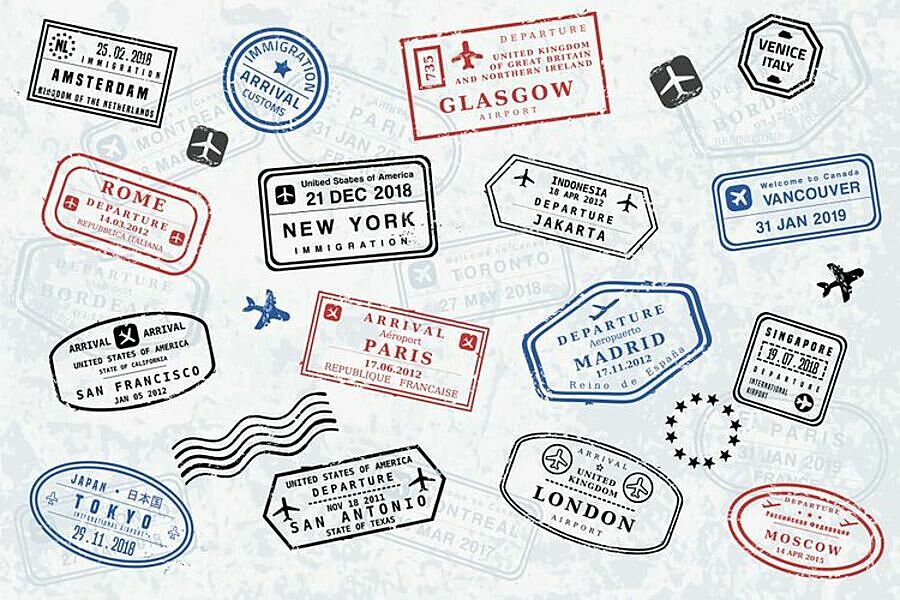 |
The stamps on a passport must be placed by an authorized person. Photo: T+L |
Once a passport is deemed invalid, numerous problems can arise. According to the International Air Transport Association (IATA), airlines are responsible for verifying that passengers possess valid travel documents. Failure to do so can result in penalties. Most airlines prioritize safety, meaning they often refuse to transport individuals with damaged passports or even minor ink marks.
Altered passports represent a common form of fraud. Even harmless decorative stamps can obscure official entry stamps, conceal valid visas, or cause errors for scanners reading the passport's integrated security features.
Even if no one suspects fraud, an unauthorized ink mark can still be considered a violation of passport usage conditions. Due to subjective assessment, one officer might overlook it, while another could deem the passport "damaged" and refuse it.
What to do if your passport is 'damaged' while traveling?
If your passport is invalidated, do not panic; act quickly. First, ask airline or immigration staff to explain the exact issue. Sometimes, a senior manager might exercise discretion. Note whether the airline or customs officer refers to your passport as "invalid" rather than "canceled".
If this happens while you are abroad, an embassy or consulate can help verify your passport status in their system and issue an emergency, limited-validity passport for you to continue your journey or return home.
To avoid such situations, always carry photo identification (like a driver's license), flight information, and proof of nationality (e.g., a photocopy of your birth certificate or passport information page) to save processing time. After returning home, replace your passport as soon as possible to prevent future travel complications.
Before allowing someone to place a "just for fun" stamp in your passport, remember that a passport is a legal document, not a souvenir book. If you wish to collect stamps, it is best to use a separate notebook.
Tam Anh (according to T+L)