 |
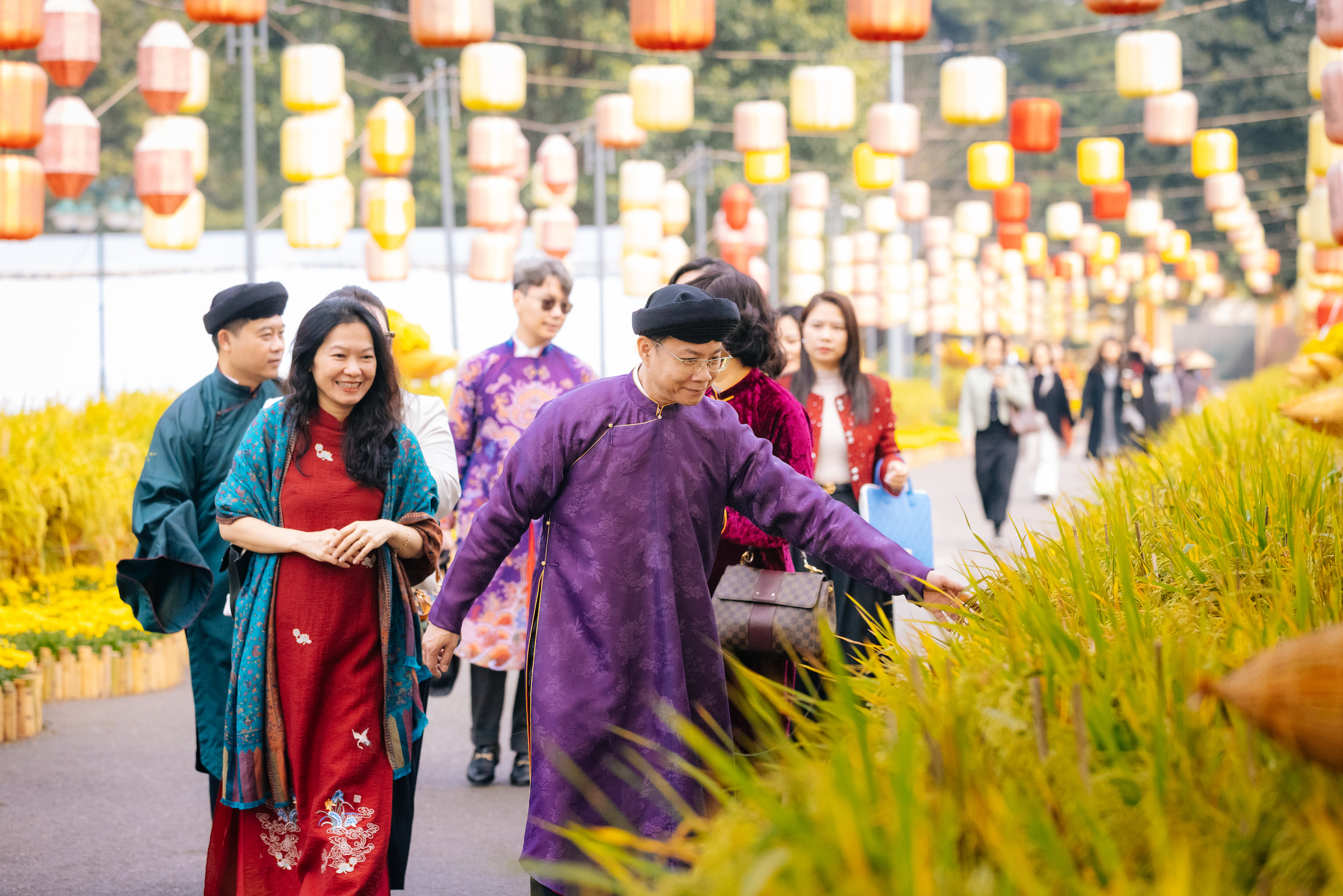
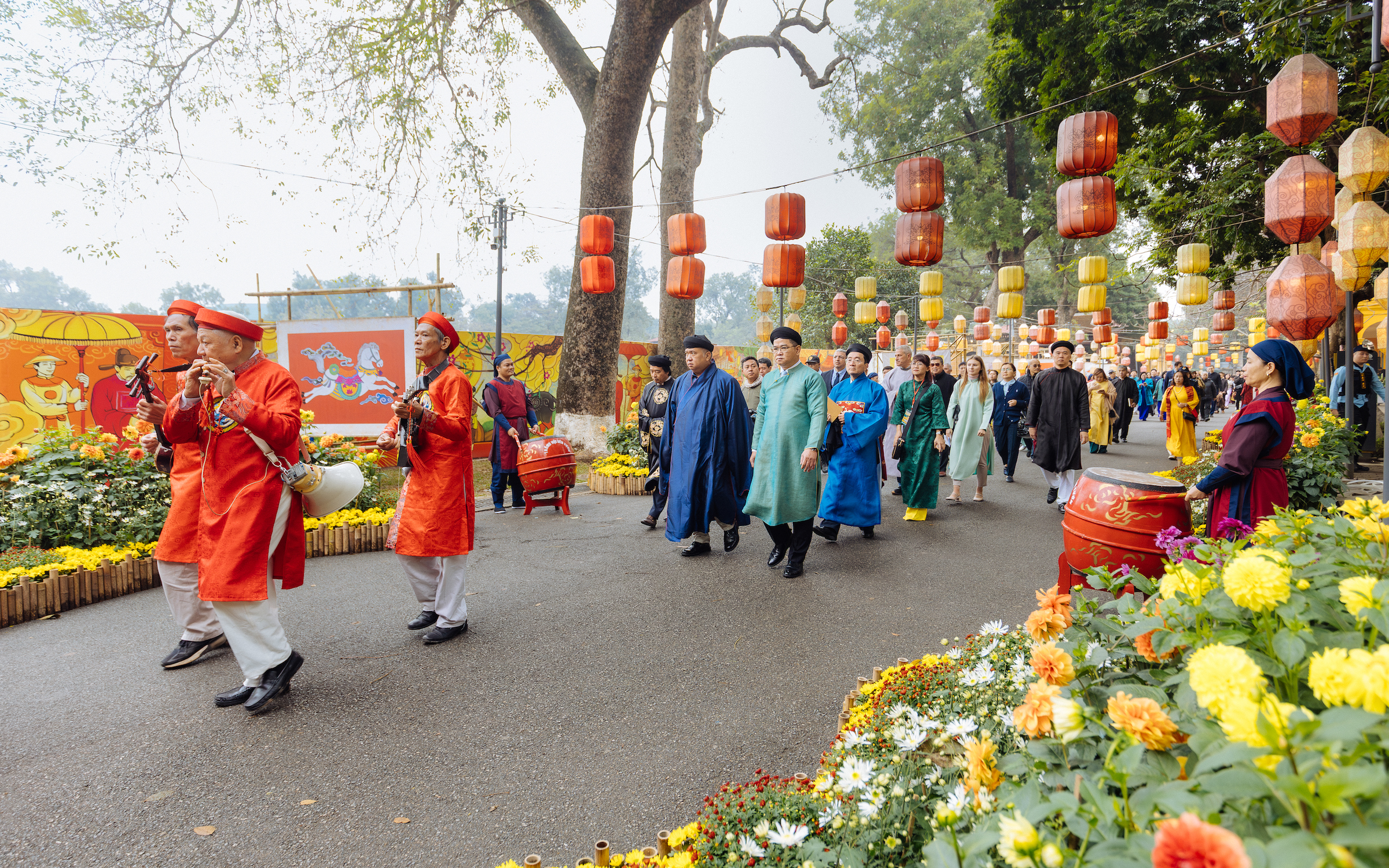
Decorative elements are designed based on conservation principles, avoiding interference with the architectural structure and specific spatial axis of the relic site. Materials primarily include bamboo and wood, combined with a restrained lighting system to maintain the solemn ambiance of the heritage site. In the photo, Ngo Le Van, vice minister of foreign affairs and chairman of the Vietnam National Commission for UNESCO, visits the spring flower street.
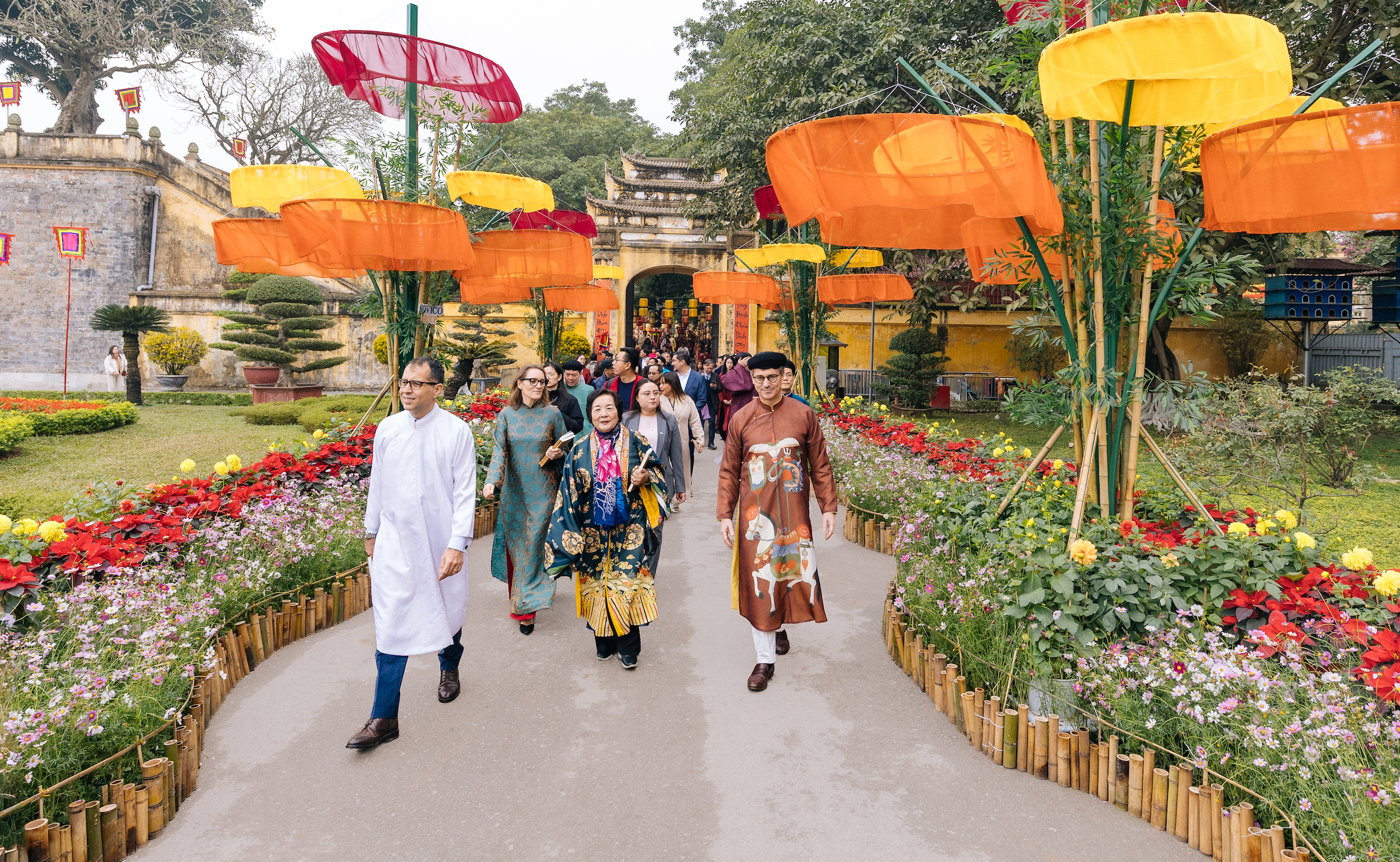 |
The flora includes many species familiar to northern spring, such as Dien pomelo, kumquat, and peach blossoms, interspersed with flowering rice strips and traditional flower varieties. The multi-tiered arrangement honors the existing architecture rather than creating large decorative masses. Jonathan Wallace Baker, head representative of UNESCO in Vietnam (wearing a brown ao dai), along with ambassadors and their spouses, visited and were impressed by the flower street.
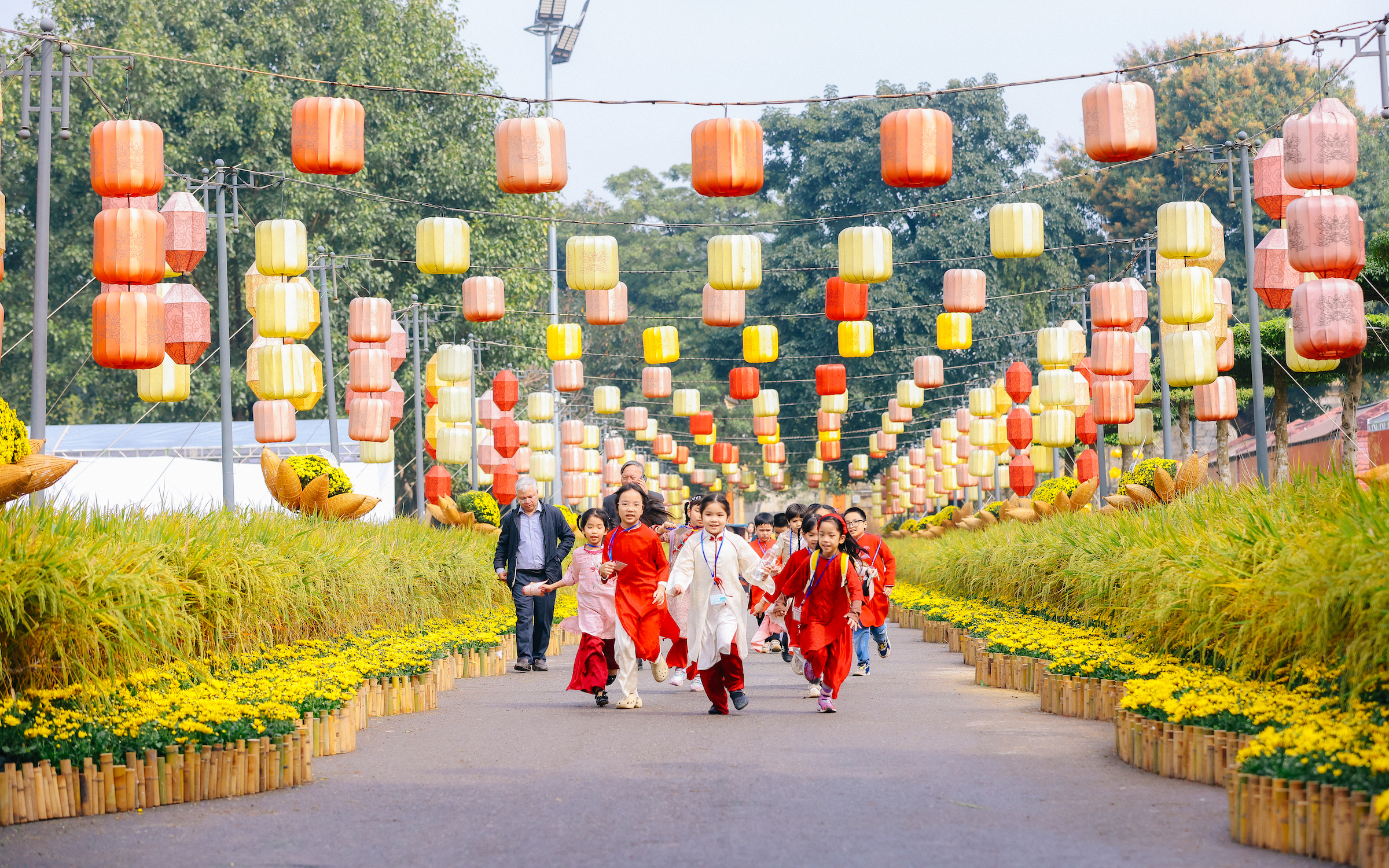 |
Themed "Dawn of Aspiration", the experiential space at the flower street is divided into four chapters: Kinh (Capital), Ky (Era), Vong (Aspiration), and Hoi (Festival), suggesting the transition between a thousand-year imperial history and the desire for development in the new era. This location was also chosen to welcome ambassadors, their spouses, and diplomatic agency representatives attending the Vietnam Discovery Day 2026 program.
 |
In addition to the flower street, Thang Long Imperial Citadel will host various cultural activities to celebrate Tet Nguyen Dan, such as thematic exhibition spaces. The folk Tet area will recreate Tet daily life for imperial residents with many traditional customs. Furthermore, the Le Trung Hung dynasty royal ritual space will showcase typical ceremonies through panels, paintings, and recreated models. Additionally, the "Tet in Memories" photo exhibition and a display on Vietnamese cultural heritage will provide further documentation on Tet life across different periods and heritage preservation efforts.
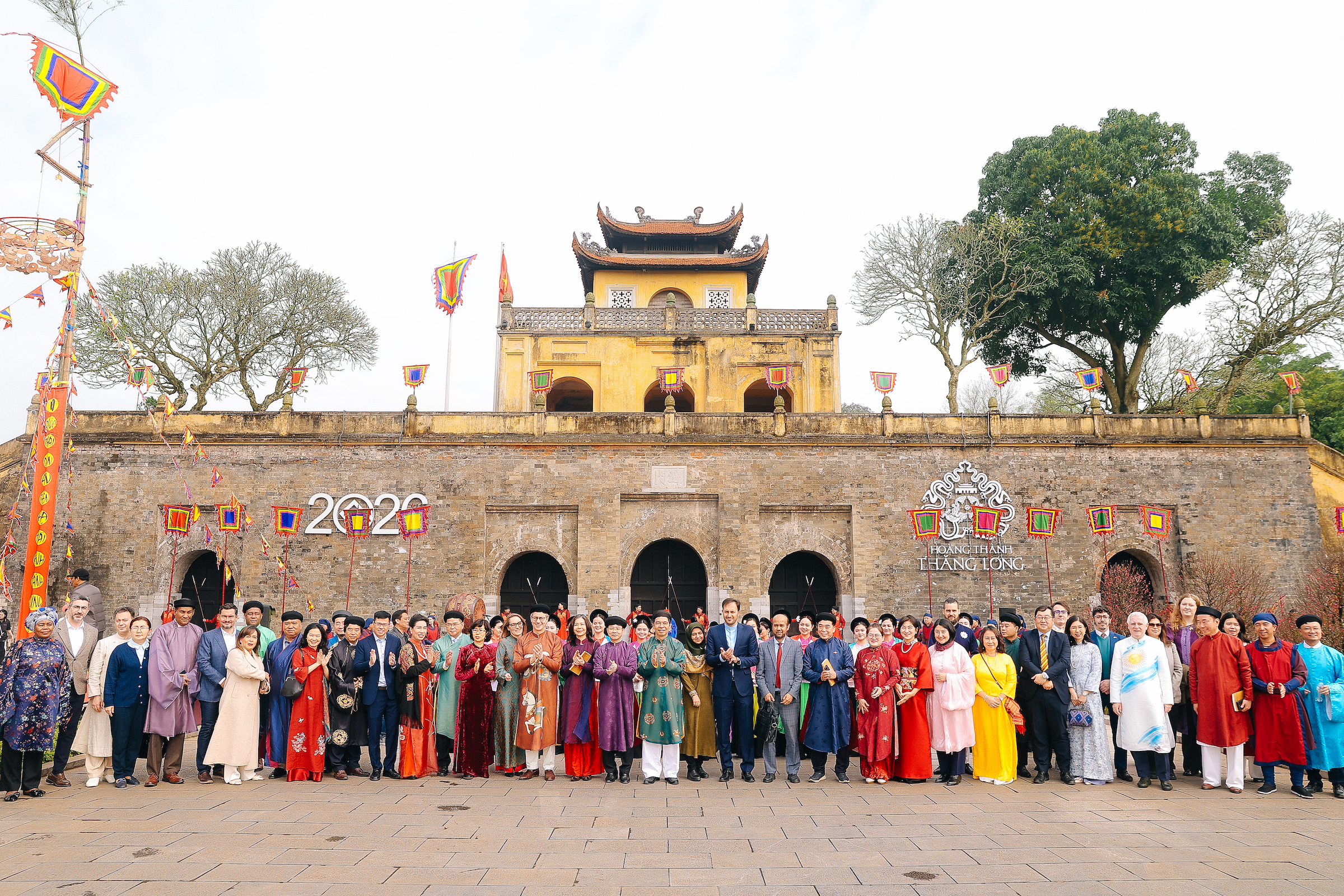 |
Thang Long Imperial Citadel was recognized by UNESCO as a World Cultural Heritage site in 2010, reflecting over a millennium of imperial history. Introducing the flower street model into the heritage site is a new approach to leveraging the relic's value, helping locals and tourists experience traditional Tet within the thousand-year historical context of Thang Long - Hanoi. The activity also highlights the role of Thang Long Imperial Citadel in promoting Vietnam's cultural image to international friends.
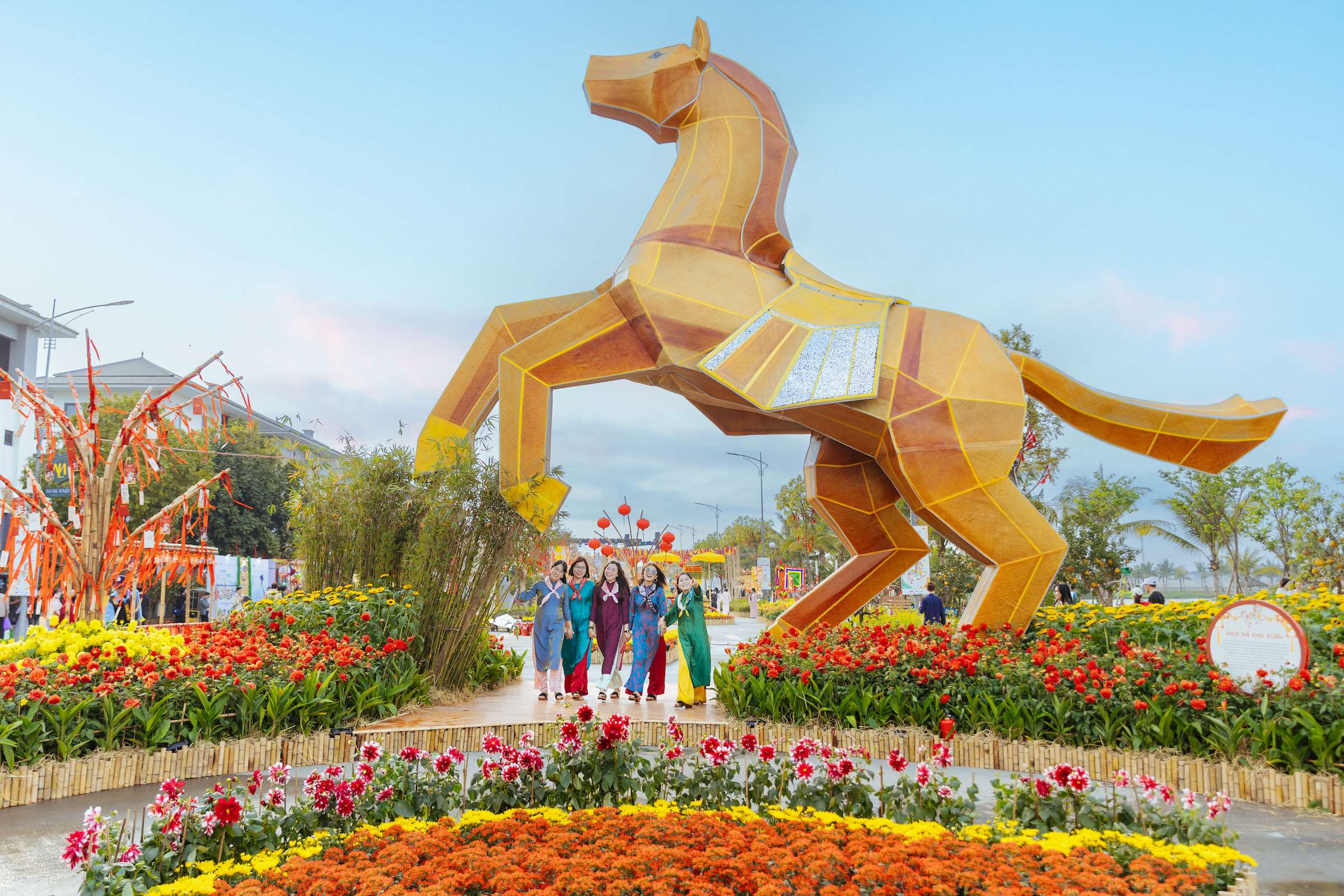 |
Concurrently, another spring flower street is being developed at Mailand Hanoi City urban area, west of Hanoi. While the flower street at Thang Long Imperial Citadel serves as a heritage space for ceremonial and diplomatic activities, Mailand Hanoi City organizes a flower street for community activities.
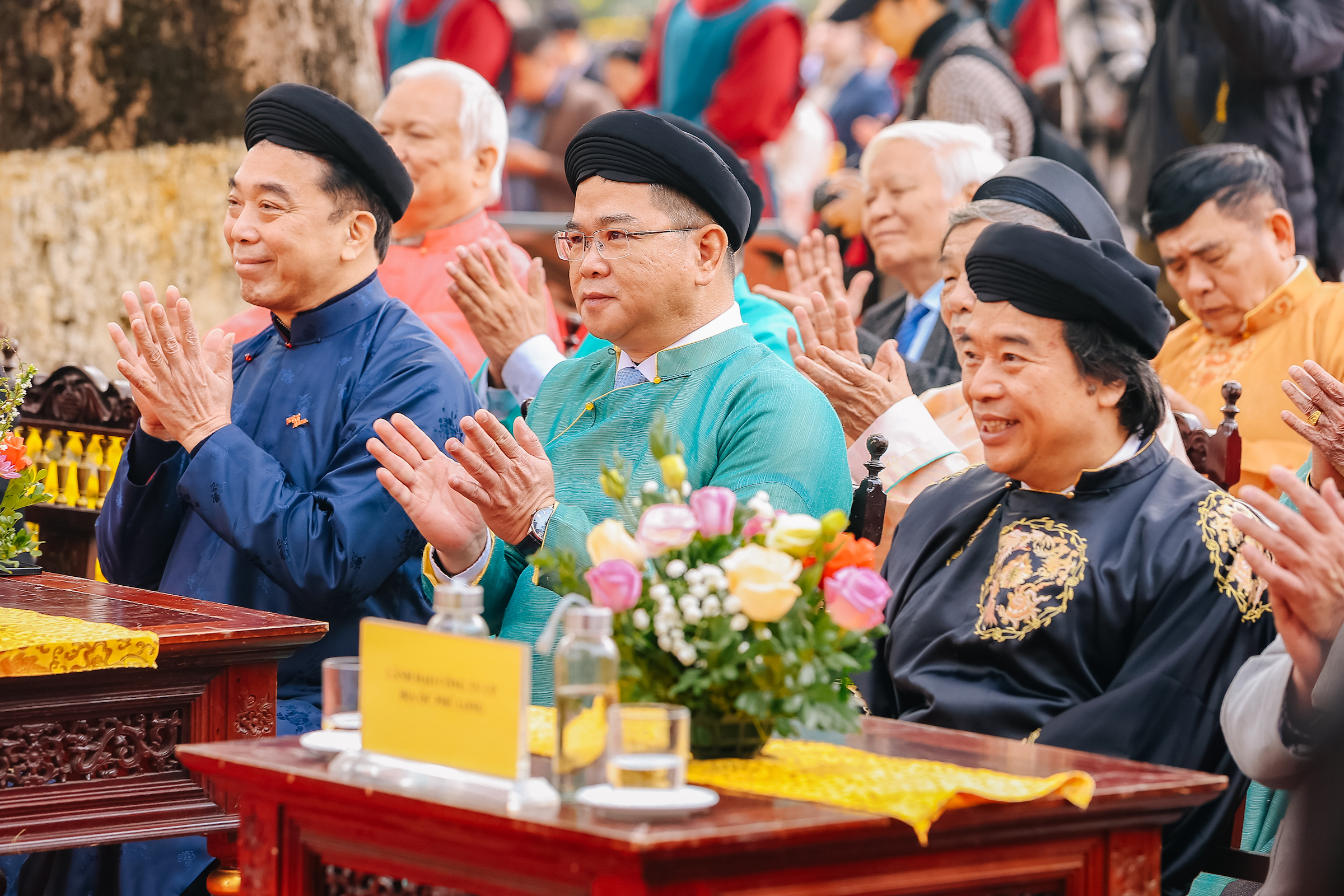 |
The event, organized by the Thang Long - Hanoi Heritage Conservation Center in collaboration with Sovico Group and Phu Long Real Estate Joint Stock Company, demonstrates the partnership of businesses in organizing cultural and heritage activities, contributing to spreading traditional Tet values to the community and international friends.
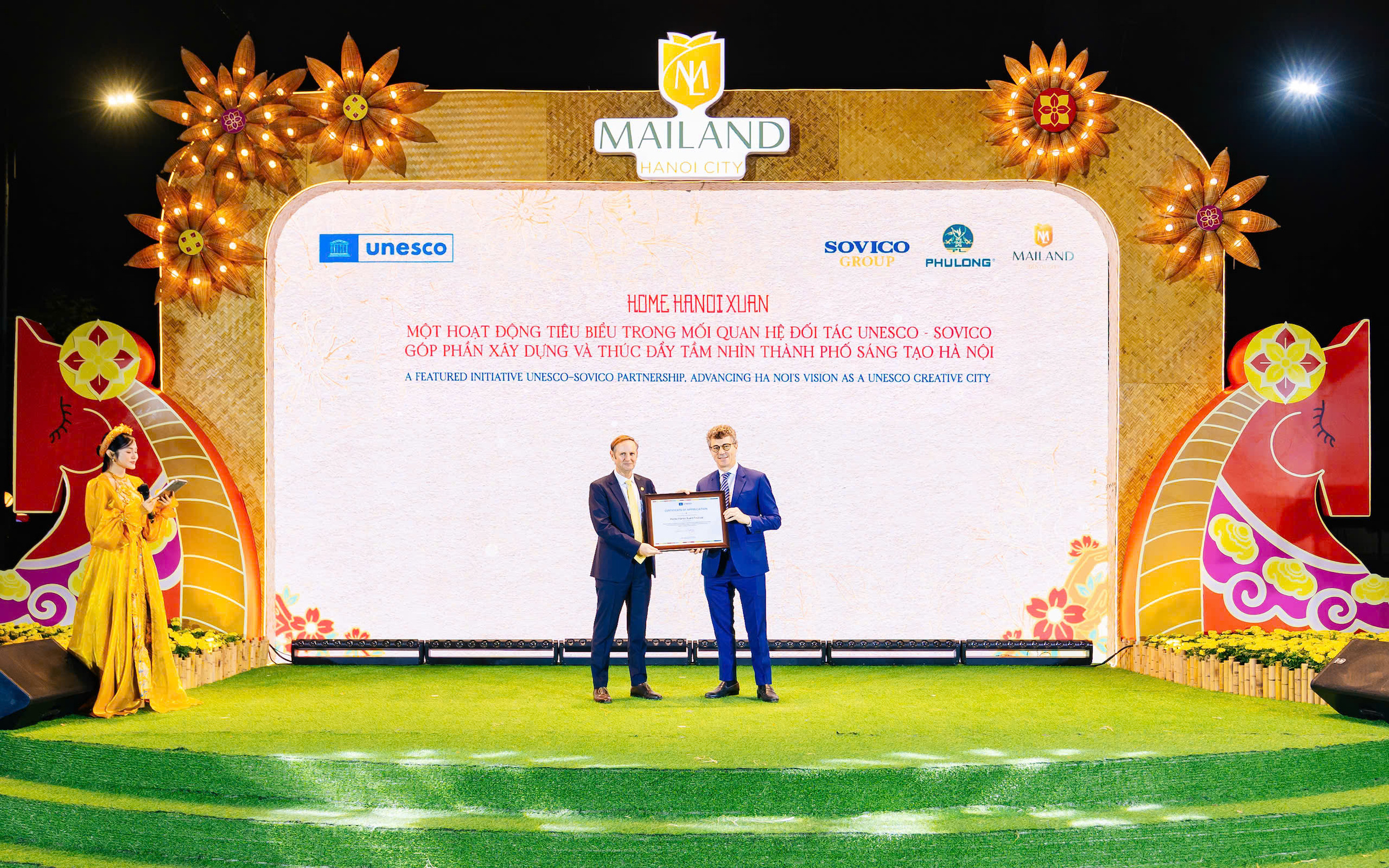 |
Previously, at the event on 7/2, the Home Hanoi Xuan flower street in Mailand Hanoi City urban area received a certificate of outstanding initiative from UNESCO, recognizing its contributions to realizing Hanoi's vision and action plan as it participates in the network of creative cities, as well as its contemporary approach to reinterpreting cultural heritage.
 |
"For Phu Long, sustainable development is linked to the responsibility of preserving and disseminating cultural and heritage values. Our participation in establishing the Tet flower street at Thang Long Imperial Citadel is carried out with respect for the relic space, while also spreading an image of Vietnam that is rich in identity, humane, and open to international friends," a Phu Long representative shared.
Song Anh