During the pandemic when the world was confined indoors, images of Italians singing from their balconies alongside vibrant clotheslines became a media phenomenon.
Clotheslines laden with laundry stretch along buildings and balconies across the country. In Italy, air-drying clothes outdoors is a social norm. This practice is evident everywhere, from large cities like Naples to small towns such as Guardiagrele and villages in Sicily. For locals, hanging laundry outside is as customary as drinking an espresso each morning.
In Italy, only 4% of households own a clothes dryer due to high energy costs. According to the U.S. Environmental Protection Agency (EPA), clothes dryers are among the largest energy-consuming appliances in a home.
On travel forums like Trip Advisor, when international tourists inquire about finding electric dryers in Italy, locals often defend the tradition of balcony drying.
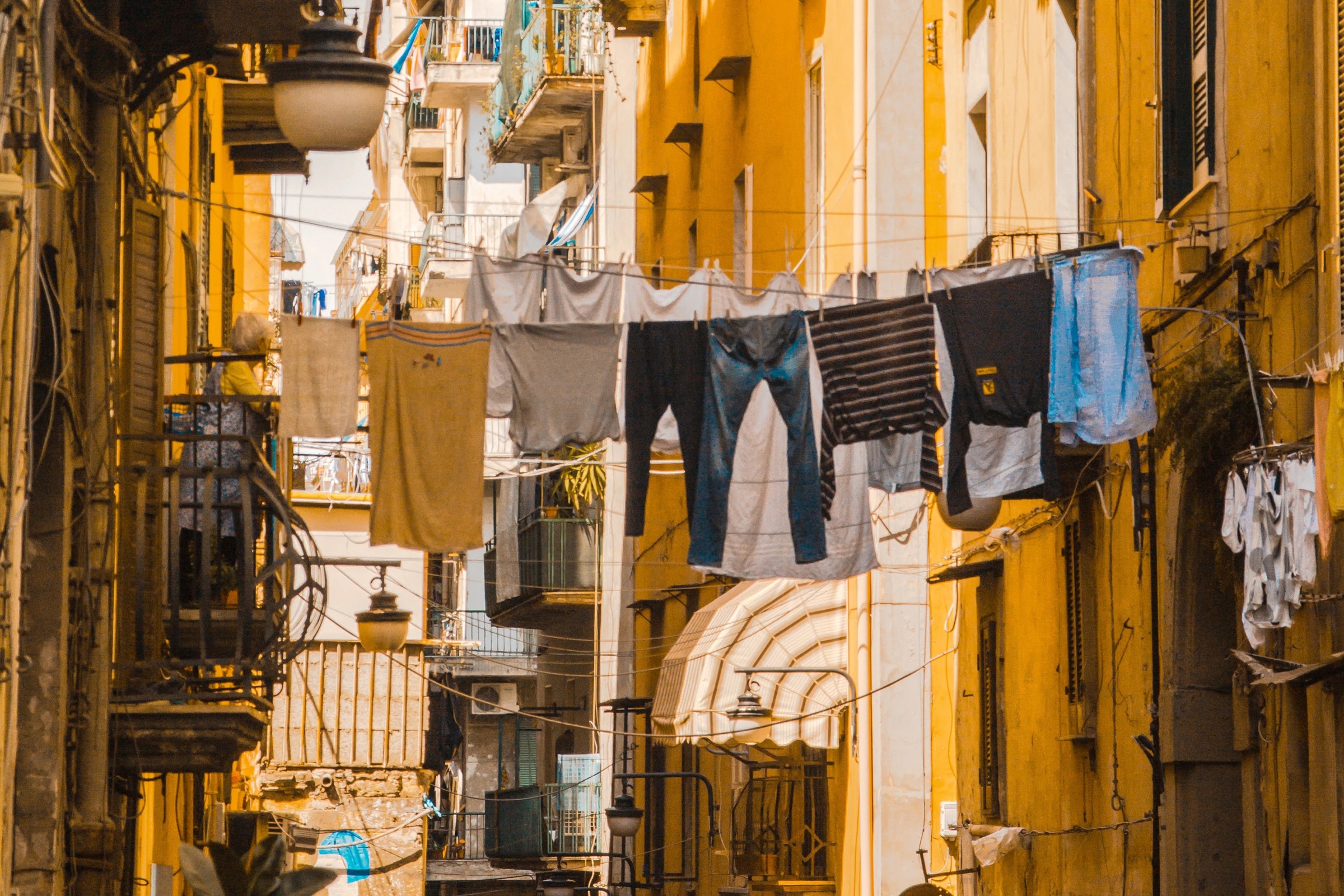 |
A street full of hanging clothes in Italy. Photo: Galaxus. |
"We don't care if people see our underwear drying outside, everyone does it. Perhaps that's why we take good care of it - no holes, no tattered underwear here", one man wrote.
Beyond economic factors, Italians prefer natural clothes drying, believing it enhances fabric quality and scent. Even in cities facing pollution issues, residents assert that clothes "smell better" when air-dried. A Sicily resident shared that walking past a freshly washed clothesline and inhaling the detergent's scent brings a pleasant and relaxing feeling.
This custom also fosters a close connection with weather patterns. Typically, when temperatures exceed 7 degrees Celsius, bed sheets, pillowcases, and towels simultaneously appear on balconies. Locals often monitor the 5-day weather forecast to plan their laundry accordingly.
Historically, this tradition is deeply rooted in community life. In the past, peasant women often gathered at the river at dawn to wash their families' clothes. This was a strenuous and monotonous task, performed in both the scorching summer heat and the winter cold.
However, this activity also created a social interaction space for women, allowing them to converse and exchange outside the domestic sphere. Even with the emergence of public laundries in the late 19th century, the community-connecting aspect of laundry remained.
Today, clotheslines connecting two opposite buildings materialize this bond, fostering a link between neighbors. In residential areas, it is common to see neighbors chatting from their balconies while clipping clothes onto shared lines.
Observing items on clotheslines also offers insight into the lives of those nearby. For instance, blue work uniforms indicate a civil servant household; children's clothes suggest a young family. Surveying the colors of towels or patterns of bed sheets swaying in the wind helps visualize the lives of their owners.
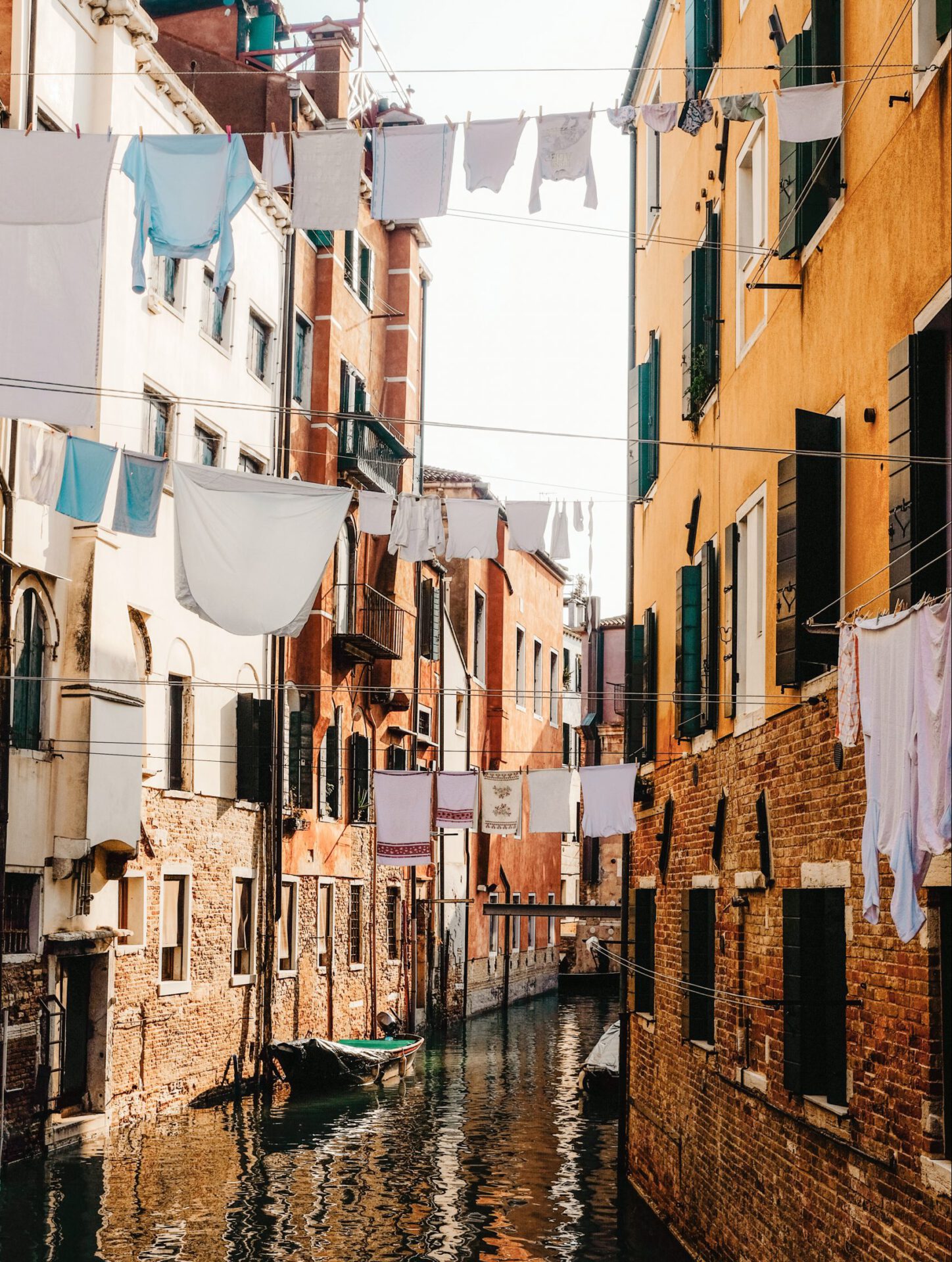 |
Clotheslines in Venice. Photo: Italysegreta. |
In central Naples, countless clotheslines often stretch across endless streets between buildings, sagging under the weight of damp laundry. Every overhead space is filled with colorful fabrics, creating successive "gateways" amidst the urban bustle.
This image has become an artistic symbol, notably in the works of director Fellini. In his film "8 1/2", the sight of white bed sheets hung out to dry became a symbol of warmth and family nostalgia.
Ultimately, the greatest benefit Italians derive from manual clothes drying is the philosophy of "dolce far niente" – the sweetness of doing nothing. After hanging the last item, people often spend time sitting on their balconies, observing their surroundings.
It is a state of quiet contemplation, simply sitting and observing the world – a practice not common in today's hurried pace of life.
Hoai Anh (According to Medium, Italysegreta)