Despite its role in promoting Chinese culinary culture and soft power, King's Joy, a three-Michelin-star vegan restaurant in Beijing, is on a list of establishments local officials are prohibited from visiting starting in 2025. The primary reason is believed to be the cost: a meal at King's Joy starts at USD 250 per person. This price contradicts the Chinese government's long-standing anti-corruption and austerity campaign.
According to the China National Bureau of Statistics in 2025, the average monthly salary for Beijing civil servants is about USD 1,600. Officials appearing at such luxurious dining venues can easily generate negative public opinion regarding misuse of public funds or bribery. This unpublicized ban follows previous government crackdowns; in 2014, many luxury private clubs in Beijing were forced to close as the government tightened its control over officials' lifestyles.
King's Joy is the only Chinese restaurant globally to receive both three Michelin stars and a Michelin Green Star for its sustainability efforts. Located opposite the Yonghegong (Lama Temple) and about 6 km from the Forbidden City, its operational model was even a case study at Harvard Business School in 2019.
Since its opening, the restaurant has become a regular destination for the ultra-wealthy and celebrities like billionaire Rupert Murdoch, as well as heads of state such as Italian President Sergio Mattarella and Spanish Prime Minister Pedro Sanchez during their visits to China.
The restaurant serves a purely vegan menu, using local ingredients prepared with traditional methods and presented in a modern style. Its interior features black marble floors and a silk chandelier system.
The restaurant's menu changes every two weeks, aligning with the 24 solar terms of the ancient Chinese calendar. Diners can experience dishes such as Manchu silk rice with black truffles and lily bulbs, purple bamboo shoot soup, or osmanthus milk pudding. Less common local ingredients like Gorgon euryale seeds are also featured, paired with homemade fermented drinks, tea, or wine.
David Yin initiated the concept for King's Joy in 2010, opening the restaurant in 2012. The Yin family, originally from Beijing, emigrated to Taiwan in 1966 and established a renowned imperial cuisine brand. After 15 years of living in Canada, they decided to return to Beijing to open the restaurant.
The name King's Joy evokes the rich cultural heritage of a capital that served four feudal dynasties. Currently, the second generation of the family manages the business, with son Gary Yin as head chef and daughter Mia Yin as pastry chef.
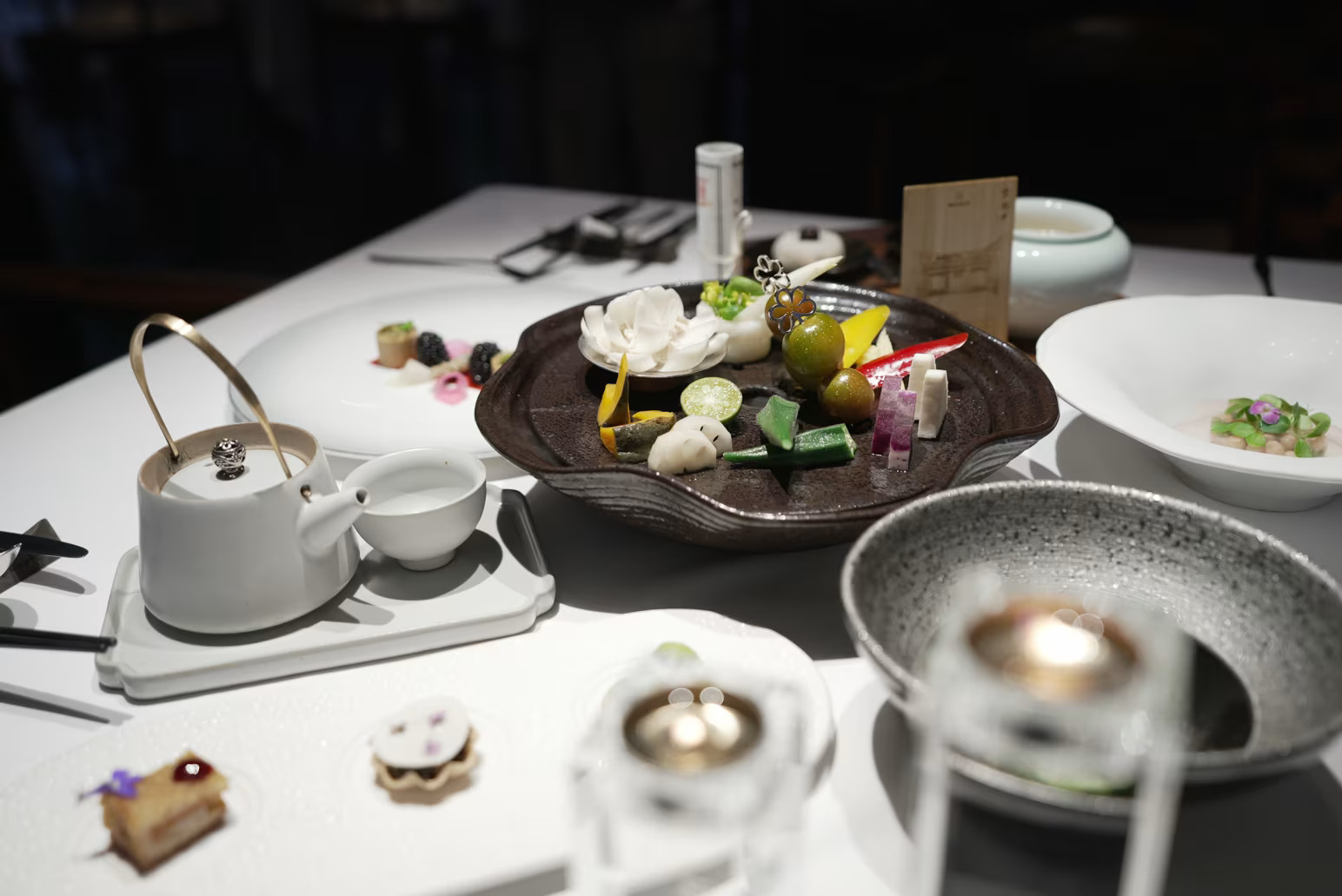 |
Fine dining vegan dishes at the restaurant. Photo: Steve Wang |
In China, vegetarianism has long been associated with Buddhist philosophy and an austere lifestyle. About 4% of the country's population identifies as vegetarian, according to state media research in 2024. China's Dietary Guidelines also began including recommendations for vegetarians in 2016.
Fuchsia Dunlop, a Chinese culinary expert, commented that elevating vegetarian cuisine to a high-end level with expensive pricing is a bold move. Instead of serving religious purposes, the restaurant transforms vegetarian cuisine into a lifestyle choice.
Head chef Gary Yin shared that locating the restaurant in the capital's center aims to reach and change the perceptions of influential people regarding sustainable cuisine. Despite reports of a ban on officials visiting, he stated that the restaurant's business has not changed.
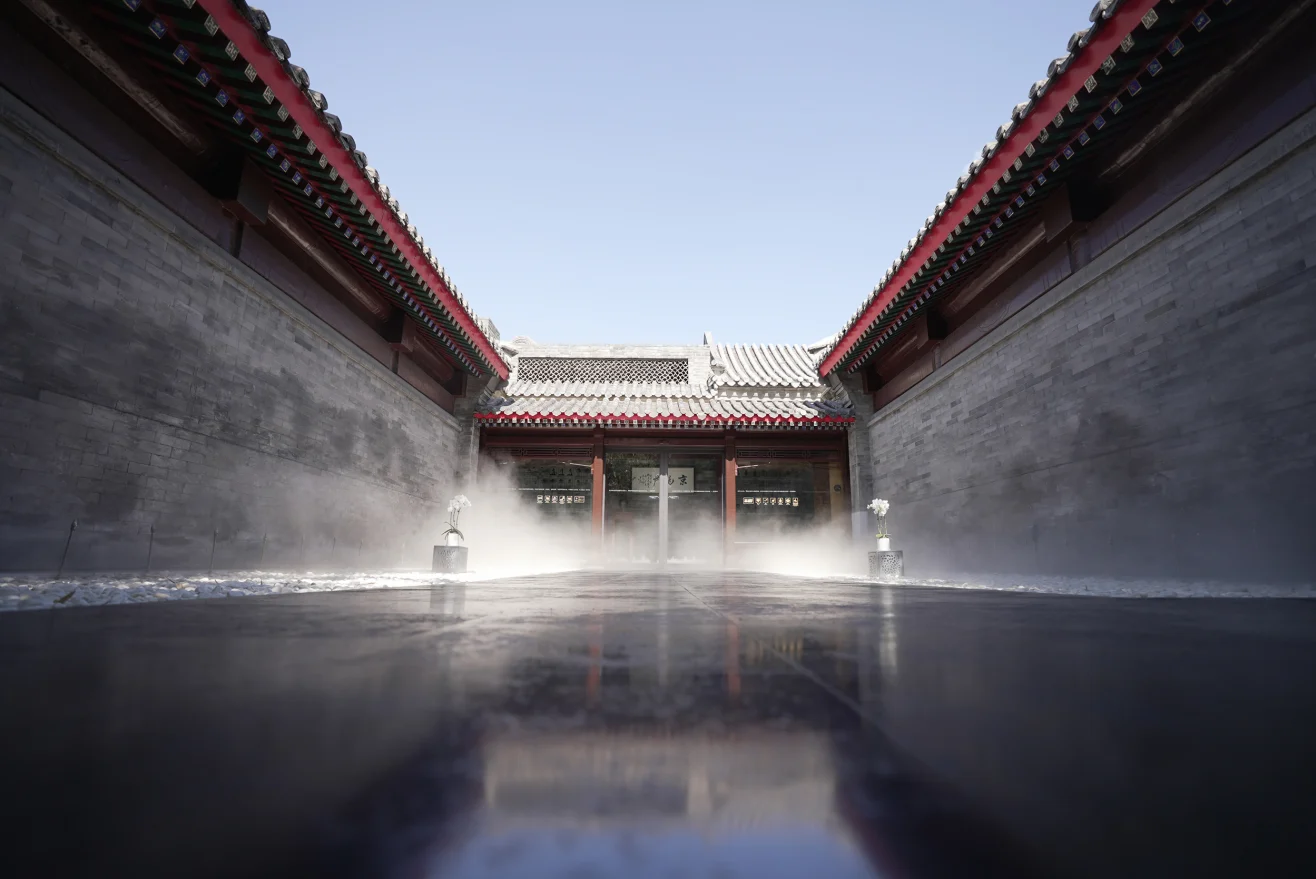 |
The entrance to King’s Joy restaurant. Photo: Steve Wang |
Mai Phuong (According to CNN, Reuters)