The Sagrada Familia church was inaugurated on 10/6 with a mass and a blessing from Pope Leo XIV for the ceramic cross crowning its main tower.
The final element of the structure, a giant 100-ton ceramic cross, was placed atop the Jesus Tower in February. This addition makes the Sagrada Familia the world's tallest church, reaching 172,5 m. Situated above the church's nave and nearly the height of a 5-story building, the cross was manufactured in Germany and then shipped in sections to Spain for assembly.
The Jesus Tower is surrounded by 17 other spires, symbolizing the 12 apostles, four evangelists, and the Virgin Mary.
"Gaudi can rest in peace", was a common sentiment expressed by many visitors upon learning of the Sagrada Familia's completion.
The Sagrada Familia church. Video: Instagram/aleteia_en
Inspired by nature, architect Antoni Gaudi conceived the basilica as a stone forest. Its interior columns branch like tree trunks, while vaults resemble foliage. The structure incorporates ceramic artistry, stained glass, biblical stone carvings, and mosaic bell towers.
Gaudi took over the Sagrada Familia project in 1882. He moved onto the construction site, dedicating himself to designing every aspect, from its structure to the interior furnishings and sculptures.
Aware he would not live to see its completion, Gaudi once remarked, "My client is not in a hurry", implying his dedication of the work to God.
 |
Inside the Sagrada Familia church. Photo: Klook
Antoni Gaudi died in June 1926. Following his death, construction faced repeated delays due to funding shortages, political instability, and the Spanish Civil War.
Many of Gaudi's original designs and models were lost during this period. Despite construction spanning over a century, the Sagrada Familia has remained a major tourist attraction in Barcelona.
Today, visitors often refer to this church masterpiece as "Antoni Gaudi's Sagrada Familia Church", honoring him as "God's architect".
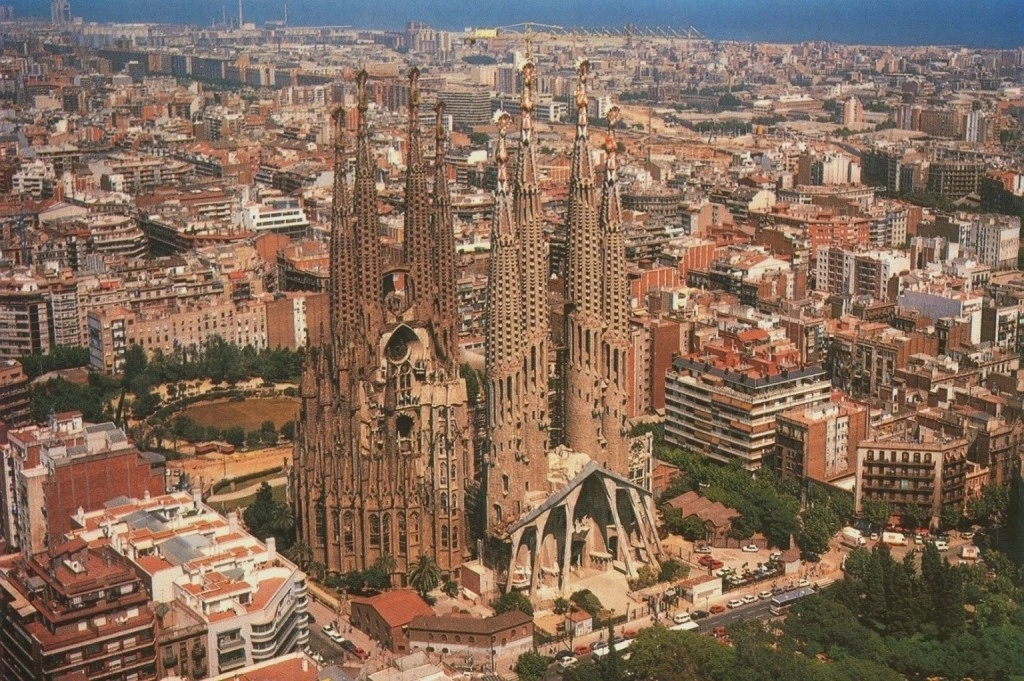 |
An overview of the church. Photo: Pinterest
Anh Minh (Via Forbes)