This opinion was shared by Doctor Ha Van Sieu, Deputy Director General of the Vietnam National Authority of Tourism, at the international scientific workshop: "Training and developing high-quality tourism human resources according to international standards in the nation's era of ascent", held on 28/8 in Quy Nhon.
The event was organized by the Vietnam Tourism Training Association in coordination with Hung Vuong University TP HCM, the Department of Culture, Sports and Tourism of Gia Lai province, and the Swiss education organization Swiss Edu Hub, with nearly 120 delegates attending.
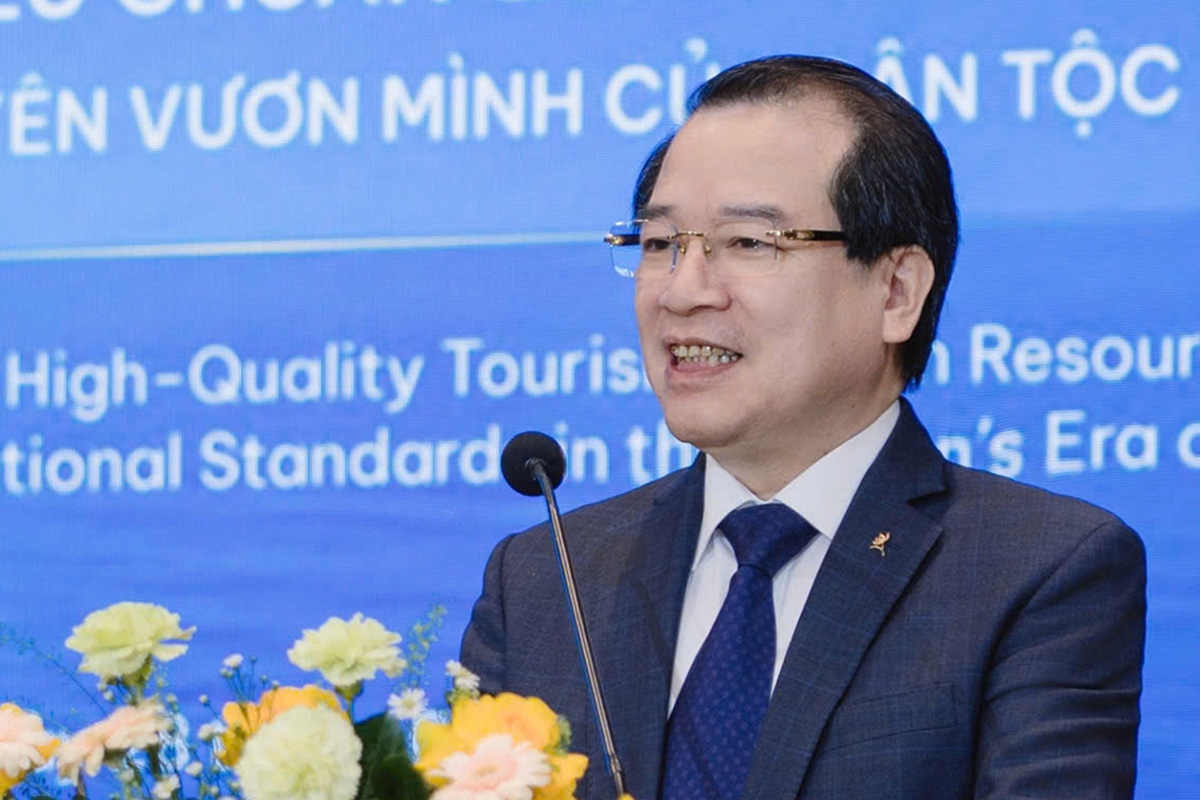 |
Doctor Ha Van Sieu speaking at the workshop. Photo: Organizing committee
According to Doctor Ha Van Sieu, Vietnam's tourism sector is entering a new development phase with increasing demands for quality, efficiency, professionalism, sustainability, intelligence, and international competitiveness.
The Politburo clearly defines the goal of developing tourism into a key economic sector in the new era, requiring the development of tourism human resources that meet standards in terms of quantity, quality, structure, and professional skills. This is a decisive requirement, as tourism quality is primarily created by the quality of its people.
"We can invest in modern infrastructure, advanced technology, and attractive tourism products; but it is the workers themselves who directly create experiences, emotions, and added value for tourists," Mr. Sieu said.
While good service requires professional skills, a memorable experience also demands friendliness, sophistication, creativity, dedication, and the heart of those working in tourism.
Furthermore, it is essential to effectively leverage artificial intelligence (AI) in training for professional situation simulation, foreign language support, data analysis, personalized learning, and assistance for lecturers and learners. "AI can support people, but it cannot replace the hospitality, empathy, emotions, and heart of those working in tourism," Doctor Sieu stated.
According to the organizing committee, the workshop received 180 papers, focusing on training standards, international and ASEAN tourism professional competency frameworks, educational innovation in the context of digital transformation, AI applications, digital skill development, and intercultural communication competence.
Delegates concentrated on discussing solutions for human resource development linked to coastal, highland, community, and indigenous cultural tourism. The aim is to build a team that is not only professionally proficient but also meets requirements in foreign languages, digital skills, intercultural communication, and experience management.
Professor Doctor Dao Manh Hung, Chairman of the Vietnam Tourism Training Association, noted that after mergers, Gia Lai province is the second largest in the country. It boasts advantages of both mountains and sea, featuring new tourist spaces like Bien Ho, Chu Dang Ya volcano, Kon Ka Kinh National Park, Central Highlands gong culture, Champa relics, and Binh Dinh traditional martial arts.
Leveraging these advantages, Gia Lai identifies tourism as one of five economic pillars, setting a target to welcome 18,5 million visitors by 2030, including over one million international visitors. However, according to Professor Doctor Hung, the proportion of formally trained tourism workers in Gia Lai is less than 30%, and personnel meeting international standards are rare.
Many key positions, such as 5-star hotel managers, inter-regional coastal-mountain tour coordinators, multilingual guides with deep understanding of indigenous culture, and international tourism market analysts, must be recruited from larger cities and provinces.
Even residents participating in community tourism in Central Highlands villages or coastal communities only receive basic professional training, lacking skills to serve international tourists and understanding of global service standards.
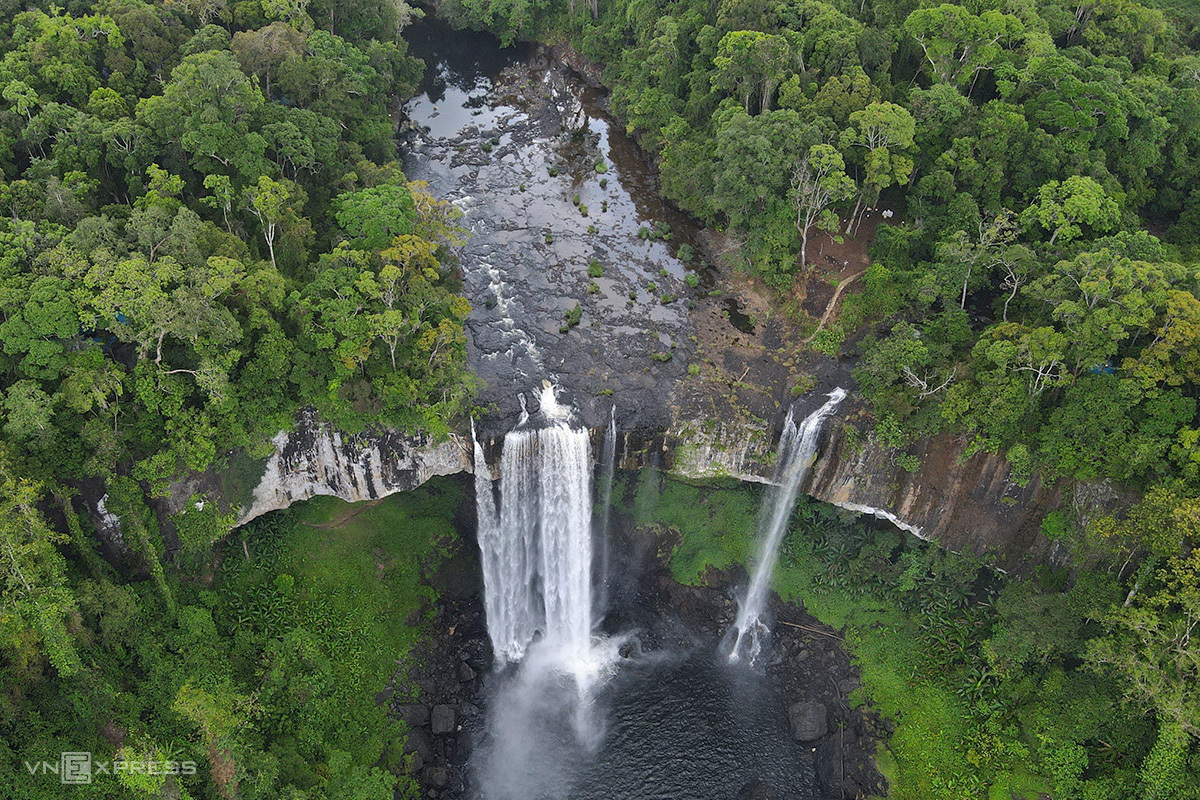 |
K50 waterfall, a famous tourist destination in Gia Lai. Photo: Tran Hoa
Mr. Nguyen Van Y, Deputy Director of the Department of Culture, Sports and Tourism of Gia Lai province, affirmed that human resources need to be equipped with not only professional knowledge, occupational skills, foreign languages, and digital skills, but also adaptability and multicultural work capacity to effectively convey unique local values to international tourists.
"From this workshop, Gia Lai province's tourism sector hopes to receive feedback and feasible solutions for developing high-quality tourism human resources suitable for Gia Lai's reality in the coming period," Mr. Y stated.
Tran Hoa