


On 7/1, community groups in Chiang Mai widely shared and commented on photos posted by the local Facebook page "Exposing Chiang Mai V2". The images captured young female tourists in bikinis, sitting and lying on the grass by the city moat, directly across from Wat Ratchamonthian temple. Admin Mana, the page administrator, stated he witnessed the incident around 13h on 5/1. Notably, one woman in the group reportedly had her feet pointed towards the temple, an act considered deeply disrespectful in Thai culture.
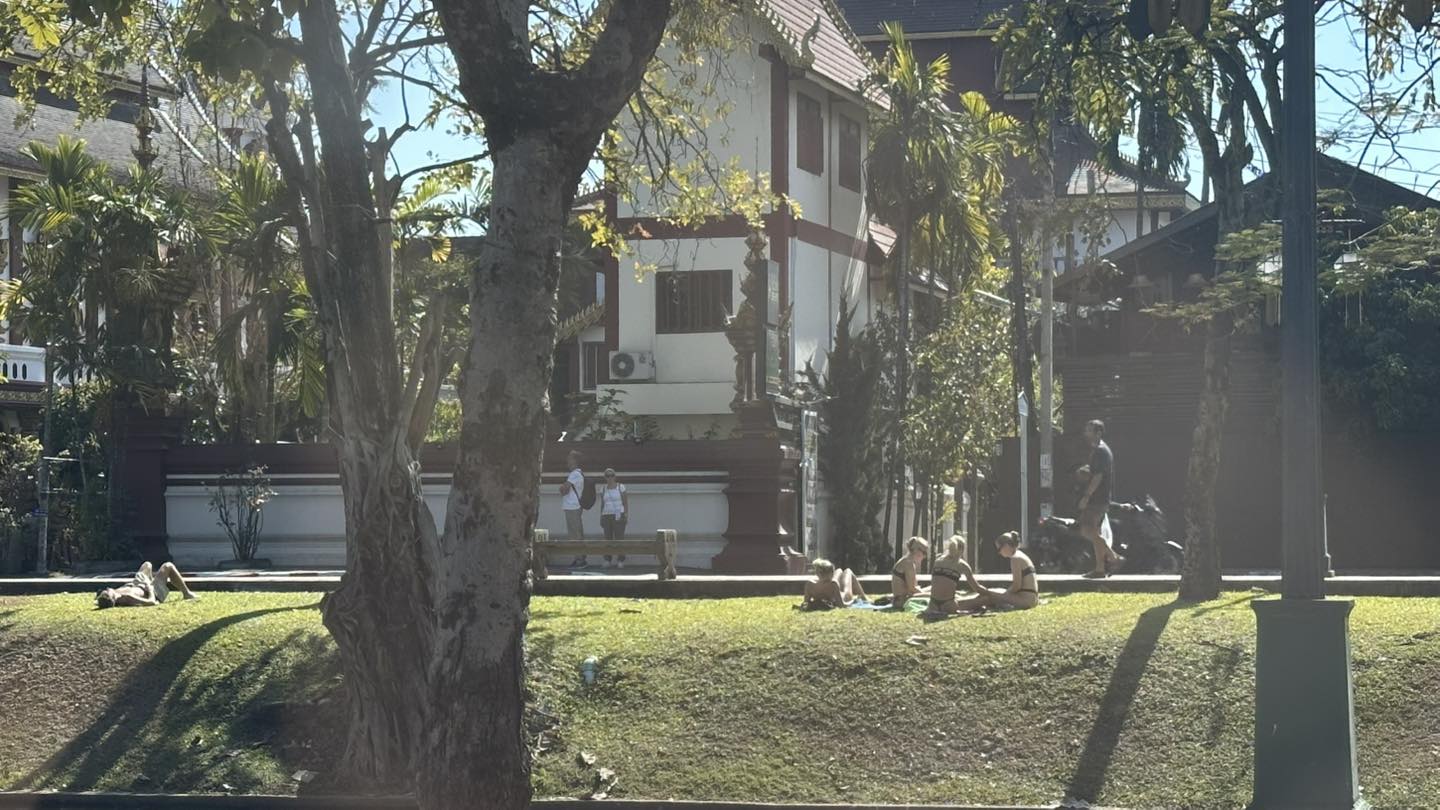 |
Foreign tourists in bikinis sitting and lying on the grass in front of a temple in Chiang Mai. Photo: Expose Chiang Mai V2 |
Admin Mana highlighted that such behavior by foreign visitors frequently occurs in public areas, mostly involving tourists from Europe or the United States. While these actions might be considered normal in their home countries, visitors must understand their inappropriateness within Thai culture. This holds true especially in Chiang Mai, a city revered as a significant cultural and religious center in Northern Thailand.
The post's author shared the images as a warning, urging authorities to address and prevent similar incidents in public spaces. Many respondents agreed, emphasizing that despite cultural differences, tourists must research local customs before visiting, particularly around Buddhist temples.
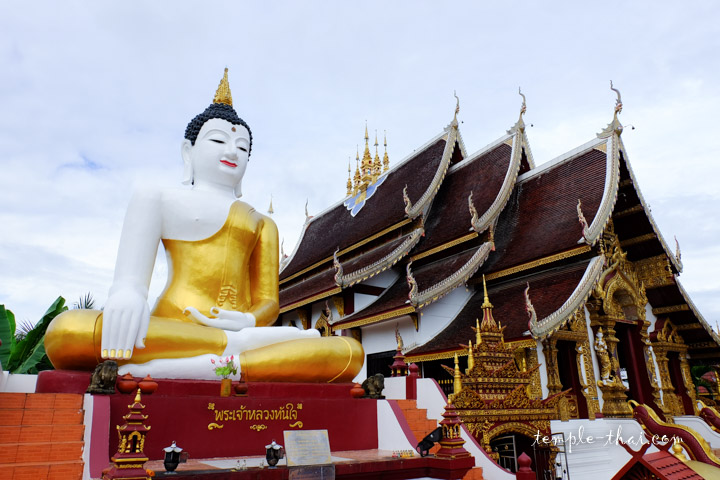 |
Wat Ratchamonthian temple in Chiang Mai city, Thailand. Photo: Temple Thai |
Wat Ratchamonthian, located within Chiang Mai's inner city, was built in the 19th century during the reign of King Rama V, a period when Thailand reorganized its national temple system. It is an important local religious site, preserving significant historical, cultural, and architectural values.
The temple opens daily from 8h to 17h. Entrance fees are 50 baht for adults and 20 baht for children, with an additional 30 baht for photography. Like many other temples in Thailand, Wat Ratchamonthian requires visitors to dress modestly and politely, prohibiting shorts, tank tops, or revealing attire. Some sites provide sarongs for visitors to wear before entering sacred areas.


