Ngoc Lan, 25, an office worker in Hanoi, shared that her first overseas trip was to Thailand, a choice driven by affordability, safety, and convenience. Her colleagues echoed this sentiment.
A VnExpress survey of travel agencies reveals that most Vietnamese first-time international travelers opt for Thailand by air and China by land. Nguyen Huu Cuong, General Director of Trang An Travel, noted that a five-day, four-night package tour to Thailand costs approximately 7-8 million VND.
According to experts, Vietnamese travelers' international itineraries typically progress in terms of cost and visa complexity. They often start with Thailand, then move to Singapore-Malaysia, before considering markets with stricter visa requirements like Korea, China, Japan, Europe, and the US.
Nguyen Dong Giang, Director of BKT Bangkok Tourist, observed that Vietnamese visitors return to Thailand two to three times more often than to other countries. This is attributed to convenient transportation and compatible cuisine.
Data from the Ministry of Tourism and Sports Thailand (MOTS) indicates that in the first five months of this year, Vietnamese arrivals to Thailand reached an estimated 230,000. This places Vietnam among Thailand's top seven largest Southeast Asian source markets. In 2025, Thailand welcomed over 600,000 Vietnamese visitors, demonstrating the strong appeal of the Thai tourism market.
How Thailand creates 'emotional tourism'
Travel blogger Ryan Nguyen commented that Thailand offers visitors "just enough" in terms of cost but excels in experiences, from nightlife and shopping to spiritual culture.
"What Thais do well is transform tourism into an emotional experience through a storytelling approach," Ryan said. When visiting the ancient capital of Ayutthaya, guests not only admire temples but also learn about the golden age of the Siamese kingdom. In Kanchanaburi, history comes alive through the "Death Railway" and the Bridge over the River Kwai.
Moreover, consistent service quality from drivers to restaurant staff ensures a pleasant experience. Thailand also consistently creates new trends, such as checking in at the old iron bridge on the Chao Phraya River, commercializing traditional festivals like the Songkran water festival and the Yipenge lantern festival, or hosting global concerts.
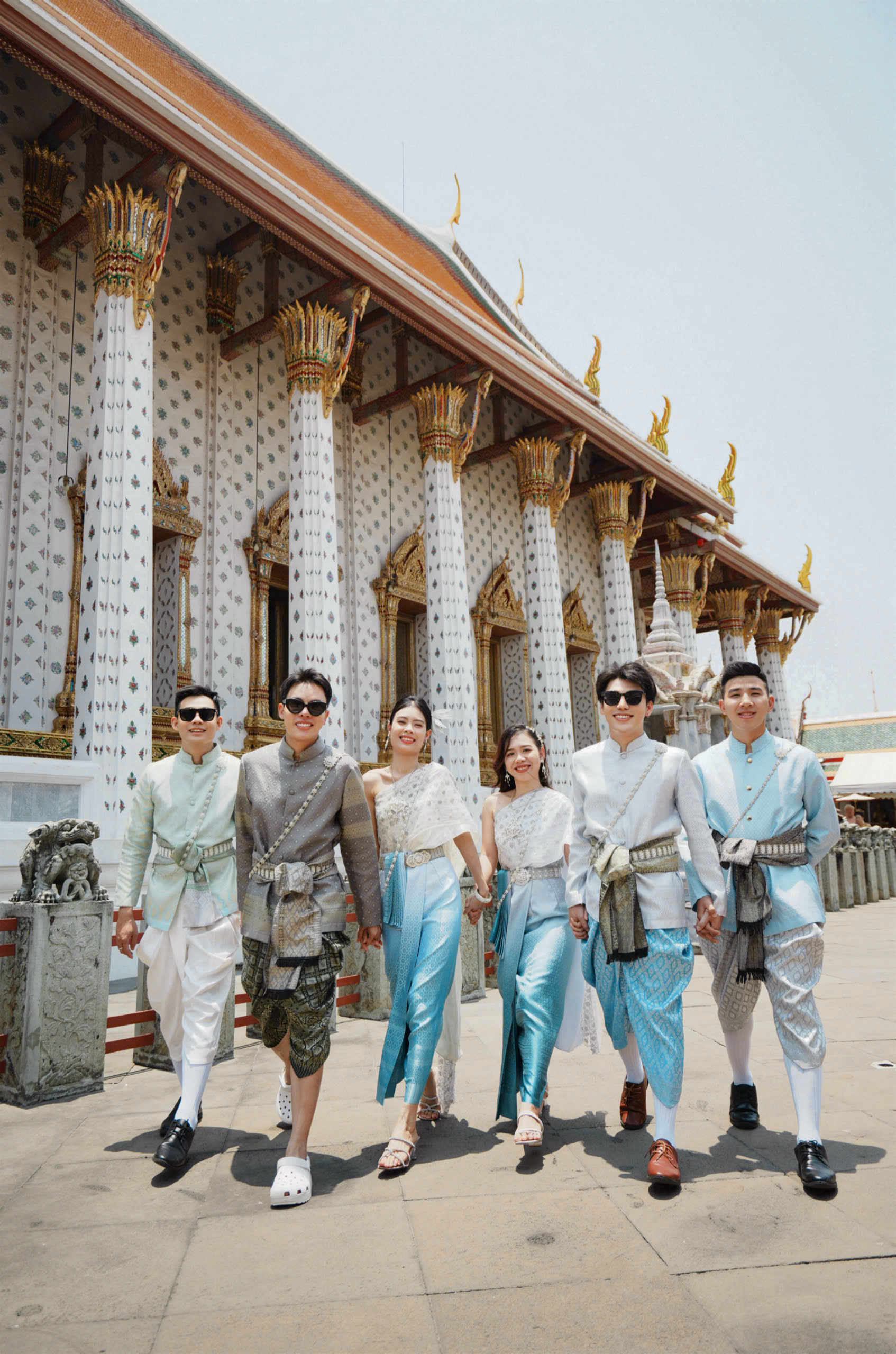 |
Vietnamese tourists in traditional Thai attire pose for a souvenir photo in Thailand. Ryan Nguyen
The challenge of attracting visitors in the opposite direction
Conversely, Vietnam is also a favored destination for Thais. In the first four months of this year, over 183,000 Thai visitors came to Vietnam, ranking among the top 12 largest source markets.
International tour guide Cao Ngoc Son noted that Thai visitors are usually over 30 years old. They are drawn to the landscapes of Ha Long Bay, Ha Giang, the Northwest mountains, or entertainment activities in Da Nang, Phu Quoc, and Hoi An.
According to Henry An, a Thai tour guide from BKT Bangkok Tourist based in Bangkok, Vietnam's advantages include: beautiful scenery, delicious food (especially pho and grilled dishes), and friendly people.
"The most famous Vietnamese dish among Thais is nem nuong," Henry said.
Thais prefer to visit Vietnam in family or friend groups rather than organized tours, valuing freedom and independent experiences. They also enjoy shopping for Vietnamese goods and fashion due to the diverse products.
However, the balance of visitor exchange between the two countries remains significantly uneven. Last year, Vietnam welcomed over 456,000 Thai visitors, nearly 30% less than the number of Vietnamese visitors to Thailand. According to the National Administration of Tourism of Vietnam, despite growth in the Southeast Asian market, tourist numbers from Thailand to Vietnam have not recovered commensurately with the trade potential between the two nations.
Currently, Vietnam's tourism industry is striving to narrow this gap by increasing direct flights connecting major Thai cities to heritage sites like Hue and Hoi An.
To attract more Thai visitors, Ryan Nguyen suggests Vietnam invest heavily in promoting its national image on social media with a youthful style and diverse experiences, rather than relying solely on existing resources.
"Just look at TikTok or social media, and you'll constantly see Thailand appearing with youthful, fun, and diverse experiences," Ryan Nguyen said.
From a strategic perspective, Tran Thi Bao Thu, Marketing and Communications Director at Vietluxtour, believes a simple comparison of superiority is unhelpful. Thailand excels in commercialization and early destination development, while Vietnam benefits from deep historical culture, diverse natural landscapes, and delicious, accessible cuisine. These are valuable "soft assets" if exploited professionally in tourism products.
A tourist's journey can span seven to ten days, offering experiences from the dynamic Ho Chi Minh City to Central heritage regions like Hue, Da Nang, or the Mekong Delta and island beaches.
What Vietnam needs to continue perfecting is the ability to connect these resources into systematic tourism products that are easy to purchase, experience, and encourage repeat visits.
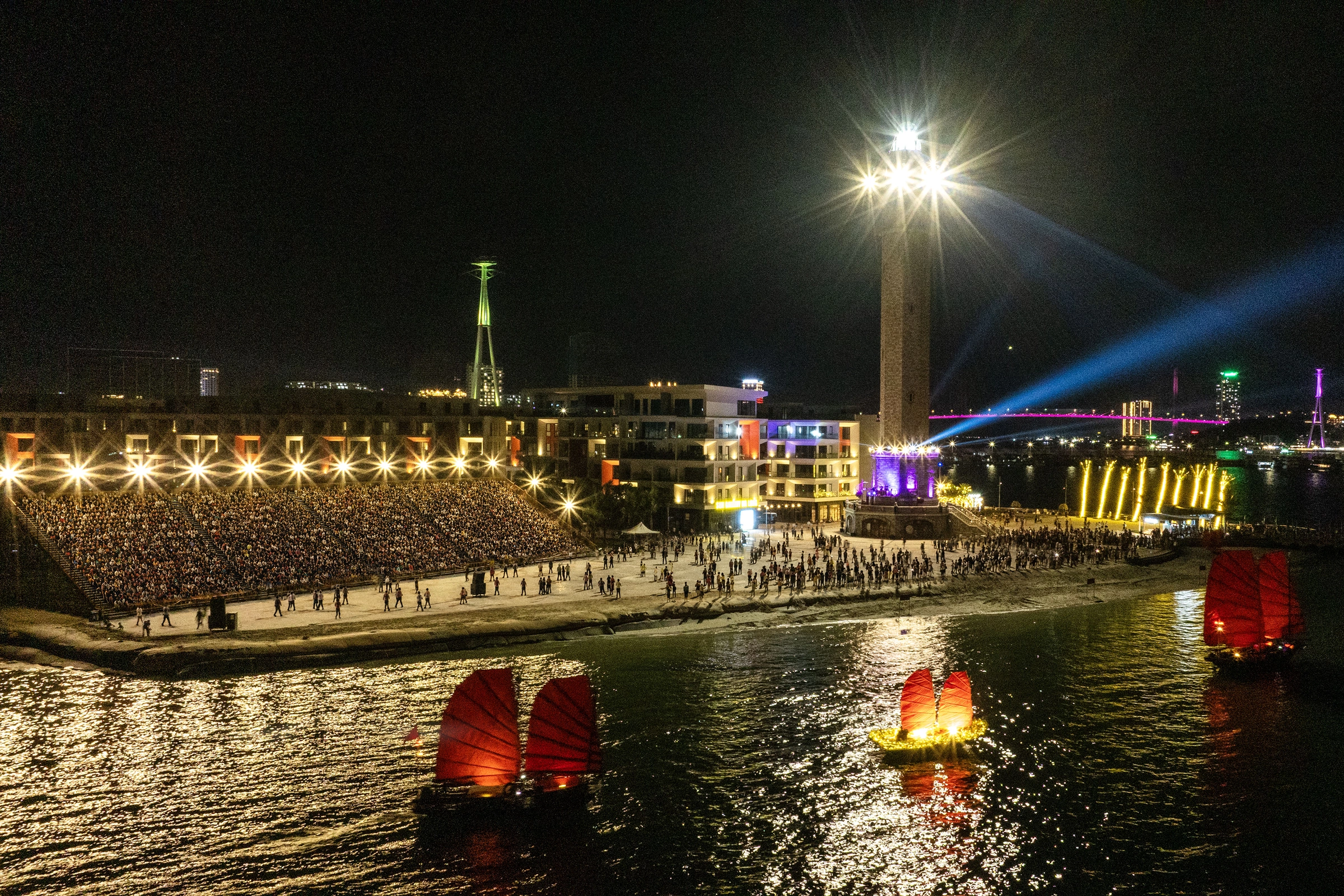 |
A new night street for tourists, built in Bai Chay, Quang Ninh, opened for the first time during the 30/4-1/5 holiday. Le Tan
Vietnam has many beautiful destinations but needs more synchronized experience chains for: nightlife, shopping, entertainment, tourist information, information centers, post-6 PM products, family services, luxury services, and consistent service standards across all touchpoints.
Thu believes Vietnam's core solution is to build a synchronized experience chain, turning night markets and real-life shows into specific reasons to retain tourists.
For tour guide Henry An, a drawback of Vietnamese tourism is that many places are not strictly managed, leading to overcharging of Thai visitors. Additionally, Thais enjoy shopping in Vietnam, but tourism goods are often spontaneous, lacking official quality assurance. Thais are interested in tax refunds for official products when traveling, whereas spontaneously sold items do not qualify.
Vietnamese tourism experts also agree that the most valuable lesson from Thailand is the ecosystem approach to tourism. Thais don't just sell destinations; they sell a lifestyle: cuisine, festivals, shopping, spas, entertainment, films, sports, music, the night economy, and everyday experiences. These elements are communicated consistently, making Thailand's tourism image memorable and recognizable.
Vietnam can learn how Thailand creates reasons for tourists to return multiple times. A visitor who has been to Bangkok can still return for: festivals, shopping, cuisine, healthcare, concerts, or sports events. This shows that tourism products should not just be about visiting scenic spots but should develop new layers of experiences based on seasons, events, customer groups, and lifestyles.
"The important lesson is not to imitate Thailand, but to leverage our differences and elevate tourism development more professionally," Thu affirmed.
Phuong Anh