Minh Long, a technology engineer from Ha Noi, experienced a phone theft during his stay at a resort near An Bang beach in Hoi An over the 30/4-1/5 holiday. He was traveling with his wife, young child, and parents, occupying two adjoining rooms. Despite the resort having security guards and cameras, which he considered quite secure, his family did not take extensive precautions.
As their young child frequently moved between the two rooms, Long did not lock the inner door before going to sleep. Around 3 h, his wife awoke to find two iPhones, a gold ty huu bracelet, and approximately 2 million VND in cash missing.
Upon reviewing the cameras, the accommodation owner discovered that the thieves had cut power to the exterior area, disabling the camera system and preventing any recording of the incident. The family subsequently reported the theft to Hoi An Tay Ward Police.
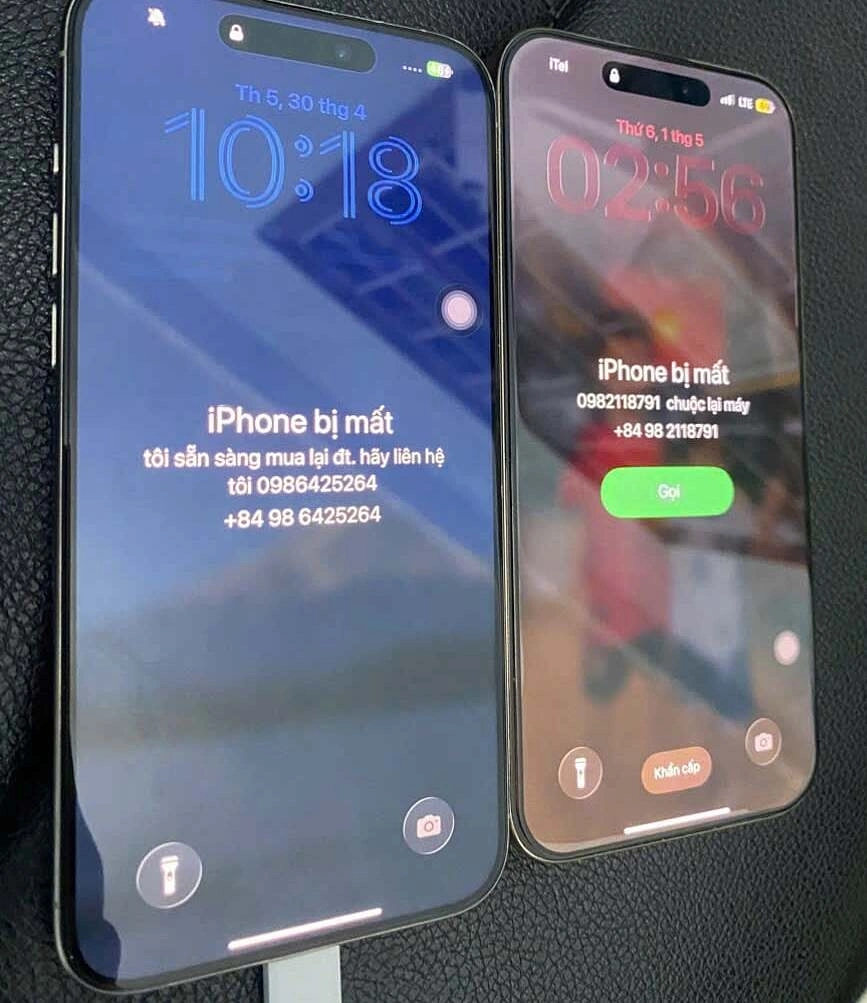 |
Minh Long's two stolen phones. Photo: Supplied |
While awaiting the authorities' search for the thief, Long also took proactive steps to protect himself, including locking his bank accounts, disabling his SIM, and activating 'lost mode' on his iPhones. Anticipating difficulty in recovery, he purchased new phones the following morning.
Monitoring the location of the stolen phones, he observed the devices being moved from Hoi An towards Tam Ky, then continuing through several other areas. Since his family needed to board a train back to Ha Noi, he could not directly pursue the thief, but he continued to track the devices' locations and stayed in contact with local police.
Around 22 h on 2/5, the phones' signal stopped. He utilized Google Maps and Street View to examine the surrounding area, identifying a pub. He then forwarded the coordinates and images to local police. At the pub, law enforcement officers apprehended an individual known for dealing in stolen phones.
By 8 h on 3/5, Hoi An Tay Ward Police successfully arrested the thief, recovering the two phones, jewelry, and cash, all of which were subsequently returned to Long.
Following this incident, Minh Long advises travelers to always check and lock their doors, regardless of whether they are staying in a hotel or a villa. He emphasizes that cameras are typically limited to common areas and cannot substitute for personal property security. Additionally, he recommends that travelers have contingency plans for phone loss, given the significant amount of important information stored on these devices.
Ngo Minh Hieu, a cybersecurity expert, highlights the severe risks of losing a phone while traveling, noting that devices contain emails, social media, banking applications, documents, flight tickets, and authentication codes. Thieves can exploit this information to compromise accounts, commit fraud, or execute unauthorized financial transactions.
Ngo Minh Hieu offers the following recommendations:
Upon realizing a device is lost, travelers must immediately lock it and secure their accounts. Use another phone to log into personal accounts and activate 'lost mode' (find my on iPhone or find my device on Android). This action remotely locks the device and displays contact information on its screen.
Subsequently, contact your bank's hotline to lock accounts and reach out to your network provider to disable your SIM. Phone SIMs are crucial for receiving one-time passwords (OTP). Failure to lock the SIM promptly could allow thieves to use it to reset passwords for important applications.
Embrace eSIMs and strengthen security. Users should transition to eSIMs instead of physical SIMs. If stolen, thieves cannot remove an eSIM to install it in another device, ensuring the phone remains connected for location tracking. Prioritize multi-factor authentication (MFA) through dedicated authenticator applications or Passkeys, rather than solely depending on SMS messages.
Secure all phone protection layers. Strong passwords, combined with facial recognition (Face ID) or fingerprint unlock features, will help safeguard internal data. iPhone users should additionally enable 'stolen device protection' to prevent thieves from altering passwords, even if they know the screen lock code. When reporting a device lost, it is crucial not to remove it from the management list, as this action will permanently disable location tracking, thereby enabling thieves to wipe the device for resale.
Prepare thoroughly before your trip. Travelers should set a PIN for physical SIMs, hide message content from displaying on the lock screen (to prevent one-time password exposure), back up all data, and record emergency hotlines for their bank and network provider in a notebook.
Mai Phuong