While a window seat grants passengers the primary right to adjust their shade, this privilege is not absolute. The ability to open or close airplane window shades is a shared responsibility between the flight crew and passengers, influenced by safety protocols, operational needs, and common courtesy.
During critical flight phases such as takeoff and landing, passengers must adhere strictly to the crew's instructions regarding window shades. Jodi R.R. Smith, president of Mannersmith Etiquette Consulting, stresses the importance of following these directives. These two phases are crucial for flight safety, as a majority of aviation incidents occur during these periods. Keeping shades open allows both crew and passengers to quickly assess external conditions in an emergency and helps eyes adjust to natural light, which is vital for a potential evacuation.
Beyond safety, operational considerations may also dictate shade positions. At a stable cruising altitude, the crew might request shades to be closed to manage cabin temperature, prevent light reflection into cockpit instruments, or enhance passenger comfort. However, in the absence of specific instructions, the passenger occupying the window seat generally holds the discretion to decide on their shade's position.
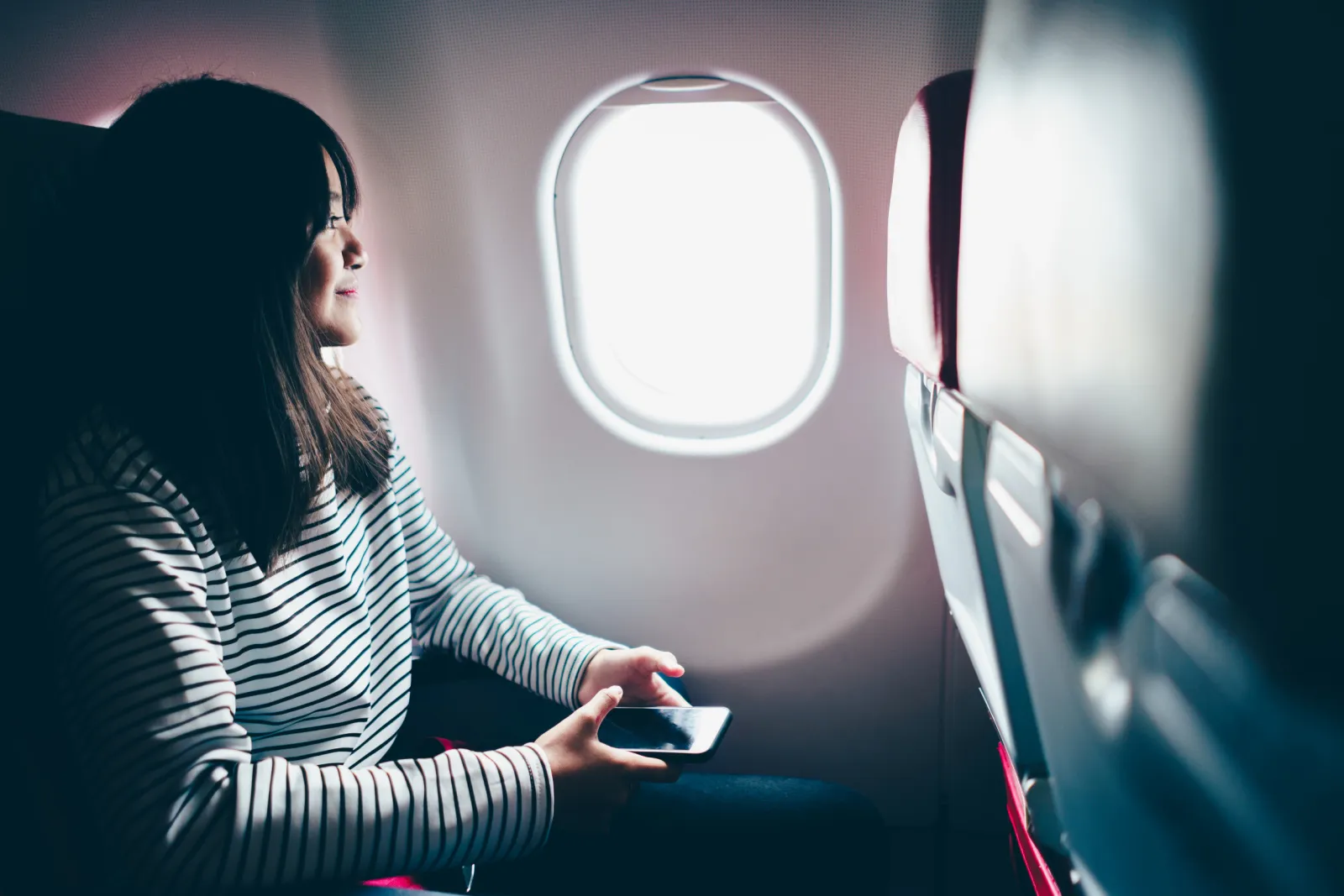 |
Adjusting airplane windows depends on many circumstances. Photo: Newsweek. |
Etiquette expert Thomas Farley highlights that passengers in middle or aisle seats should not unilaterally decide or reach across another person's space to adjust a window shade. If the window seat is vacant, control of the shade transfers to the passenger in the middle seat. Should both inner seats be empty, the aisle passenger then assumes control. In cases where a window is positioned between two rows, priority is typically given to the passenger with the larger portion of the window directly in front of them.
Even when exercising their right to adjust the shade, window seat passengers are encouraged to practice courtesy and consider those around them. Jackie Vernon-Thompson, founder of From the Inside-Out School of Etiquette, advises seeking input from fellow row passengers before making any adjustments. "Just ask if it would bother them if you open the shade, and in most cases, the answer will be no problem", Jackie suggests.
Specific flight conditions often guide shade etiquette. For overnight flights, it is generally recommended to lower shades. During short daytime flights, most passengers are usually amenable to sunlight. However, on flights coinciding with dawn or dusk, the sun's angle can cause significant glare. If the glare inconveniences others, shades should be lowered until the discomfort subsides. For long-haul flights spanning multiple time zones, where the departure point is sunny but the destination is experiencing nighttime, lowering shades when the crew dims cabin lights can aid passengers in resting and adapting to the new time zone.
Experts also propose a compromise: partially lowering the shade instead of fully opening or closing it. For passengers prioritizing sleep, carrying an eye mask offers a proactive solution, reducing reliance on negotiating shade preferences with others.
Tam Anh (according to HuffPost)