In mid-november, several popular tourist destinations in the north, such as Ha Giang and Ba Vi (Hanoi), were 'overwhelmed' as visitors flocked simultaneously, causing severe traffic jams and gridlock. Many tourists reported spending two hours to travel just 20 km.
According to Nguyen Tien Dat, a representative of AZA Travel, the immediate cause of the recent 'overwhelm' was the confluence of three factors: peak hour, peak day, and peak season.
"Tourists flocked to Ha Giang and Ba Vi precisely when the flowers were in their most beautiful bloom of the year. Most chose to visit on weekend days and departed at the same early morning hour to catch the scenery, causing a sudden surge in vehicles on a single route, exceeding the infrastructure's capacity," Dat explained.
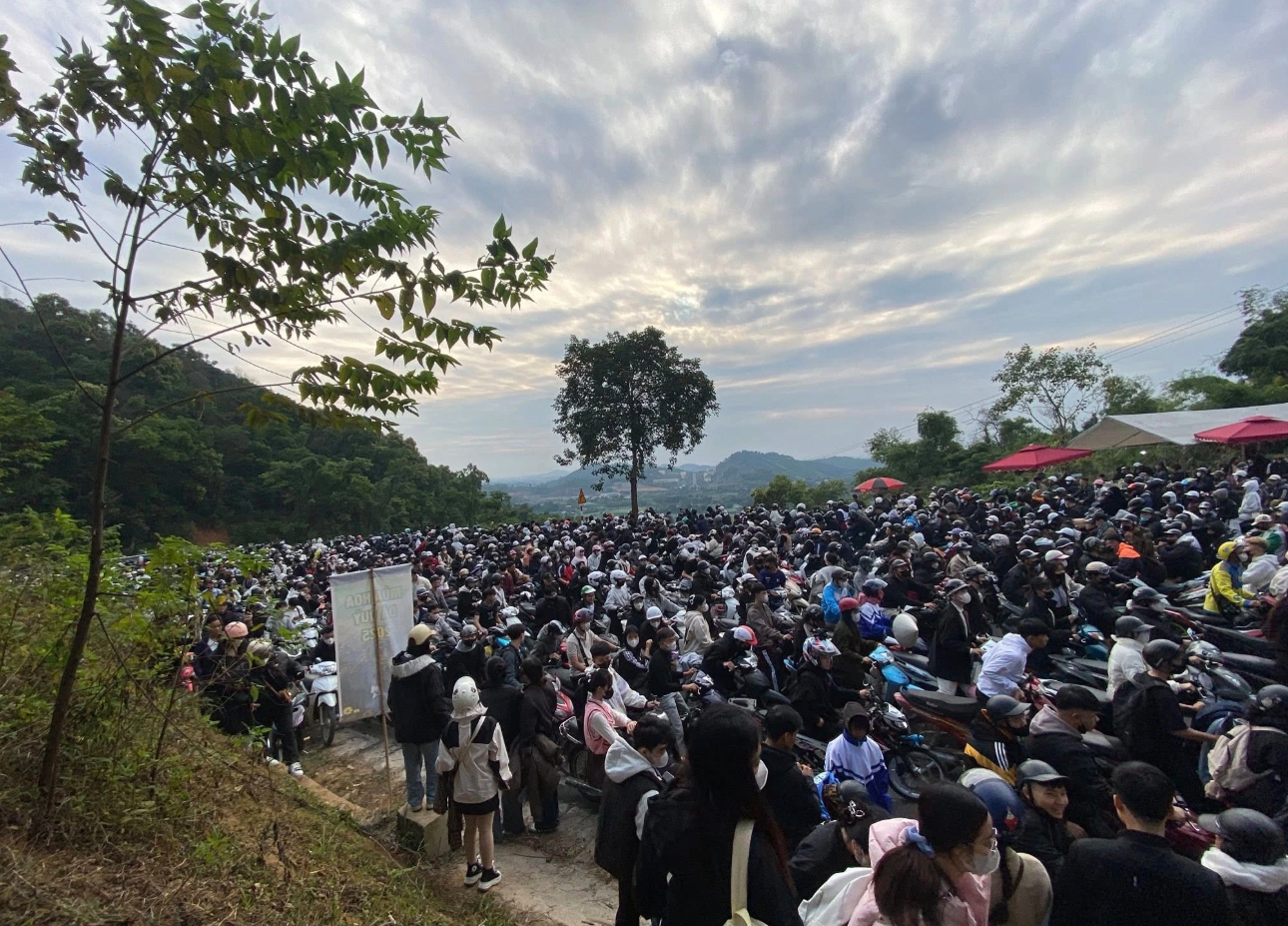 |
The road leading to Ba Vi National Park was congested with people and vehicles, on the morning of 16/11. Photo: Duong Thi Minh Nguyet |
The road leading to Ba Vi National Park was congested with people and vehicles, on the morning of 16/11. Photo: Duong Thi Minh Nguyet
From a planning perspective, Pham Hai Quynh, Director of the Asia Tourism Development Institute, stated that this is a consequence of an imbalance between local supply and demand. The transportation infrastructure connecting to popular tourist hotspots in the northern mountainous regions primarily consists of single-lane roads.
National Highway 2 and National Highway 4C, leading to the Dong Van Karst Plateau (Ha Giang), feature numerous winding, steep mountain passes with narrow roads barely wide enough for two vehicles to pass. Even a minor traffic incident or a vehicle breakdown can completely paralyze the entire route due to the lack of alternative exits. At Ba Vi National Park, on 16/11, management recorded a record number of visitors, exceeding 15,000 people, while parking lots and access roads to peak 400 and peak 1,100 have limited capacity.
Beyond physical infrastructure, the "soft infrastructure" of capacity management and early warning systems in Vietnam remains underdeveloped. Experts suggest that most tourist destinations currently do not identify or strictly adhere to a "tourism carrying capacity." This refers to the maximum number of visitors a destination can accommodate without degrading the quality of the experience or harming the environment.
The absence of real-time warning tools also leaves tourists "information blind." Most travelers departing for a destination are unaware it is already overcrowded. Upon arrival, finding themselves stuck, they have no option but to push forward, intensifying the bottleneck effect.
Social media also contributes to localized overcrowding. The Fear Of Missing Out (FOMO) effect leads tourists, especially young people, to flock to the same locations, checking in at the same photo spots at the same time, following trends on TikTok or Facebook. This behavior creates immense pressure on destinations with fragile ecosystems. Instead of dispersing to satellite routes, tourists concentrate heavily on a few "hot" spots, leading to some areas being overcrowded while others remain deserted.
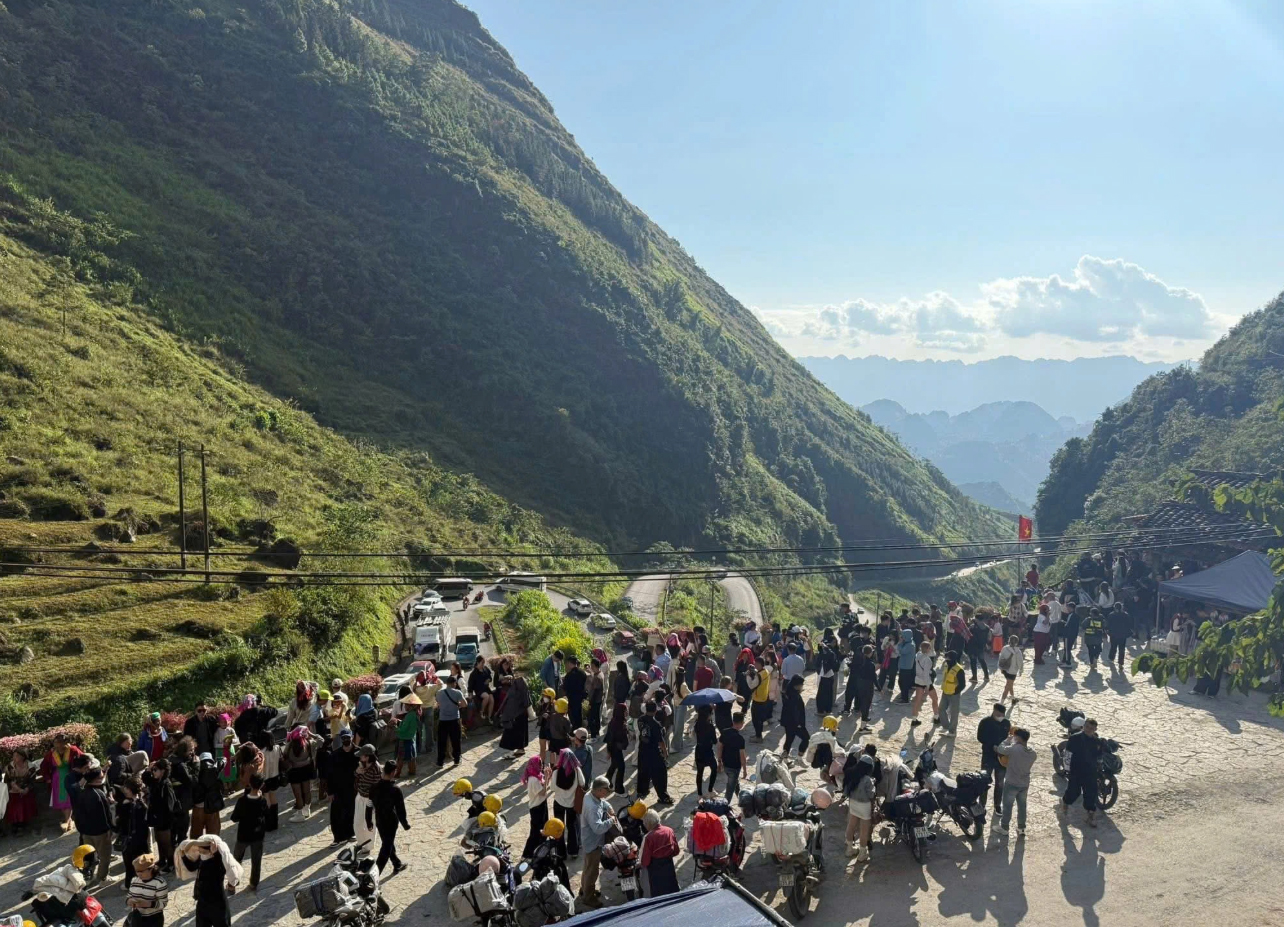 |
Tourists checking in at Tham Ma Pass on 15/11. Photo: NT |
Tourists checking in at Tham Ma Pass on 15/11. Photo: NT
To address this issue, Pham Hai Quynh proposed that localities should promptly apply technology to destination management.
He suggested developing a timed ticket sales system for attractions and strictly limiting the number of tickets sold daily based on calculated carrying capacity. "If tickets for one time slot are sold out, visitors must choose another slot or another day, preventing everyone from arriving at once," Quynh said.
According to him, destinations need to implement tiered pricing for tickets and services based on time, such as applying higher prices on weekends and holidays and offering significant discounts on weekdays to encourage off-peak travel, thereby reducing seasonality and congestion pressure.
Nguyen Tien Dat shares this view, stating that management agencies need to act as conductors in regulating information. Before each peak season, provincial and city tourism departments should publicize booking numbers for peak days in each area, forecast traffic conditions, and provide guidance on travel routes and bypasses to avoid congestion.
"Localities should learn from the experiences of countries like China or in Europe, sending warning messages or continuously updating digital platforms when a destination is approaching its capacity limit, so tourists can proactively change their itineraries," the AZA Travel CEO stated.
In the long term, the core solution remains infrastructure and product planning. Instead of relying solely on a flower season or a single check-in spot, provinces need to diversify cultural and culinary experiences to draw visitors to neighboring areas. For example, Tuyen Quang's tourism sector should connect buckwheat flower viewing tours with cultural village experiences, local markets, or less-traveled routes in Xin Man and Quan Ba to disperse pressure from Dong Van.
For tourists, experts advise becoming "smart travelers" by closely monitoring information and avoiding travel during peak days and hours. Choosing lesser-known satellite destinations with similar landscapes is also a way to have a fulfilling experience, rather than enduring a torturous experience amidst the crowds.
Phuong Anh