


As the world enters 2026 according to the Gregorian calendar, the people of Nepal are living in 2083 under the country's official calendar system.
This 57-year difference from the Gregorian calendar reflects an ancient culture, where time is not merely a number but is intertwined with history, beliefs, and daily life.
Nepal's official calendar system is known as Bikram Sambat (BS). This calendar began around 57 BCE, named after King Vikramaditya, a legendary emperor of ancient India. According to legend, he established this era after defeating the Saka invaders.
Unlike the Gregorian calendar, Bikram Sambat is a lunisolar calendar, combining lunar cycles to determine festivals and solar cycles for agricultural seasons. Because it started nearly 57 years before the Common Era, Nepal's traditional calendar consistently runs over half a century ahead of the Gregorian calendar.
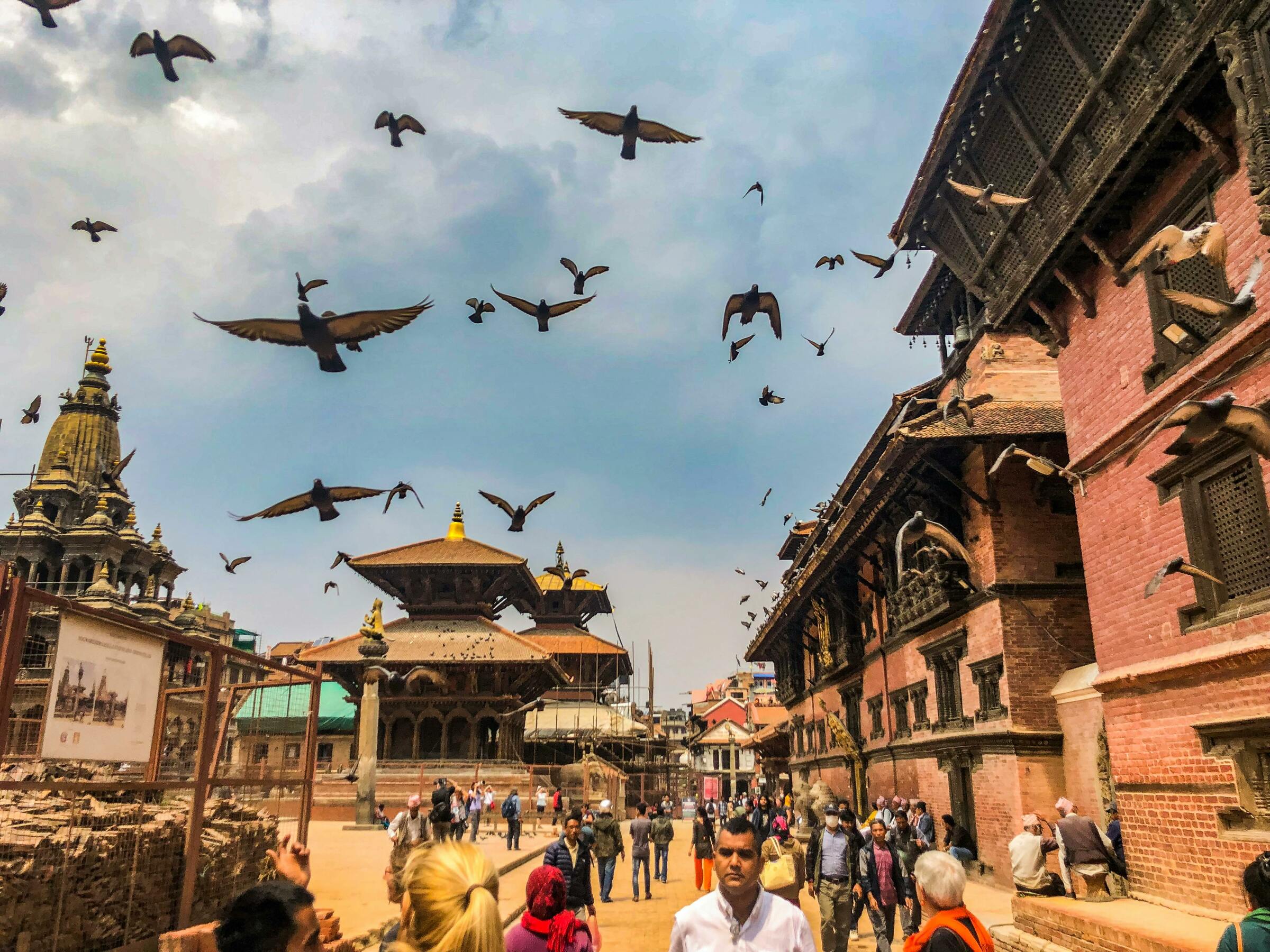 |
Patan city in Nepal. Photo: Anuar Gresati |
Multiple calendar systems coexist in Nepali life. Bikram Sambat (BS) serves as the national calendar, used in government documents, media, administrative records, and education.
Nepal Sambat, a calendar tied to the Newar community, indigenous residents of the Kathmandu Valley, began in 879 CE and is primarily used for religious ceremonies and traditional festivals.
In high-altitude regions, the Sherpa, Tamang, and other ethnic groups celebrate New Year according to the Tibetan calendar (Lhosar), with various New Year's days depending on the group. The Gregorian calendar is widely used for international communication, tourism, and foreign affairs.
This diversity results in Nepal's distinctive multi-dimensional calendars. A single day box on a calendar might display three or four numbers representing different calendar systems, ensuring no important festival or date is overlooked.
A distinguishing feature of the Nepali calendar is that the number of days in each month is not fixed. Unlike the Gregorian calendar, where months have 30 or 31 days, a month in the Bikram Sambat calendar can range from 29 to 32 days, depending on annual astronomical calculations. This means tracking dates in Nepal cannot rely on routine but requires consulting updated calendars published by specialized agencies.
Nepal's New Year, called Naya Barsha, typically falls on 13 or 14/4, marking the transition from spring to summer and the start of a new agricultural cycle.
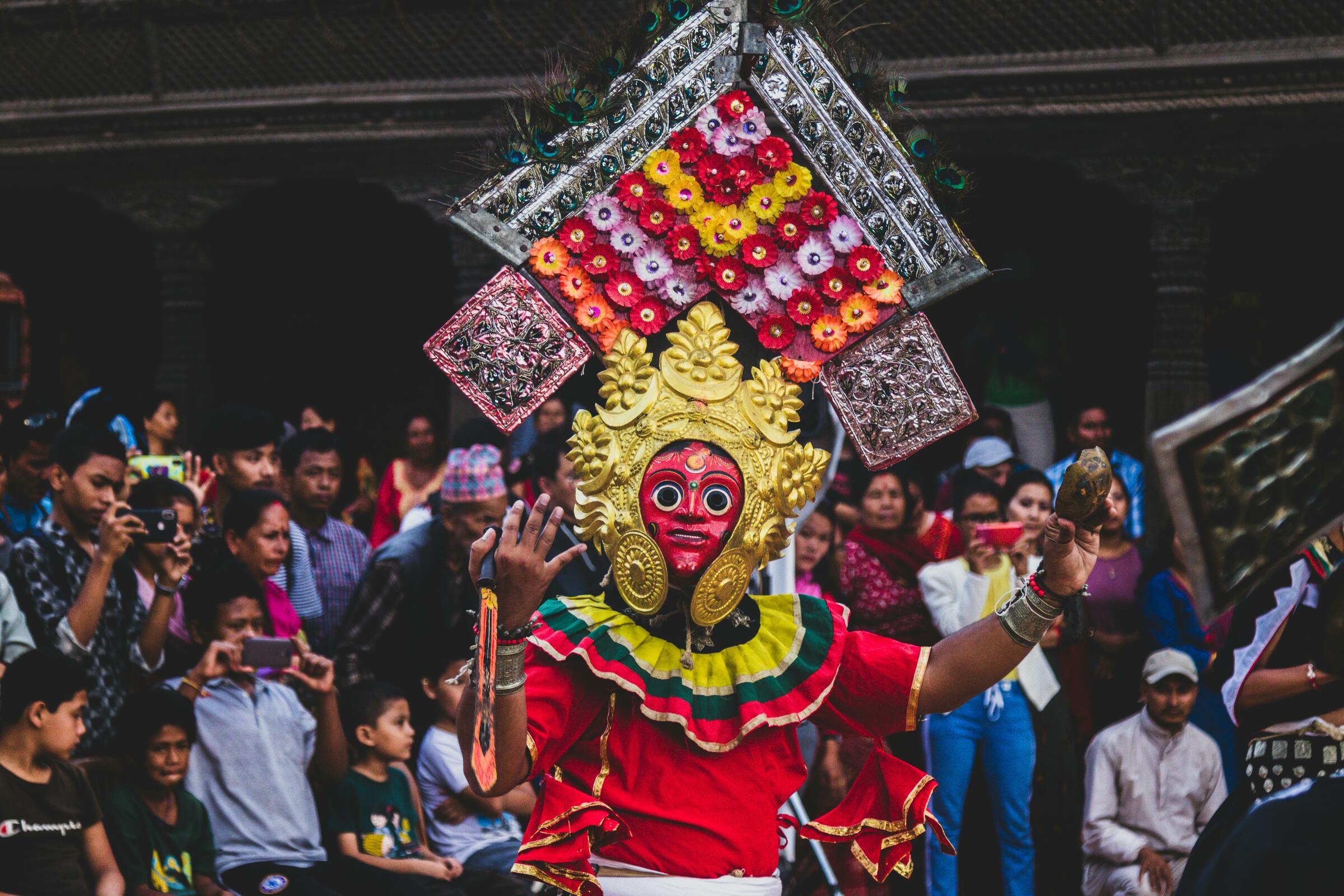 |
Lakhe dance during the Indra Jatra festival in Bhaktapur, Nepal. Photo: Sudip Shrestha |
For Nepalis, the Bikram Sambat calendar also guides spiritual and agricultural life. Most major festivals, such as Dashain, Tihar, and Holi, are determined by this calendar. The calendar's months accurately reflect climate changes in the Himalaya region, helping farmers determine planting and harvesting times and organize rituals to thank deities. Maintaining a distinct calendar helps preserve a traditional way of life, where community, religious activities, and agricultural production are closely tied to natural cycles.
Nepal's use of a calendar 57 years ahead of the rest of the world can pose challenges for tourists. Many first-time visitors are often surprised to see food packaging showing a production year of 2081 and an expiry date of 2082, figures belonging to the Bikram Sambat calendar.
When filling out forms or buying bus tickets in local areas, dates on documents may follow the Nepali calendar exclusively. However, in major tourist hubs like Thamel in Kathmandu or Pokhara, staff often provide Gregorian dates alongside the local ones for international visitors' convenience.
Major festivals like Holi or Dashain do not have fixed dates on the Gregorian calendar. Tourists planning to visit Nepal for these celebrations need to check the Bikram Sambat calendar for the specific year, rather than relying on previous years' dates.
Throughout its history, Nepal has been one of the few South Asian nations never fully colonized. Its continued use of a distinct calendar system is seen as a symbol of cultural identity and spiritual sovereignty. While the Gregorian calendar connects Nepal to the world for commerce and tourism, Bikram Sambat retains its central role in social life, administration, and festivals.
Mai Phuong (Source: Spiritualculture, Turistas)


