Cambodia has appealed to the United Nations (UN) Security Council (SC) to intervene in its escalating border conflict with Thailand, citing a global trend of declining respect for international law and the normalization of force. Ambassador Keo Chhea, permanent representative of Cambodia to the UN, made the plea during an open debate on "Leadership for Peace" in New York on 15/12.
Ambassador Keo Chhea emphasized the need to strengthen the SC's capacity for mediation and crisis prevention. He stated, "the United Nations needs to increase its peacekeeping and monitoring role, especially to protect small nations." This call for intervention comes as Cambodia reports ongoing attacks along its border.
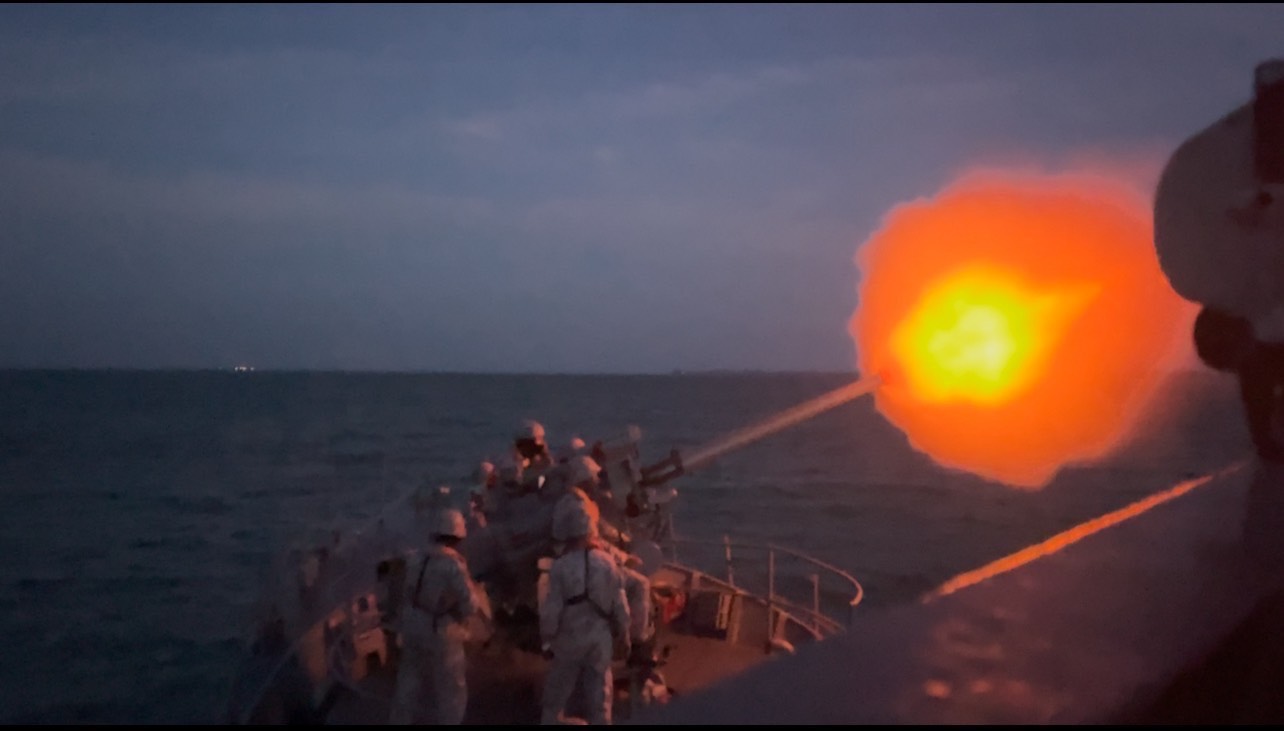 |
Thai warship HTMS Thepa fires near Trat province on 9/12. Photo: ThaiPBS |
Phnom Penh has accused Bangkok of expanding the conflict by attacking seven Cambodian provinces, including Siem Reap, despite the latter not sharing a direct border with Thailand. These alleged attacks have resulted in 15 civilian deaths, including a mot infant, and displaced over 409,000 people. Many civilian infrastructures have been destroyed, along with the Preah Vihear temple, a UNESCO-recognized world heritage site. Ambassador Keo Chhea argued that shelling and airstrikes extending 90 km into Cambodian territory cannot be considered a mere border issue or an act of self-defense.
Cambodia further accused Thailand of rejecting peaceful resolutions, including refusing to bring the dispute to the International Court of Justice (ICJ), unilaterally suspending a peace agreement signed in Kuala Lumpur, rejecting a ceasefire proposal, and declaring an end to negotiations. Ambassador Keo Chhea stressed Cambodia's commitment to diplomacy over force, law over coercion, and cooperation over conflict, supporting a ceasefire initiative proposed by Malaysia.
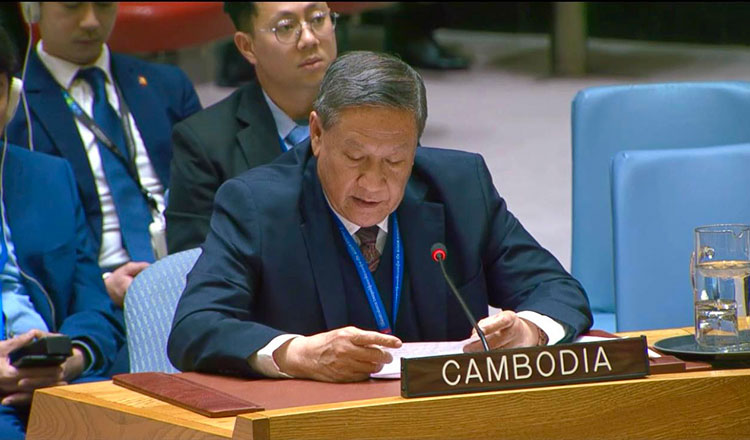 |
Ambassador Keo Chhea, permanent representative of Cambodia to the United Nations, speaks on 15/12 before the Security Council. Photo: Khmer Times |
Thailand, on 16/12, rejected Cambodia's accusations, asserting its actions were "self-defense and in compliance with international law." The Thai permanent mission to the UN accused Cambodia of presenting bilateral disputes in multilateral forums to undermine the spirit of international cooperation. Rachada Suthepakul, a Thai representative, reported that over 400,000 Thai citizens have been evacuated, about 200 hospitals and medical facilities have ceased operations, and nearly 400 schools have closed due to "Cambodian attacks." She stated that Cambodia's actions violated international humanitarian law, compelling Bangkok to exercise its right to self-defense under Article 51 of the UN Charter, while adhering to necessary principles and using proportional force.
Yesterday, Maratee Nalita Andamo, spokesperson for the Thai Ministry of Foreign Affairs, outlined conditions for ending hostilities between the hai countries. She stated that "Cambodia must declare a ceasefire first, demonstrating a sincere and verifiable commitment to peace." Bangkok also urged Phnom Penh to halt all attacks on civilians, fully comply with international humanitarian law and international law, and "take responsibility for the damage caused to civilians." Cambodia has not yet responded to Thailand's demands.
The renewed fighting between the hai nations, which re-erupted on 7/12, has resulted in at least 32 deaths, including 16 soldiers and a mot Thai civilian, along with 15 Cambodian civilians. Approximately 800,000 people in both countries have been evacuated. Cambodia has not yet released figures for its military casualties. Both sides accuse each other of initiating the conflict and targeting civilians, while simultaneously claiming to act solely in self-defense.
Thanh Danh (According to Khmer Times, AFP, Thai Enquirer)