Canadian Minister of Emergency Preparedness and Community Recovery Eleanor Olszewski announced on 17/7 the decision to evacuate residents in the Fort Hope area of southern Ontario province.
This sparsely populated region has few roads and relies heavily on air transport. It is also currently experiencing some of the most severe wildfires. Canadian officials previously evacuated thousands of people from affected areas to cities further south in Ontario province.
Large-scale wildfires occur annually in Canada, one of the countries with the largest forest areas globally. Climate experts state that rising temperatures lead to drier wood, increasing the risk of wildfires.
On 18/7, Canada's Ministry of Energy and Natural Resources recorded 69 new wildfires, bringing the total to 955. The total area burned so far is about 28,500 square kilometers, which is significantly lower than the average over the past five years.
However, wind has carried smoke across the border into US territory, prompting many local areas to issue health and poor air quality warnings. President Donald Trump claimed that Canadian wildfires caused billions of USD in damage to the US and threatened to increase tariffs on its neighbor.
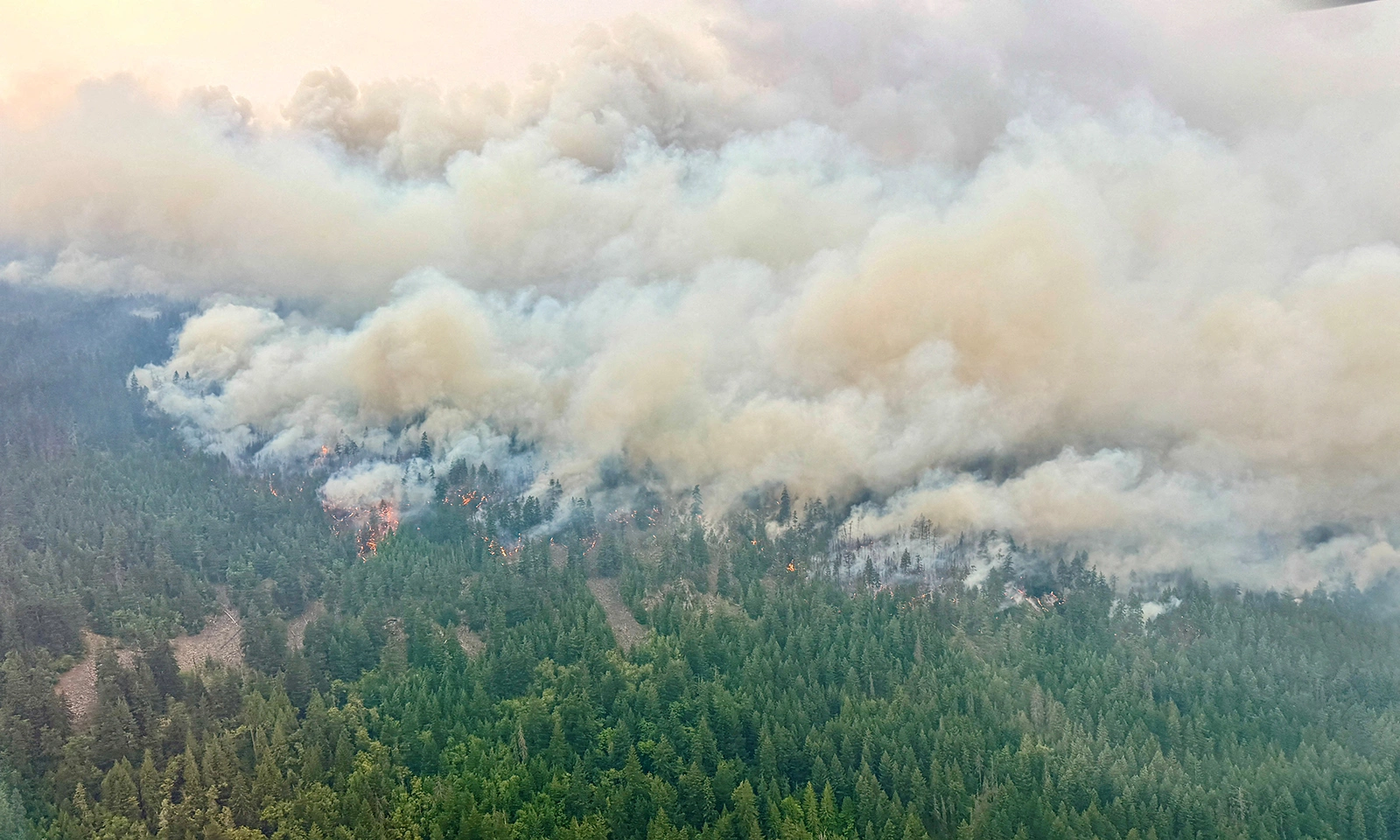 |
Smoke rises from a wildfire in North Bend, British Columbia province, Canada, on 16/7. Photo: Reuters |
Following President Trump's comments, Minister Olszewski stated that Canada has invested nearly USD 8.6 billion in forest conservation and wildfire prevention since 2020, as the country faces increasingly dry and warm weather.
Canadian Prime Minister Mark Carney indirectly responded on 16/7 to criticism regarding the country's natural disaster response. He also referenced the US's stance on climate policy, noting it "maintains production methods contrary to clean energy goals" and reduces its role on the international stage.
Nguyen Tien (According to AFP, AP, Reuters)