


"Our recent achievements with China aim to resolve issues that have arisen over the past few years," Canadian Prime Minister Mark Carney stated on 25/1, referencing his mid-month visit to Beijing. "We have no intention of pursuing a free trade agreement with China or any other non-market economy."
According to Carney, the free trade agreement between Canada, the US, and Mexico includes a commitment from all parties not to negotiate or sign free trade agreements with "non-market economies" without prior notification.
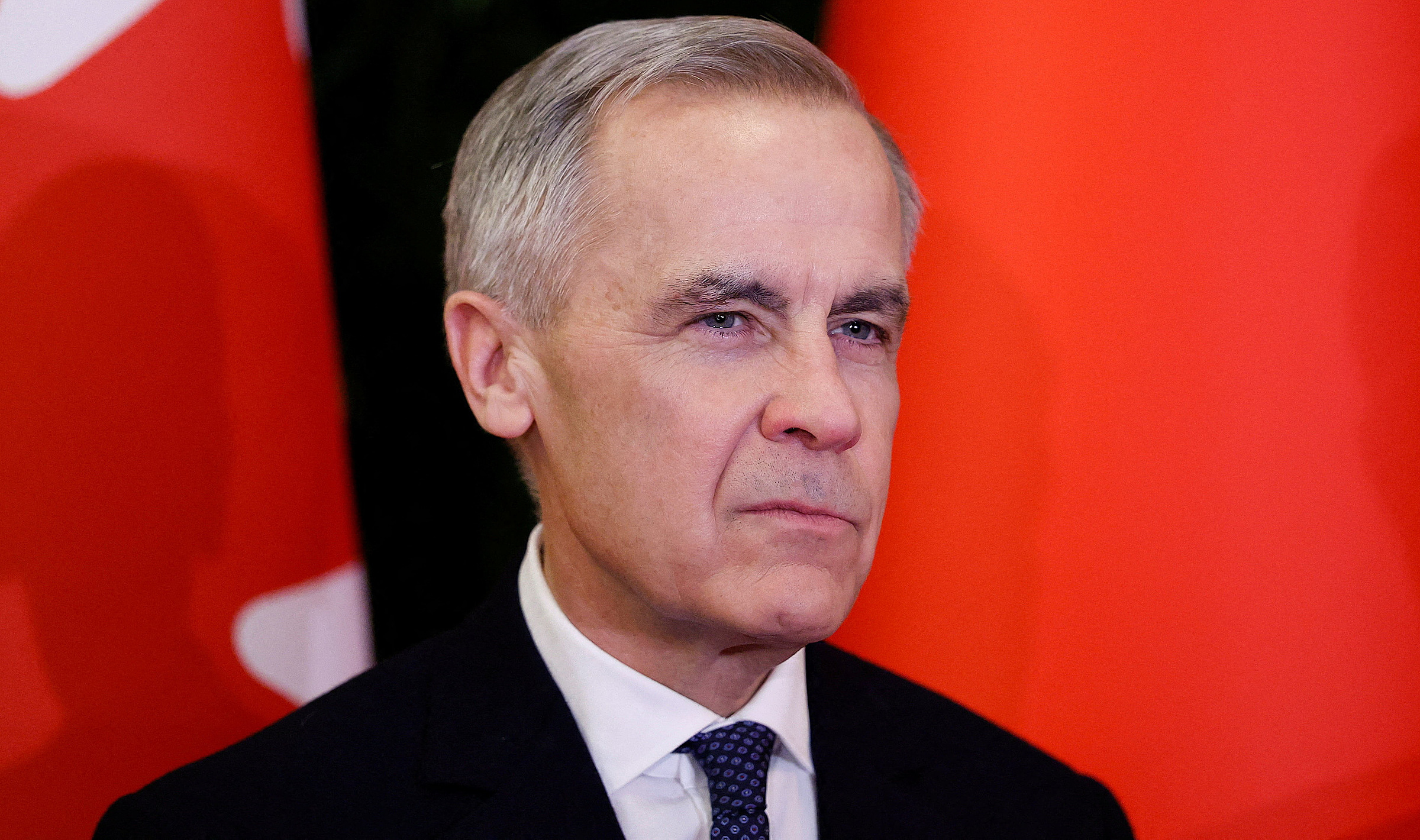 |
Canadian Prime Minister Mark Carney in Beijing, China on 15/1. Photo: Reuters |
Carney's statement followed a threat from US President Donald Trump to impose 100% tariffs on Canadian imports if Canada reached a trade agreement with China. Trump argued that China would attempt to use Canada to circumvent US import duties.
"If Carney thinks he can turn Canada into a 'transshipment port' for China to funnel goods and products into the US, he is gravely mistaken," Trump wrote.
US Treasury Secretary Scott Bessent echoed this sentiment, stating that "Canada cannot be allowed to become a gateway for China to flood the US with cheap goods."
In 2024, Canada followed the US by imposing 100% tariffs on electric vehicles and 25% on aluminum and steel imports from China. Beijing retaliated with 100% import tariffs on oil and canola meal, and 25% on Canadian pork and seafood.
During his mid-month visit to China, Prime Minister Carney diverged from the US stance by agreeing to reduce the 100% tariff on Chinese electric vehicles. In return, Beijing agreed to lower tariffs on the aforementioned Canadian exports.
Carney announced that Canada would implement an initial annual quota of 49,000 imported Chinese electric vehicles, subject to a 6.1% tariff. This figure will gradually increase to about 70,000 over five years. He highlighted that prior to 2024, Canada had not imposed any quotas on Chinese electric vehicles.
According to Carney, this initial quota represents only about 3% of the 1.8 million vehicles sold annually in Canada. He emphasized that in exchange, China is expected to begin investing in Canada's automotive industry within the next three years.
Canadian and US leaders recently engaged in a war of words concerning the Trump administration's interest in acquiring Greenland from Denmark. On 22/1, the US President announced the withdrawal of Canada's invitation to participate in the Peace Council, an initiative he launched to end global conflicts.
Huyen Le (According to AP)


