On a recent night, Youga was so happy he cried, finally sleeping on a bed, albeit without a pillow or blanket. The African man shared that after escaping a scam center in O'Smach, a border town in northern Cambodia near Thailand, and reaching Phnom Penh, he had slept on the streets for two days.
Youga had 100 USD left, but he dared not spend the small sum, wanting to keep it for emergencies. He was fortunate to be taken in by the Caritas Catholic charity shelter.
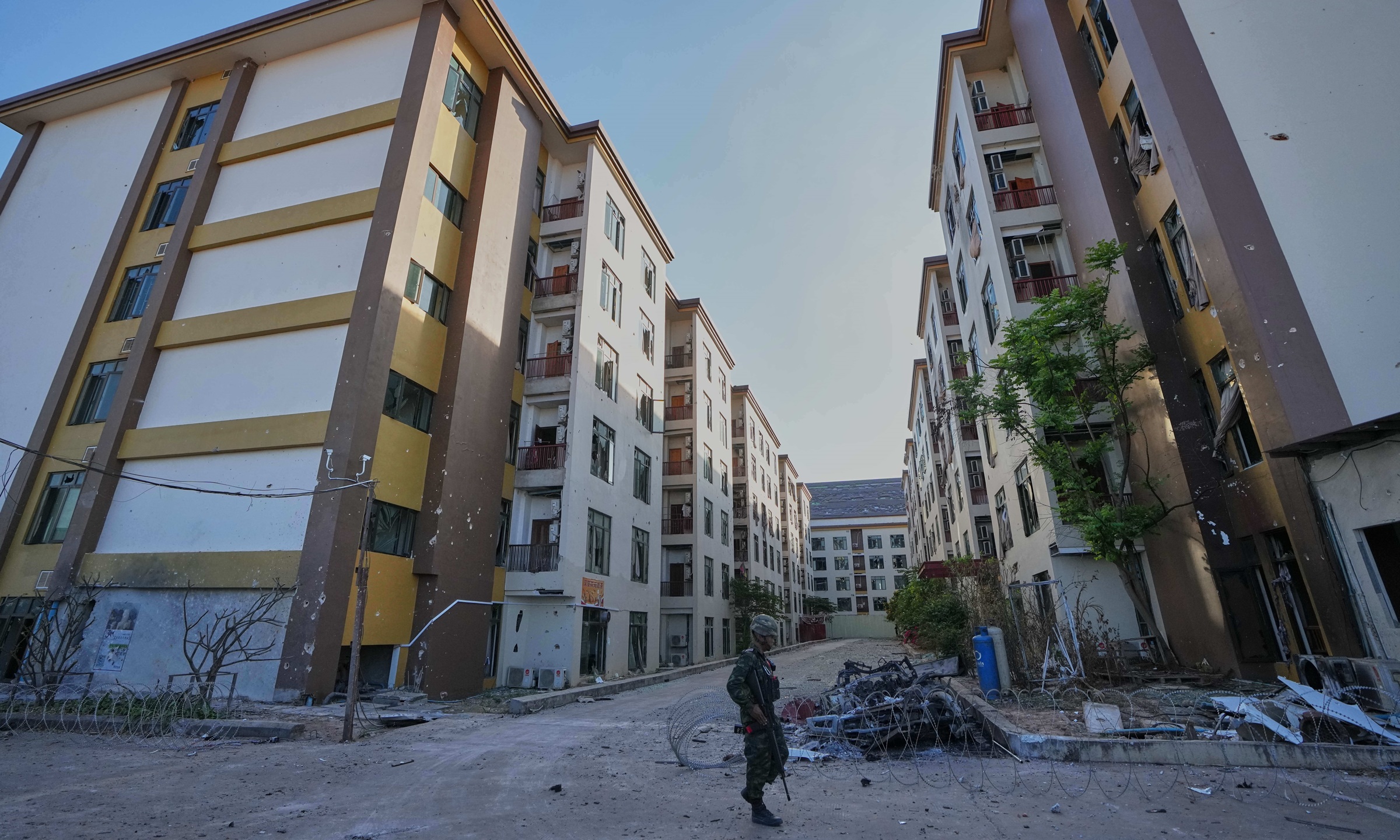 |
Inside an abandoned scam complex in O'Smach, a border town in northern Cambodia near Thailand, on 2/2. Photo: AP |
However, the Caritas facility operates continuously at overcapacity, with its staff reduced to one-third and its budget severely cut compared to before. This occurs amid an unprecedented surge in workers abandoning scam compounds in Cambodia.
Due to a lack of space, they have had to turn away over 300 people needing help. "The current situation is like triaging emergency patients", said Mark Taylor, an expert on human trafficking in Cambodia.
As of last week, the facility was accommodating approximately 150 people. Many new arrivals sleep in communal rooms, carrying nothing but the clothes they wear. The shelter also lacks enough blankets and pillows for everyone.
The most pressing issue for Caritas in the coming weeks is its food budget. "They are living hand to mouth", Taylor noted.
According to numerous videos and images on social media, verified by Amnesty International, scam compounds in Cambodia have been releasing people en masse in recent days. The organization interviewed 35 victims who described their escape as chaotic and dangerous.
This wave of escapes follows the extradition of Tran Chi, the kingpin of a massive transnational scam network, to Trung Quoc a few weeks prior. Cambodian Prime Minister Hun Manet recently declared the fight against cybercrime a "top priority" for the nation.
Li Ling, a rescue worker, stated she currently has a list of over 200 Ugandan and Kenyan nationals seeking assistance after leaving scam hubs. She has spent about 1,000 USD of her own money to provide accommodation for the most desperate individuals, but cannot sustain this support long-term.
"Embassies say there's no clear path for them, and international organizations report full capacity. Responsibility is being passed back and forth, creating a vicious cycle with no way out", Li explained.
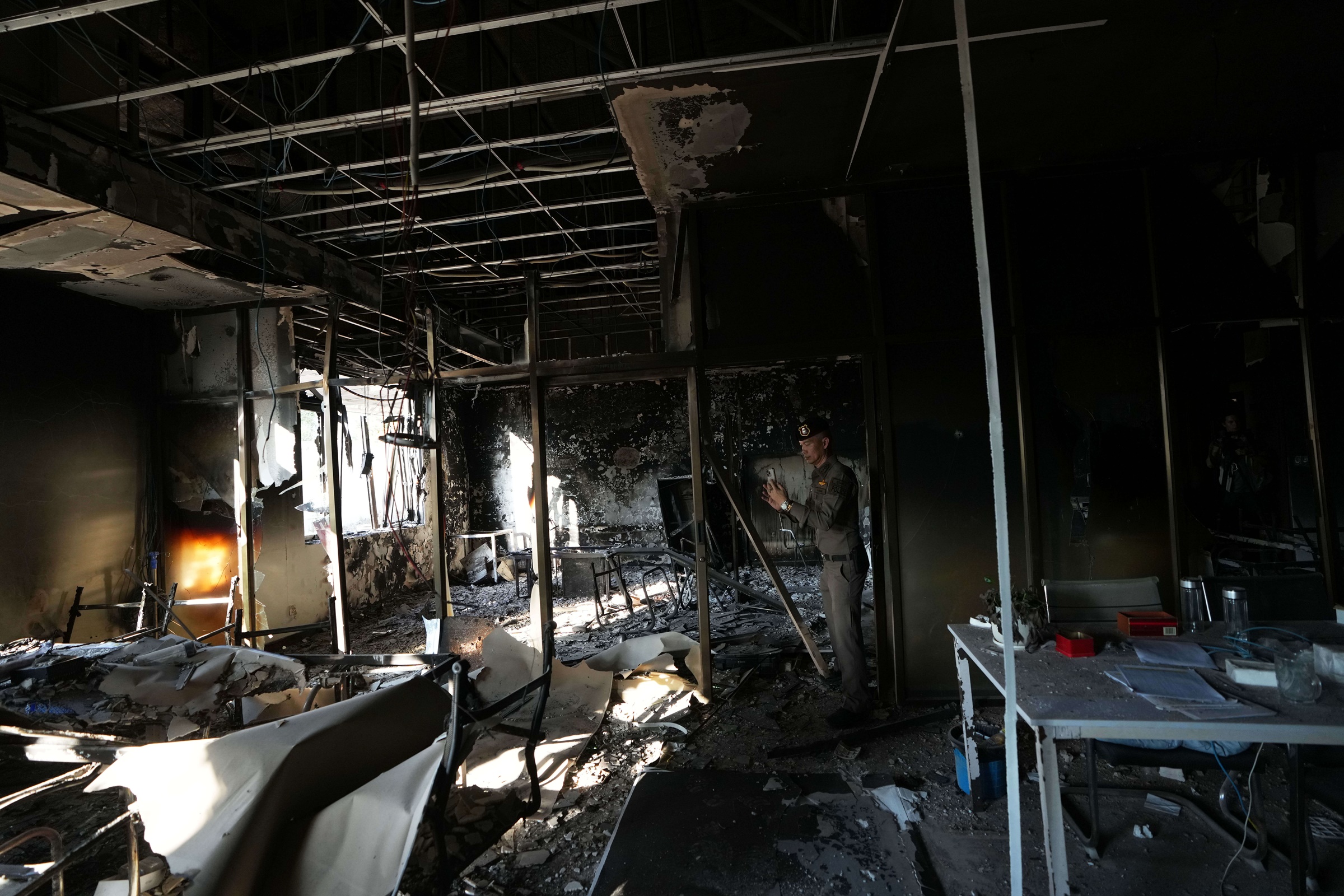 |
A destroyed "work room" in a scam center in O'Smach, Cambodia, on 2/2. Photo: AP |
"Amidst this chaotic and painful scene, thousands of trauma survivors are being overlooked, forced to fend for themselves without any government support", emphasized Montse Ferrer, regional research director at Amnesty International.
As a result, some individuals have had to return to work in scam compounds, unwilling to face hunger or sleeping on the streets.
However, the Cambodian government refutes allegations that it is neglecting victims lured into scam rings or condoning abuse at these centers.
"All individuals are screened to categorize victims and perpetrators. Victims will be protected, provided with shelter, medical care, and assistance to return home safely", stated Neth Pheaktra, Cambodia's Minister of Information.
In recent years, online scams have become a global issue. Inside isolated complexes, scammers establish sophisticated operational systems with soundproof phone booths, executing elaborate scripts to lure victims in multiple languages, even impersonating police stations from various countries.
While many anti-trafficking organizations are registered in Cambodia, the Caritas shelter is the only entity accepting victims from scam compounds.
Caritas previously received financial support from Winrock International, a partner of the U.S. Agency for International Development (USAID) in Cambodia. The organization was scheduled to receive 1,4 million USD from USAID from 9/2023 to early 2026. However, funding was cut after President Donald Trump's administration suspended foreign aid and dissolved USAID early last year.
The shelter also receives partial funding from the International Organization for Migration (IOM), but IOM relies primarily on U.S. funding and is also facing budget cuts.
Due to various complications, "the number of legitimate organizations willing to address this problem in Cambodia is extremely small", said Jacob Daniel Sims, an expert at Harvard University's Asia Center, who has worked in anti-trafficking efforts.
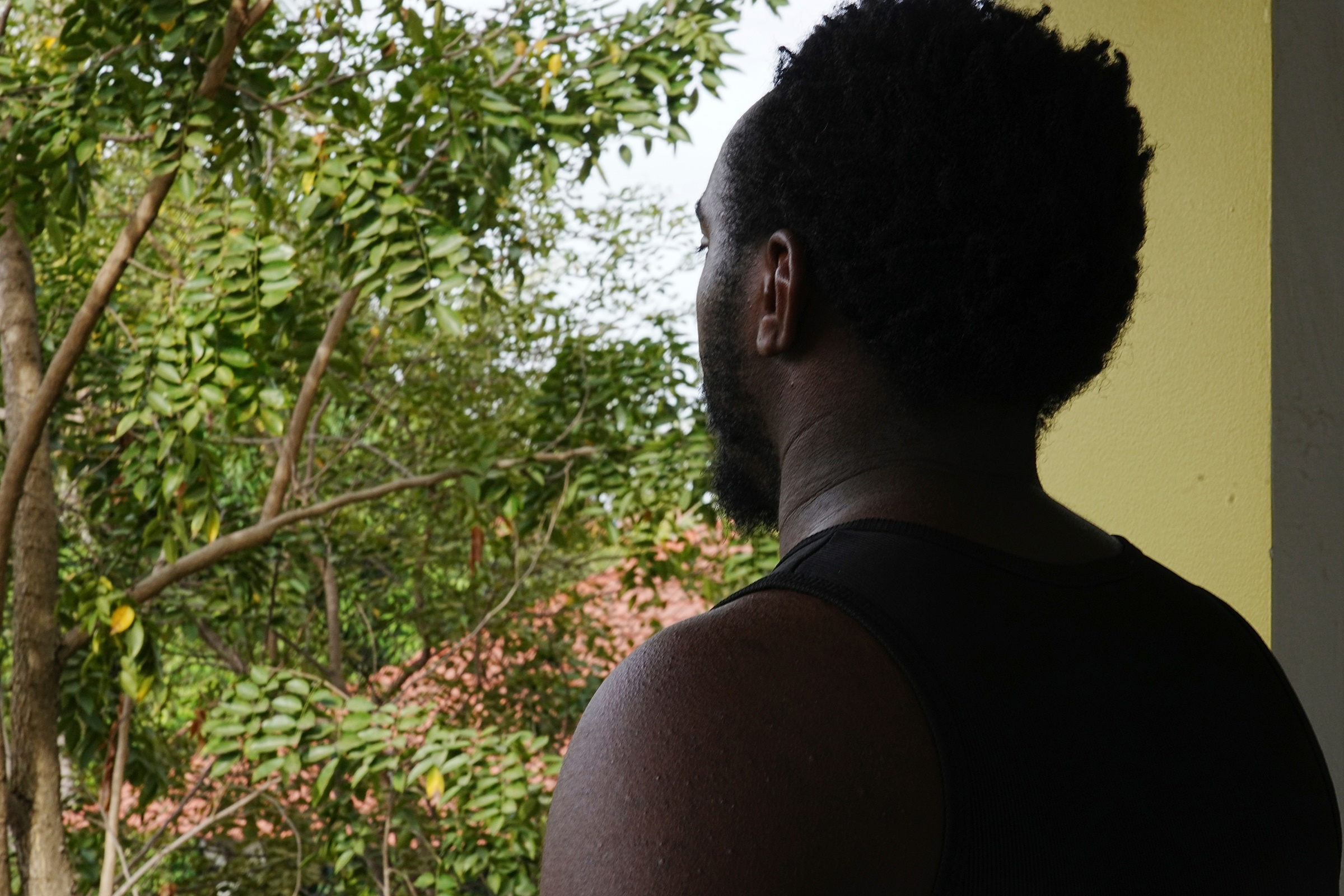 |
Youga at an undisclosed location in Cambodia. Photo: AP |
Youga recounted that while in the scam center, he was regularly beaten for refusing to work. He was lured there last November by an "all-expenses-paid" job offer via email. Despite multiple rejections, the recruiter persisted until he fell into the trap.
Youga cannot return to his homeland. He belongs to the Banyamulenge ethnic group, primarily living in DR Congo, which is frequently attacked by armed groups. Youga also cannot rely on embassy assistance, as his country has no diplomatic representation in the region.
He stated he was a university student and wishes to continue his education in the future. Currently, he only hopes to find a safe place. "I want to rebuild my life properly and with dignity", Youga said.
Vu Hoang (According to AP)