El Paso, Texas, saw its airspace closed for over 7 h on the evening of 10/2, a move the Federal Aviation Administration (FAA) attributed to "special security reasons." While the FAA later stated "no threat" existed for commercial aviation, the sudden closure sparked concerns among local officials. El Paso Mayor Renard Johnson reported that neither he nor the management of El Paso International Airport (ELP) received prior notification. This unexpected action grounded emergency aircraft and diverted medical flights bound for ELP to Las Cruces International Airport, nearly 100 km away.
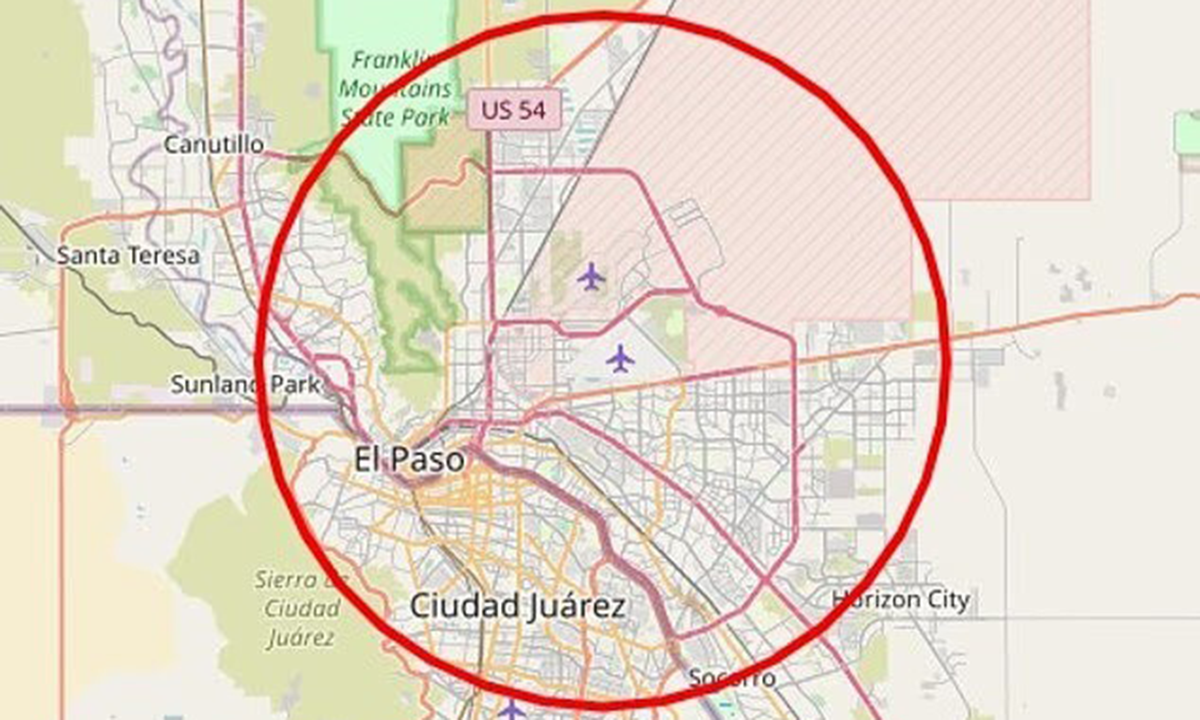 |
The area where airspace was closed. Graphic: FAA |
On 11/2, US Transportation Secretary Sean Duffy, along with representatives from the White House and the Pentagon, stated that the FAA decided to close El Paso airspace due to the presence of unmanned aerial vehicles (drones) operated by Mexican drug cartels. Duffy declared the threat "neutralized" and asserted there was no longer any danger to civilian flights. However, US media, citing four anonymous sources, reported that the FAA was compelled to order the El Paso airspace closure because the Pentagon chose to deploy "new anti-drone technology" without providing aviation officials sufficient time to assess potential risks to civilian aircraft operations. Sources indicated that despite FAA objections, the Pentagon deployed the new technology this week at Fort Bliss, near El Paso. The aim was to counter what military officials believed was a drug cartel drone, but which was, in fact, a balloon. "This operation was conducted without FAA coordination", a source stated.
The US military is developing high-power laser technology to intercept drones, which Mexican drug cartels use to monitor border patrol and transport illicit drugs into US territory. Reuters news agency reported that the technology deployed was the LOCUST laser system, a specialized anti-drone weapon with a 20 kilowatt power output developed by AeroVironment.
According to two sources, FAA officials had previously warned the Pentagon that they would have no option but to close the airspace if not provided with sufficient time and information to assess the risks posed by this technology. Aviation and US military officials had initially scheduled a meeting for 20/2 to discuss the matter. However, the US military proceeded with its operation earlier without rescheduling the meeting, prompting the FAA to respond by closing the airspace for 10 days, an action considered rare.
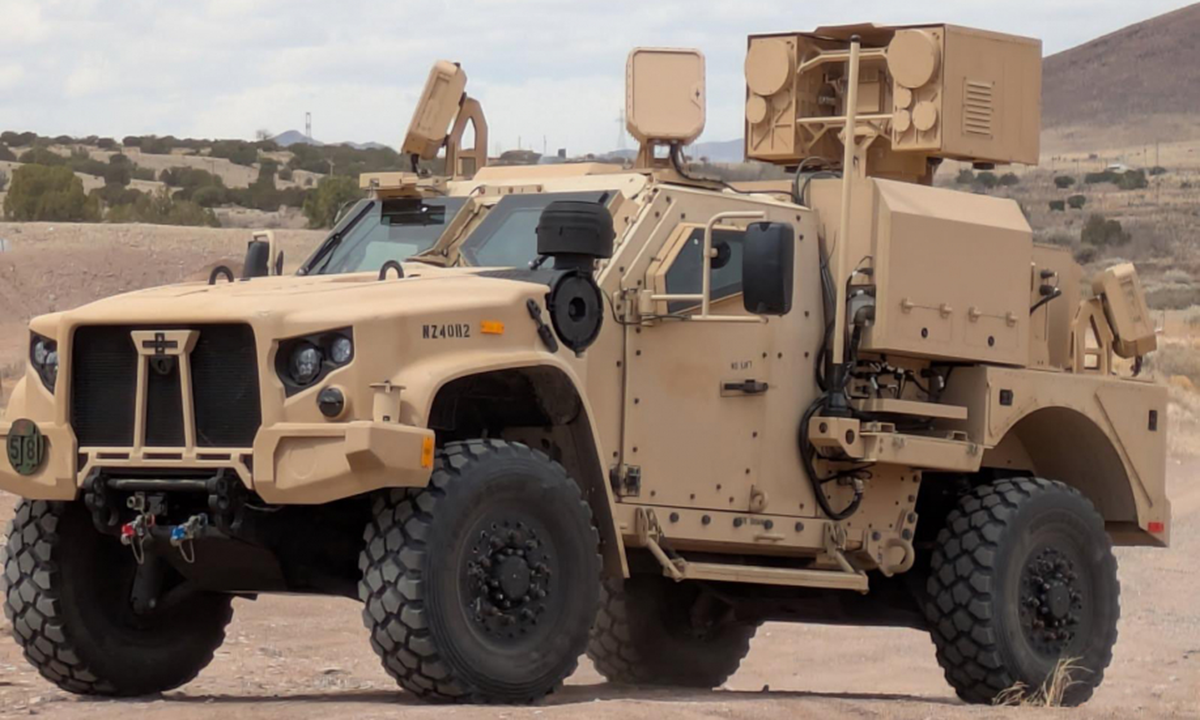 |
The Locust laser system mounted on a vehicle in an image posted in 12/2025. Photo: AeroVironment |
However, an anonymous US government official refuted claims of communication breakdowns, asserting that the Pentagon and the US Department of Transportation had coordinated with the FAA for months and received assurances that there was no threat to commercial flight operations. When questioned about the US closing El Paso airspace due to drone intrusions operated by Mexican drug cartels, Mexican President Claudia Sheinbaum stated she had received no reports of drones appearing at the shared border.
Pham Giang (According to Hill, Reuters)