Satellite images released by China's National Meteorological Center on 9/7 show typhoon Ba Vi's cloud system covering nearly 940,000 km2, approximately nine times the area of Zhejiang province or 850 times that of the Hong Kong special administrative region.
The agency reports that super typhoon Ba Vi has wind speeds of nearly 200 km/h and a diameter of about 1,000 km, comparable to the width of France. It is forecast to sweep past northern Taiwan before making landfall in Fujian province on the evening of 11/7.
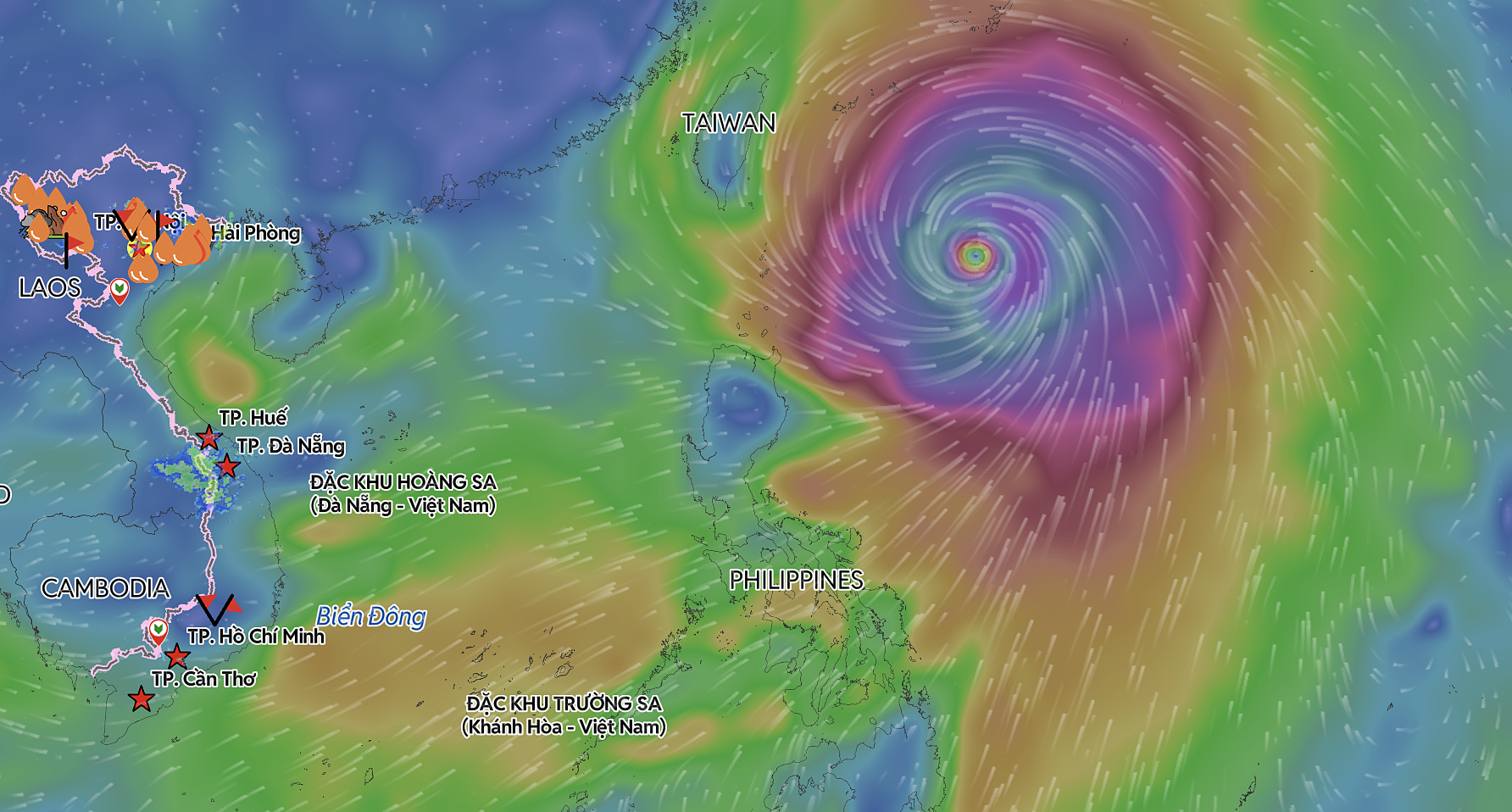 |
Super typhoon Ba Vi's position on the morning of 10/7. *Graphics: Vietnam Disaster Monitoring System.*
Hui Xinyi, a high school English teacher in Hangzhou, the capital of Zhejiang province, is among many people constantly checking weather forecast apps and social media for updates. "It's still unclear whether the typhoon will make a direct hit or just pass by. That uncertainty is causing real panic", she said.
Hui, who lives on the 25th floor of an apartment building, plans to tape her windows to mitigate the risk of glass breaking from strong winds. She is also stocking up on instant food and bottled water in case of power outages or water supply disruptions.
Hui stated that if bad weather impacts travel, classes might have to shift online or be canceled entirely.
Jason Chang, a forecasting expert at Taiwan's meteorological agency, noted that such large-scale typhoons are "quite rare in recent years." He believes Ba Vi will likely be the largest typhoon to affect the island since 1987.
Taiwan officials warn that super typhoon Ba Vi could bring up to 1,000 mm of rainfall to mountainous areas north of Taipei. Approximately 29,000 defense force members have been placed on standby for response efforts.
If it maintains its intensity, Ba Vi could become the strongest typhoon to make landfall on Taiwan since typhoon Kong-rey in 2024. Taoyuan International Airport, Taiwan's largest, announced that local airlines have canceled all flights departing on 11/7.
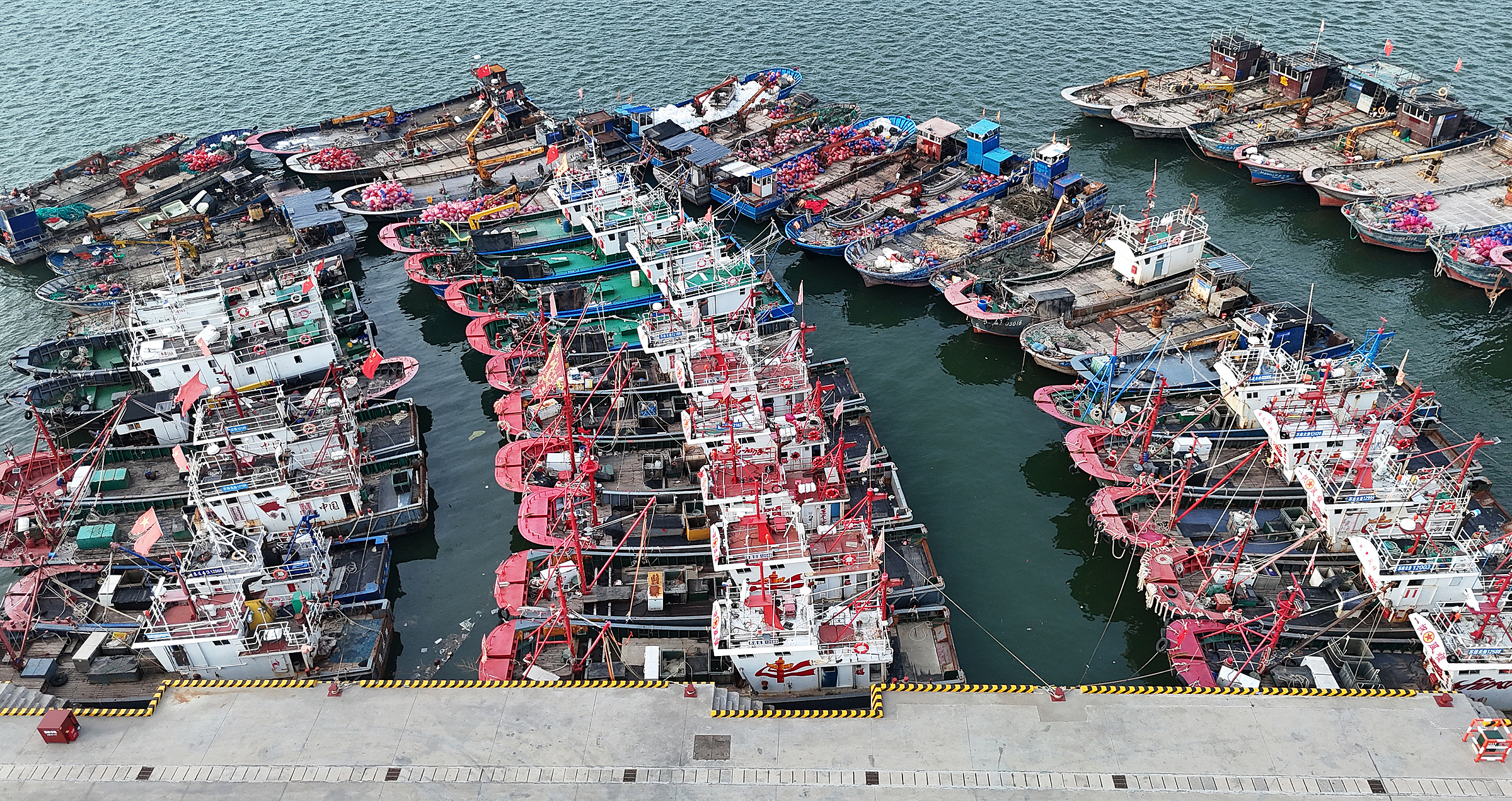 |
Fishing boats anchored to shelter from super typhoon Ba Vi at a port in Jiangsu province, China on 10/7. *Photo: Reuters.*
In a fishing town in northeastern Taiwan, hundreds of boats have filled harbors, seeking shelter from the typhoon. "Don't let the calm weather now deceive you. A typhoon like this can be the most terrifying thing", said Chen Ming-hui, a fishing boat captain.
Japan's Meteorological Agency also warned residents in Okinawa province to remain highly vigilant on 10-11/7 due to the risk of strong wind gusts, landslides, floods, and storm surges caused by the typhoon.
Japan Airlines canceled 50 flights on 10/7, affecting approximately 7,600 passengers. All Nippon Airways also canceled 34 flights, impacting about 1,800 passengers, with further cancellations expected on 11/7.
"Special attention is needed for Ba Vi because the typhoon has had a long time to absorb energy from warm waters and accumulate a massive amount of moisture. Upon landfall or approaching coastal areas, its destructive power could be catastrophic. Even a small change in Ba Vi's path could make a very significant difference", said Xiangbo Feng, a researcher at Imperial College London.
 |
Residents placing sandbags in front of doors in Taipei, Taiwan on 9/7. *Photo: Reuters.*
Typhoon Ba Vi is preparing to make landfall as search and rescue teams continue to look for victims after typhoon Maysak swept through southern China, killing at least 39 people earlier this week. Maysak's remnants caused at least two landspouts and severe flooding in Hubei province, central China.
In the most heavily damaged towns in Guangxi, residents are trying to stabilize their lives before the new typhoon arrives. Aid teams are also deploying drones to transport essentials to isolated areas.
At a farm in Xinyang district, pig carcasses lay scattered and began to decompose after two days submerged in floodwaters. Three lions at Guigang Zoo died due to flooding, and about 100 other animals, including: zebras, hedgehogs, parrots, and raccoons, are still missing.
China, Japan, and Taiwan are increasingly experiencing extreme weather phenomena that scientists link to climate change. This year is particularly concerning with the predicted emergence of El Nino, which causes higher temperatures and creates conditions for more frequent and intense tropical storms.
Huyen Le (According to Reuters, SCMP)