Cuba's Ministry of Energy announced that the national power system completely shut down around 18:45 on 21/3. Buildings in the capital, Havana, began losing power around 18:30.
According to the Ministry of Energy, efforts to restore the grid are underway. Cuba's power grid previously suffered a nationwide collapse on 16/3 and was restored after 29 hours, thanks to round-the-clock work by employees of the National Electric Union (UNE).
This outage coincided with the arrival of an international aid convoy in Havana this week, delivering essential medical supplies, food, water, and solar panels to the island.
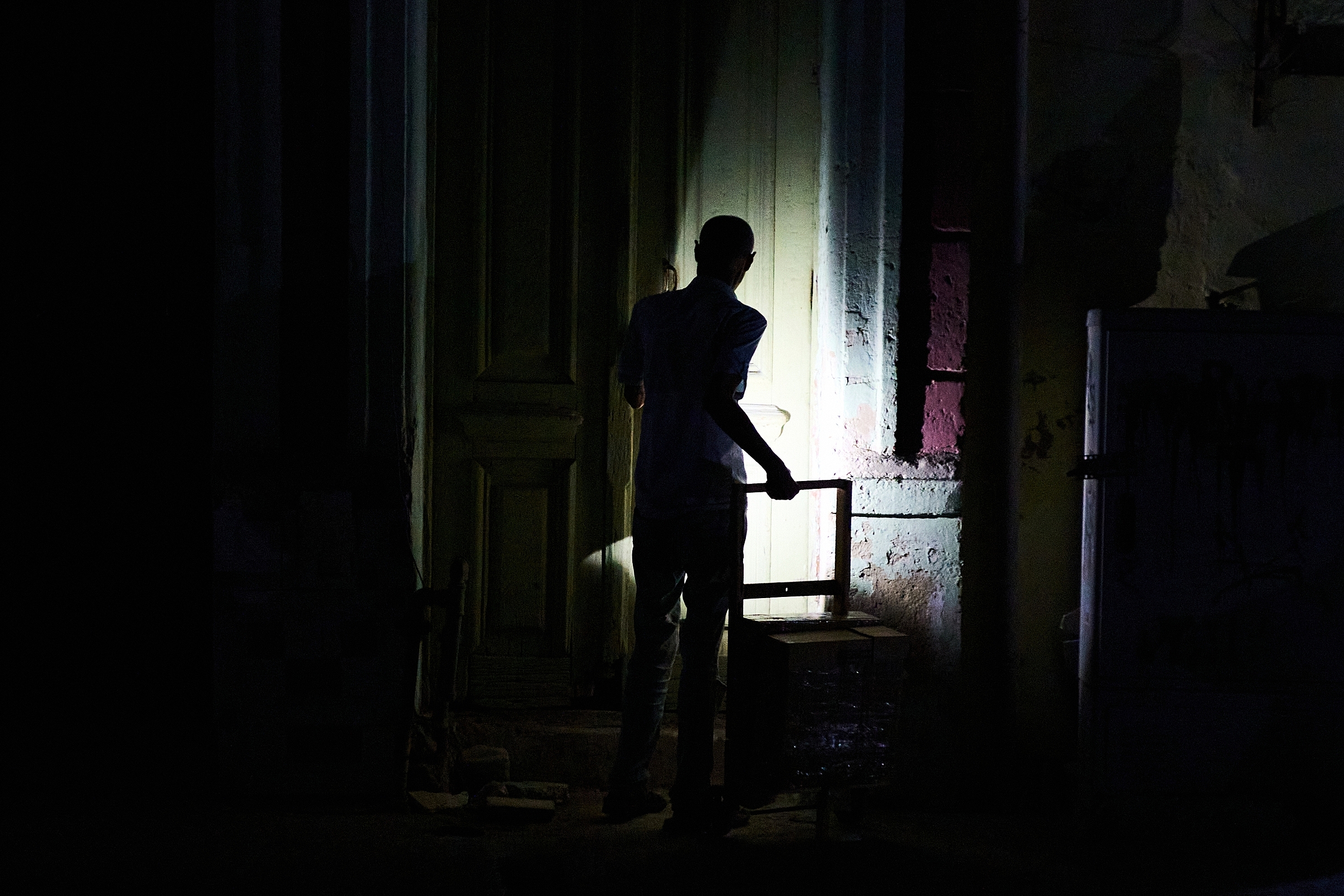 |
A man enters a building during a power outage in Havana, Cuba on 16/3. Photo: *AP*. |
Cuba relies heavily on oil for electricity generation, primarily importing it from Venezuela and Mexico. However, this supply was disrupted after the US conducted a raid in Caracas to arrest President Nicolas Maduro on 3/1. The US also tightly controlled Venezuela's oil exports and applied commercial pressure on Mexico to stop supplying oil to Cuba.
Cuban President Miguel Diaz-Canel previously stated that no oil shipments had reached the island nation in the past three months.
Cuban officials state that the near-total US blockade of fuel supplies has exacerbated the energy crisis, leading to rolling blackouts, shortages of medical supplies, and a decline in tourism. In some Cuban regions, daily power outages lasting up to 20 hours have become routine.
Cuba needs to revitalize its economy as the country faces prolonged power outages and shortages of fuel, food, and medicine, all stemming from US oil embargoes and sanctions.
Huyen Le (According to AFP, CNN)