Cuba's Deputy Prime Minister and Minister of Foreign Trade and Foreign Investment, Oscar Perez-Oliva Fraga, stated on 16/3 during a state television interview that "there are no barriers" for US businesses and other foreign investors seeking to enter Cuba.
This new policy expands investment opportunities for Cubans living abroad. Previously, while Cuban citizens were allowed to establish and operate private businesses since 2021, those residing overseas were not. Perez-Oliva Fraga emphasized that, depending on the business scale, Cubans abroad can now "fully participate in the country's development sectors." He reiterated, "We have repeatedly stated that Cuba's door is always open to investment from the Cuban community residing abroad. When we say that, we are not only referring to small projects, but also to the possibility of investing in larger projects", Perez-Oliva Fraga said.
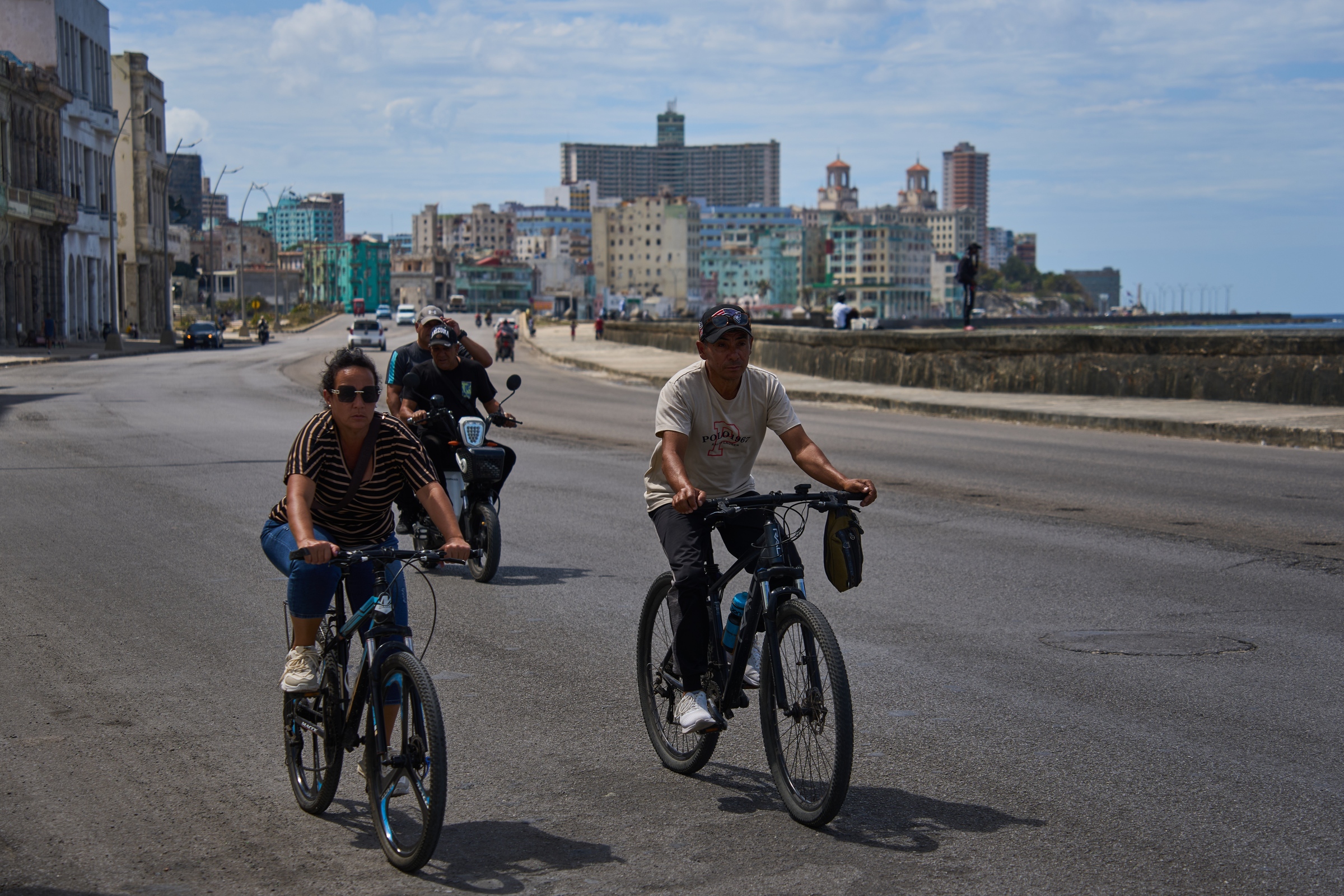 |
Residents cycle along a coastal road during a power outage in Havana on 16/3. *Photo: AFP* |
Cuba is particularly keen on attracting investment in agriculture, citing the model of Vietnamese companies producing rice in Cuba. These projects operate under usufruct rights, meaning land ownership remains with the state. However, the Deputy Prime Minister noted that US law still prohibits investment in Cuba due to longstanding economic embargoes.
The policy shift comes as Cuba's economy faces severe challenges, including prolonged power outages and shortages of fuel, food, and medicine. These difficulties stem from US oil blockades and sanctions. This change also follows Cuba's announcement of renewed negotiations with the US. Officials from the administration of US President Donald Trump previously indicated Washington's desire for Cuba to open its economy during bilateral talks. Trump's administration had notably blocked oil supplies from Venezuela to Cuba and threatened tariffs on any country selling oil to Cuba, further exacerbating the island nation's economic woes.
Hong Hanh (via Reuters)