Cuba's National Electric Union (UNE) announced on the evening of 17/3 (morning of 18/3 Hanoi time) that Granma province had connected to the National Electric System. This marked the connection of all provinces nationwide to the common power grid. The announcement ended a nationwide blackout that lasted about 29 hours, restoring power to millions across the island nation.
Officials confirmed that the nation's largest oil-fired thermal power plant had resumed operation. However, they warned that power shortages would persist due to insufficient generation capacity. The UNE had announced on 16/3 that the national power grid collapsed but did not disclose the cause. The corporation's workers then worked tirelessly around the clock to restore the power system in the provinces.
Osvanis Nunez Pena, technical director of Granma Electric Company, was quoted by Cuba's Granma newspaper as saying that adverse weather conditions prevented them from connecting solar power stations to the system. This precaution was taken to avoid the risk of another grid collapse.
For residents, the blackout brought significant concern. "What we always fear is that the blackout will last and the little food left in the fridge will spoil, because everything is expensive," said Olga Suarez, 64, a resident of Havana. "Otherwise, we are used to this situation because it's almost always like this here, going to sleep and waking up without electricity."
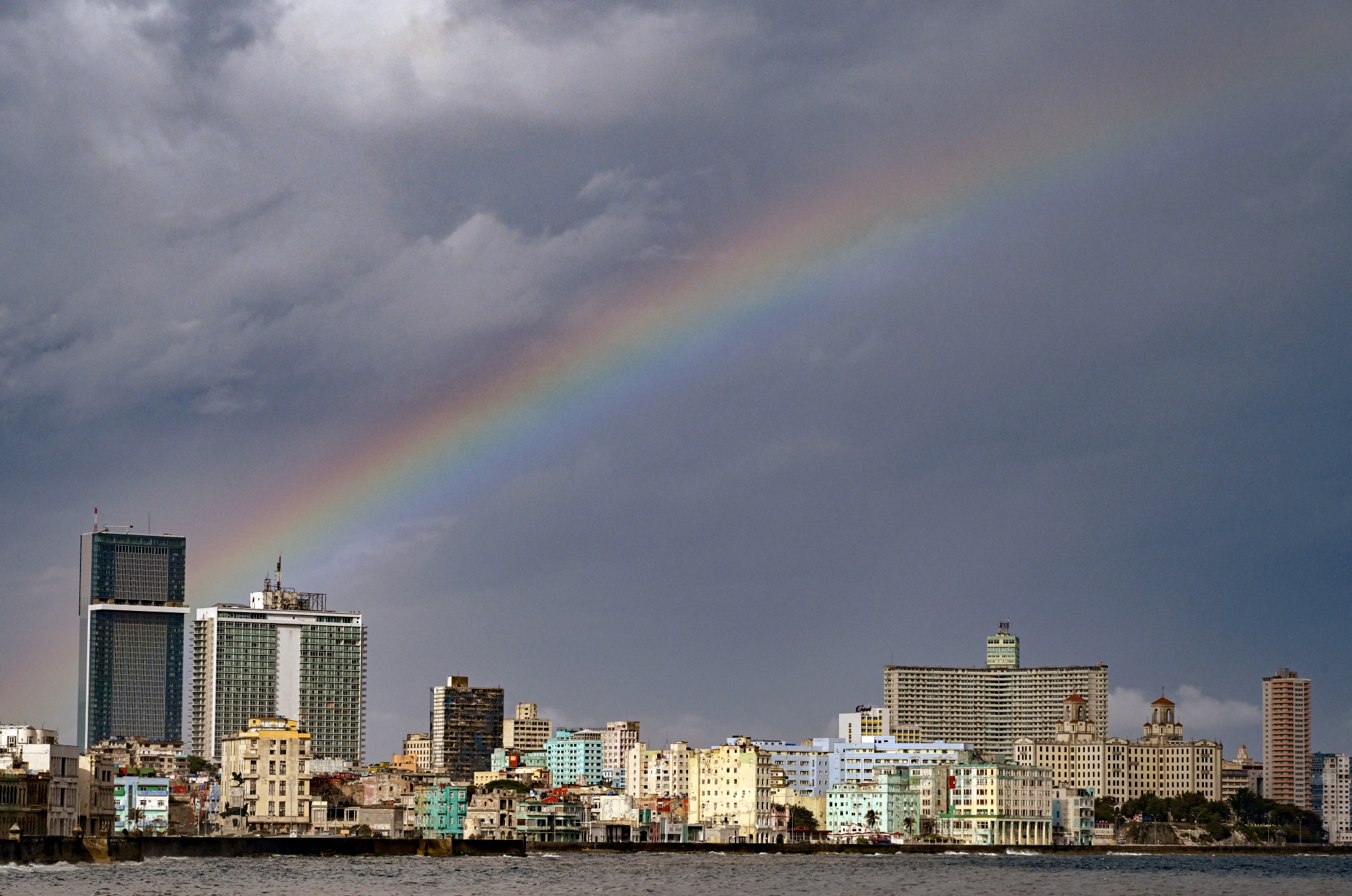 |
Havana, Cuba on 17/3. Photo: AFP |
Cuba relies heavily on oil for electricity production. However, after the US launched a raid to arrest Venezuelan President Nicolas Maduro on 3/1, Washington tightly controlled this South American nation's oil exports. This action meant oil supplies to Cuba were also cut off. Cuban President Miguel Diaz-Canel previously stated that no oil shipments had reached the island nation in the past three months.
According to Cuban officials, Washington's near-total blockade of fuel supplies has exacerbated the energy crisis. This has led to rotating blackouts, shortages of medical supplies, and a decline in tourism. In some areas of Cuba, blackouts lasting up to 20 hours daily have become common.
President Miguel Diaz-Canel on 17/3 criticized US President Donald Trump's "almost daily" threats against the island nation. Diaz-Canel posted on social media platform X: "In the worst-case scenario, Cuba is certain that any external aggressive force will face insurmountable resistance."
Cuban leaders previously stated that Cuba and the US had engaged in dialogue to identify bilateral issues needing resolution. Officials from the Trump administration revealed that Washington wanted Cuba to open its economy during bilateral agreement negotiations. Cuban Deputy Prime Minister and Minister of Foreign Trade and Foreign Investment Oscar Perez-Oliva Fraga declared on 17/3 that there were "no barriers" for US businesses and foreign investors wishing to come to Cuba.
Cuba is struggling to revive its economy as the country faces prolonged blackouts, fuel, food, and medicine shortages due to oil embargoes and US sanctions.
Huyen Le (According to AFP, CBC)