


The USS Yorktown, launched in 1983 and commissioned into the US Navy over one year later, was the second ship of the Ticonderoga-class cruiser. The vessel cost approximately one billion USD to build, with annual operating expenses of 28 million USD. The 173 m long warship had a full load displacement of nearly 10,000 tons, integrated the Aegis missile shield system, and carried various weapons.
At the time of its commissioning, it was one of the most advanced warships in the US Navy. It could perform independent patrol missions or escort aircraft carriers, serving as the air defense command center for carrier strike groups.
In 1995, the US Navy established the Smart Ship Project Office (SSPO) to advance the goal of reducing personnel on warships while maintaining combat readiness, through the adoption of new regulations and changes in operational procedures.
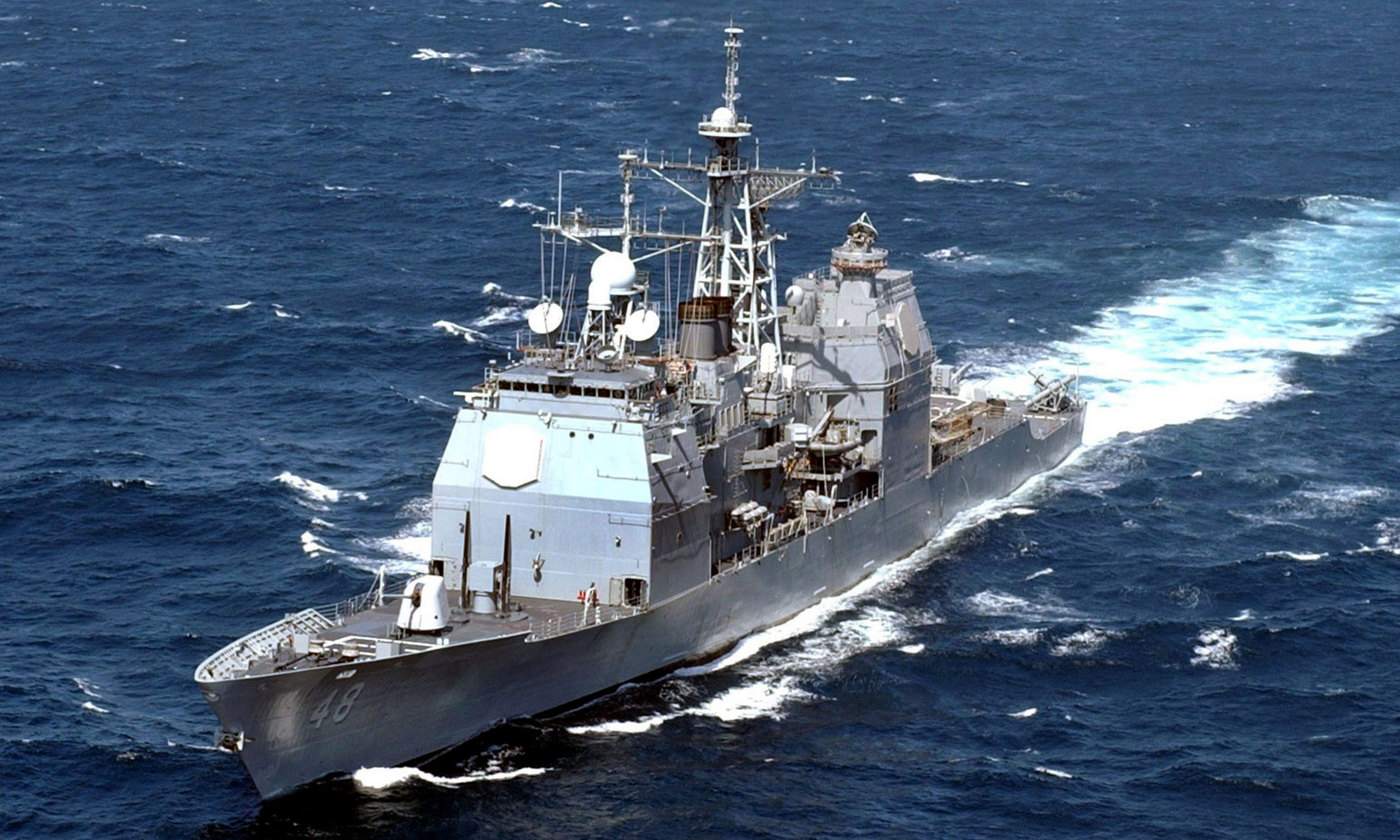 |
The USS Yorktown warship in the Caribbean Sea in 2002. Photo: Wikimedia
Ships under the SSPO project were equipped with new systems, enabling the automation of many stages in control, combat management, and communication via wired and wireless networks.
The USS Yorktown was chosen by the SSPO as the first test platform. The prototype Smart Ship System was installed on the ship in 12/1996, based on a local area network (LAN) comprising 27 computers communicating with a server via fiber optic cables. All computers used the Windows NT 4,0 operating system.
The system was projected to help the US Navy reduce four officers and approximately 40 enlisted personnel from the crew, saving 2,8 million USD annually by cutting maintenance and manual operation costs.
In 5/1997, the USS Yorktown completed a five-month deployment, which included anti-drug missions in the Caribbean Sea and interoperability testing with the George Washington carrier strike group. US officials subsequently conducted an assessment, concluding that the USS Yorktown could meet operational requirements with a reduced crew.
However, the US cruiser's operations were not always smooth.
The incident occurred on 21/9/1997, while the USS Yorktown was conducting exercises off the coast of Virginia, US. The Standard Machinery Control System (SMCS) warned that a fuel valve was open, despite it being closed in reality, prompting a sailor to attempt to rectify the error.
The sailor tried to calibrate and reset the fuel valve's status by entering a value of 0 into one of the parameters on the Remote Data Manager (RDM), a component of the SMCS.
The RDM performed a division operation based on the newly entered value, leading to a "division by zero" error and causing the software to crash. This resulted in a chain reaction, as other systems relied on the RDM for operation. Consequently, the remaining components of the SMCS, including the propulsion system control unit, also completely failed.
The crew took nearly three hours to repair and restore the ship's systems before the USS Yorktown returned to its home port in Norfolk, Virginia. "The ship went into what we call 'dead in the water,' drifting for 2 hours and 45 minutes", John Singley, spokesperson for the US Navy's Atlantic Fleet Surface Force, stated after the incident.
The USS Yorktown's journey back to port also sparked controversy. Anthony DiGiorgio, a civilian engineer working for the Atlantic Fleet Technical Support Center, claimed that the warship was towed back by another vessel and could not move under its own power.
Richard Rushton, the captain of the USS Yorktown, refuted the information and affirmed that the ship's emergency power had been activated after the propulsion system malfunctioned.
He implied that the control system had crashed twice since the USS Yorktown was equipped with the Smart Ship System, both due to incorrect values entered into the RDM. In both instances, the ship's systems successfully restarted, and the warship continued to operate normally.
DiGiorgio later retracted his initial statement, saying that "the reporter edited the wording". However, the newspaper's leadership supported the reporter and asserted that the original information was true, raising suspicions that DiGiorgio changed his statement due to significant political pressure.
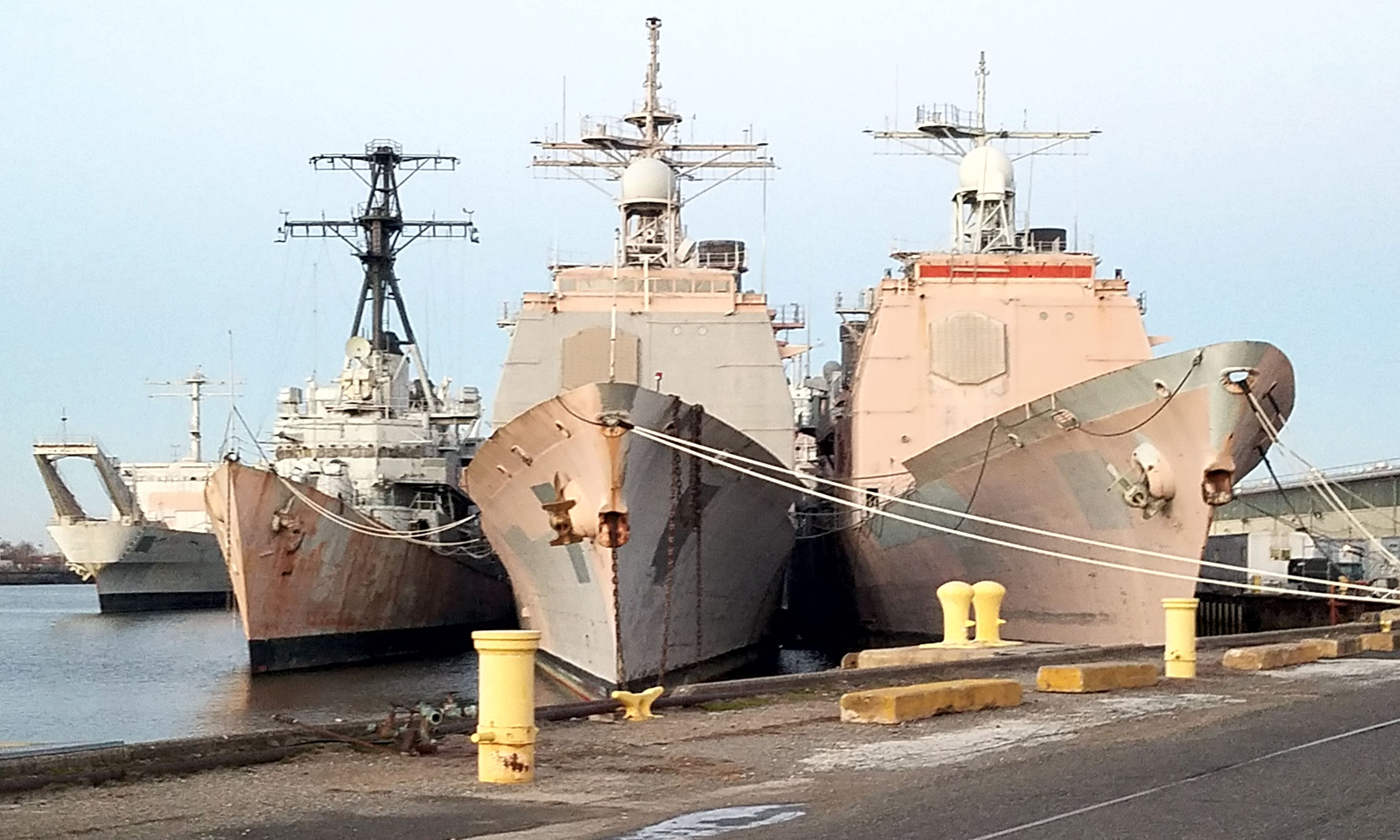 |
The Yorktown warship (far right) in Philadelphia in 2018. Photo: NavSource
Another debate was whether Windows NT 4,0 was one of the causes of the incident. DiGiorgio argued that the operating system bore some responsibility, asserting that using Windows NT on a warship was an act of "leaving it to chance".
Ron Redman, deputy director of information technology at the Aegis Program Executive Office, commented that the UNIX operating system was suitable for equipment and machinery control systems, while Windows NT was better for data transmission. "Windows NT was not perfect, and at times we experienced outages caused by it", he said.
Captain Rushton once again defended the US Navy's decision to choose the operating system, emphasizing that Windows NT "did not cause any problems" and that the issues lay with the programs, databases, and code within the software being used.
The US Navy launched an investigation into the incident but did not release the results. Some software issues on the SMCS were subsequently fixed. The Yorktown warship underwent further testing before returning to service after more than one year. In 9/1999, the ship deployed to the Caribbean Sea for a four-month anti-drug mission and encountered no incidents.
The USS Yorktown's final mission was patrolling the Persian Gulf in mid-2004, protecting oil ports in Iraq and conducting maritime security operations.
The warship was deactivated and decommissioned in 12/2004, nearing the end of its estimated 35-year lifespan. It was moored at the Inactive Ship Maintenance Facility in Philadelphia, Pennsylvania, before being sent for dismantling in 2022.


