On Palm Island, the artificial island that has become a symbol of Dubai’s opulence, five-star hotels are bustling on weekends and holidays, despite having been deserted by tourists previously.
This influx of guests comes from hotels offering exclusive deals for city residents, a strategy that has become a lifeline for Dubai’s luxury tourism sector.
"I had never stayed at a hotel on Palm Island because the prices were too high," said Fadi Iskandarani, a doctor in his 60s, who recently enjoyed his first weekend getaway at a luxury resort on Palm Island.
Iskandarani, who has lived in Dubai for five years, chose to vacation in his own city after seeing a Palm Island hotel offer significant discounts.
The hotel Iskandarani chose was not fully booked; some floors were even closed due to low occupancy. However, the pool area was crowded. According to Iskandarani, these guests came to Palm Island to enjoy a touch of luxury that had long been out of reach.
"Luxury in Dubai has now become affordable for residents. Previously, it was only for the rich, the very rich," Iskandarani stated.
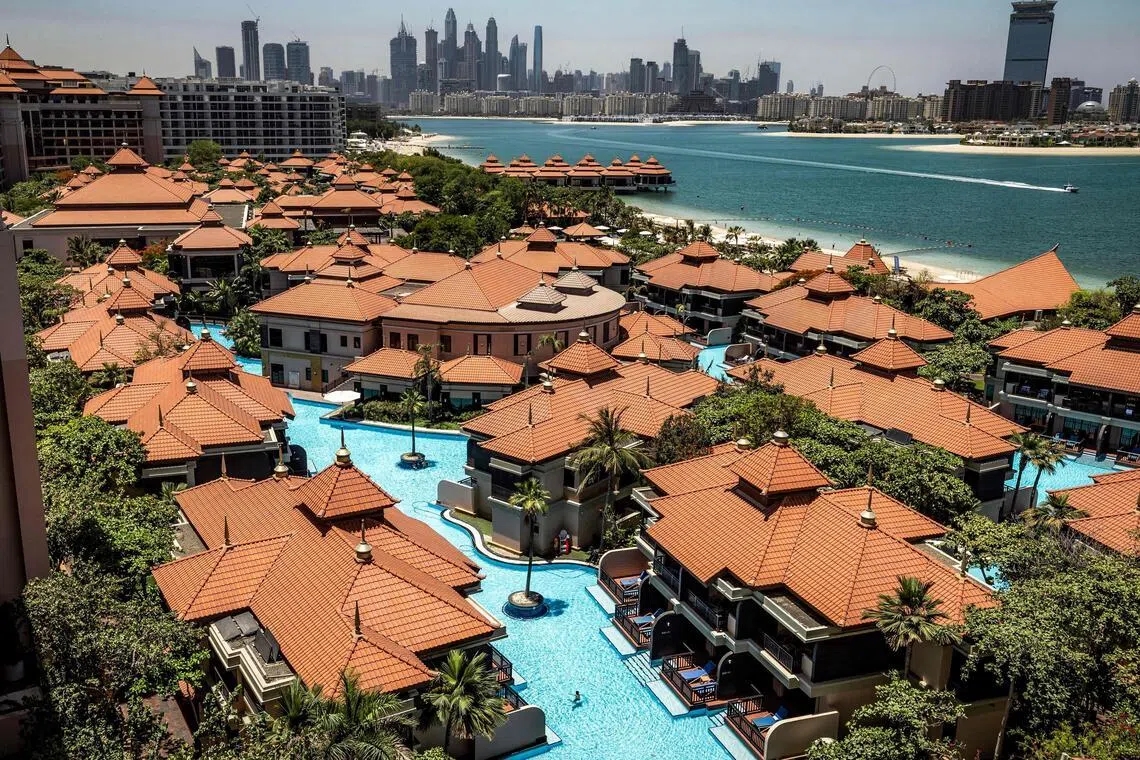 |
Anantara The Palm Dubai resort on 6/6. Photo: AFP |
With 19,5 million tourists annually, Dubai ranks among the region’s top destinations and has long been considered a playground for the world's wealthy and celebrities. Its 827 hotels, including 173 five-star establishments, typically maintained an average occupancy rate of over 80% before the conflict.
However, following the outbreak of regional conflict, which stemmed from US and Israeli attacks on Iran on 28/2, the Gulf region lost its image as a stable sanctuary. The UAE was one of the areas subjected to missile and unmanned aerial vehicle (UAV) attacks from Iran.
Michael Robinson, general manager of Anantara The Palm Dubai resort, reported that since a fragile ceasefire took effect on 8/4, some tourists have arrived, but hotels primarily rely on local guests. These individuals are embracing the "staycation" trend, opting to relax and enjoy resort services within their own city instead of traveling far.
This new customer base has provided important revenue for hotels, helping Anantara The Palm avoid staff layoffs. However, Robinson added that this wave of "staycations" cannot be sustained long-term.
"Essentially, 'staycations' only last one or two nights. Previously, guests from international markets might stay for a whole week," Robinson explained.
Many Dubai hotels have had to reduce staff or cut salaries. One anonymous hotel employee disclosed that his salary was cut by 40% during the conflict before returning to normal in recent weeks.
Another employee at a hotel in nearby Abu Dhabi mentioned he was given unpaid leave for two months but is soon returning to work at his previous salary.
Negotiations to end the conflict have spanned two months, and sporadic attacks persist in the Gulf, pressuring the tourism industry. Despite this, Robinson remains optimistic.
"If we see some resolution next month or later, I think tourists will return faster than people anticipate," he concluded.
Ngoc Anh (According to AFP, Reuters)