Thousands of Albanians have recently taken to the streets to protest a resort project connected to Jared Kushner, former US President Donald Trump's son-in-law. The project consists of two parts: one to be built in the Narta Lagoon area, western Albania, and another on the nearby uninhabited Sazan Island.
The project was announced in 2024, and the Albanian government granted "strategic investor" status to Atlantic Incubation Partners, a company associated with Kushner's Affinity Partners fund. Ivanka Trump, Kushner's wife, subsequently visited the project site multiple times with architects and investors.
For the Albanian government, this is a strategic investment that could elevate the country's standing on the global tourism map. However, for many citizens, environmental activists, and civil society organizations, the project raises questions about nature conservation and the country's future development direction.
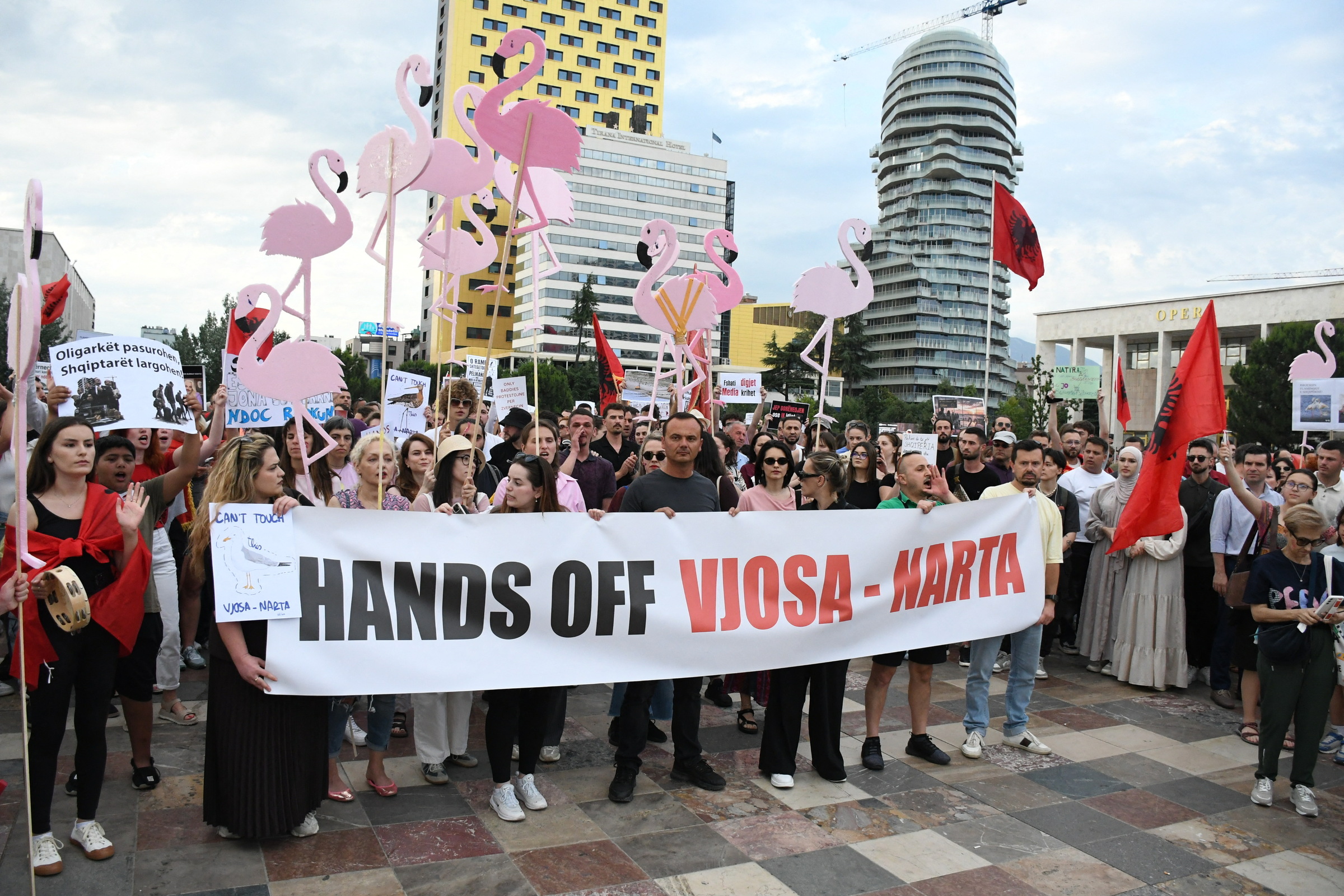 |
People gathered in the capital Tirana, Albania, to protest the tourism project in the Zvernec area on 3/6. Photo: AFP
The project includes luxury hotels, villas, resort apartments, and a marina. This mega-project has a total investment capital of 4,7 billion USD, with the luxury components on Sazan Island alone accounting for approximately 1,6 billion USD.
Prime Minister Edi Rama views this as an opportunity to bring Albania "into the Premier League of world tourism." In contrast, conservation organizations warn that building a resort in a protected area risks altering the habitats of many rare animal and plant species. In January, more than 40 organizations sent a letter to the Albanian government, calling for the project's suspension.
The controversy primarily revolves around the Pishe Poro Narta area and the Vjosa River delta. This region features numerous lagoons, wetlands, pine forests, and sand dunes, serving as a vital stopover for migratory birds traveling between Europe and Africa. Flamingos, Dalmatian pelicans, loggerhead sea turtles, and Mediterranean monk seals are among the species that conservation organizations believe could be significantly impacted.
Activists visited Narta in late May and observed bulldozers and other heavy machinery clearing roads and felling pine trees to prepare the site. The project area was fenced off, with security personnel forcibly removing protesters.
These images ignited a wave of outrage across Albania. Thousands of people demonstrated in Tirana for several consecutive days with the slogan "Albania is not for sale." Images of flamingos became a symbol of the movement, as these birds frequently appear in the Narta Lagoon.
"This is not just a local dispute about fences, roads, or a construction site. The issue also lies in how such decisions are made and the lack of transparency surrounding them," Besjana Shehu, co-founder of the Albanian Ornithological Society, told DW.
According to Shehu, the ecological integrity of over 18,000 hectares, part of one of Albania's most important natural corridors, is at stake.
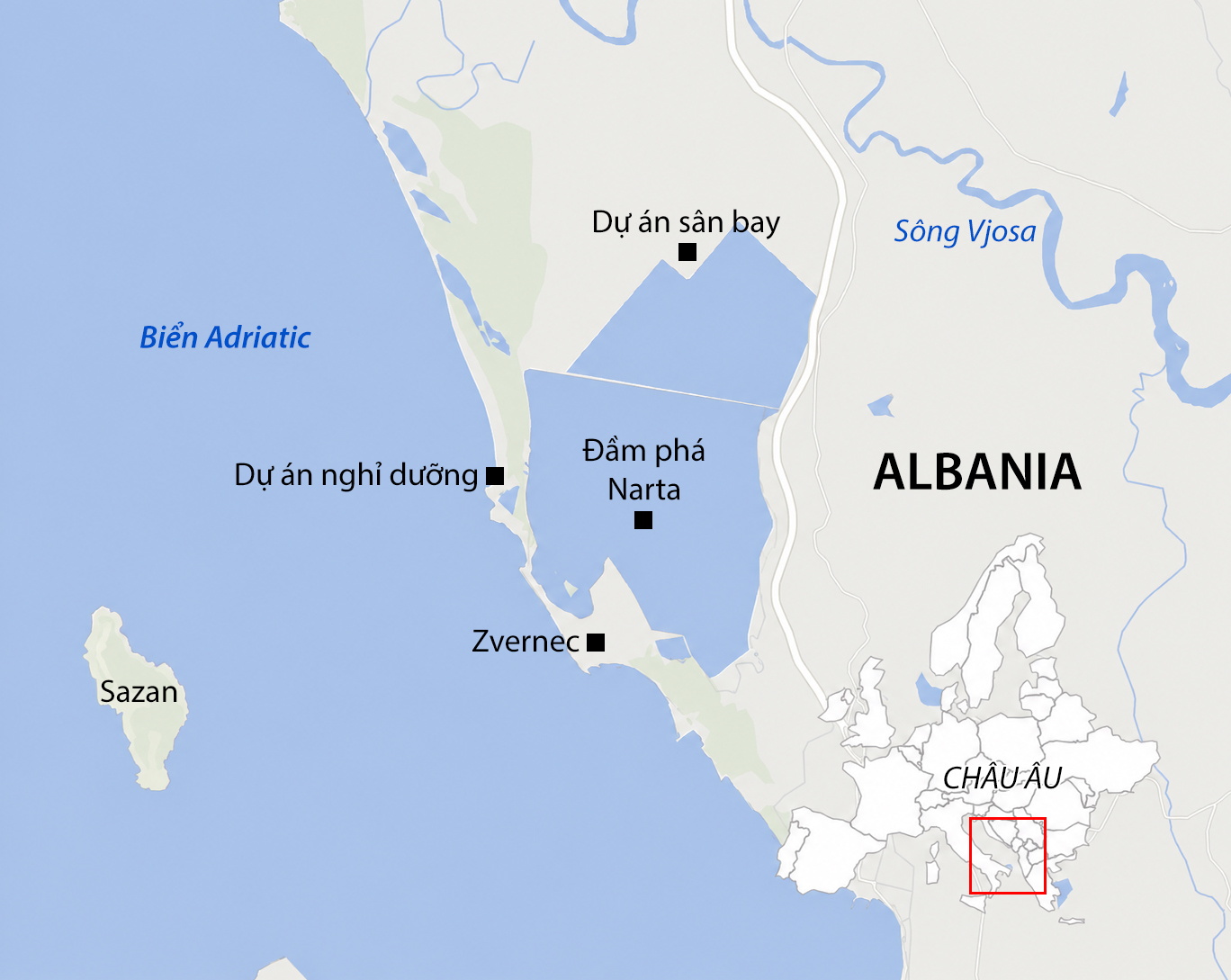 |
Location of Sazan Island and Narta Lagoon, Albania. Graphic: OpenStreetMap
Ulrich Eichelmann, head of the Riverwatch organization and coordinator of the Save the Blue Heart of Europe campaign, has long monitored this ecosystem. He spearheaded the campaign that helped secure national park status for Vjosa, Europe's last wild river flowing through Albania.
Eichelmann stated that many Mediterranean rivers and coastal areas have been altered by hydropower dams and economic development activities for decades.
"The Vjosa River delta is the last intact delta in the entire Mediterranean region," Eichelmann said.
Many civil society organizations report that they have not received full access to information regarding the project's permits, environmental impact assessments, and legal procedures.
Aleksandr Trajce, executive director of the Protection and Preservation of Natural Environment in Albania (PPNEA), noted that activists do not oppose the existence of high-end resorts. However, development must adhere to regulations and involve local communities.
"From beginning to end, a lack of transparency has existed," Trajce told Guardian.
The Albanian anti-corruption agency has launched an investigation into legal changes passed in 2024 that favor tourism development in protected areas. The investigation also examines the process of land ownership establishment and procedures related to the project.
Prime Minister Rama argues that large-scale resort projects can create jobs, attract foreign capital, and allow the economy to benefit from high-spending tourists. The Albanian leader also dismissed the possibility of the project being canceled while he remains in office.
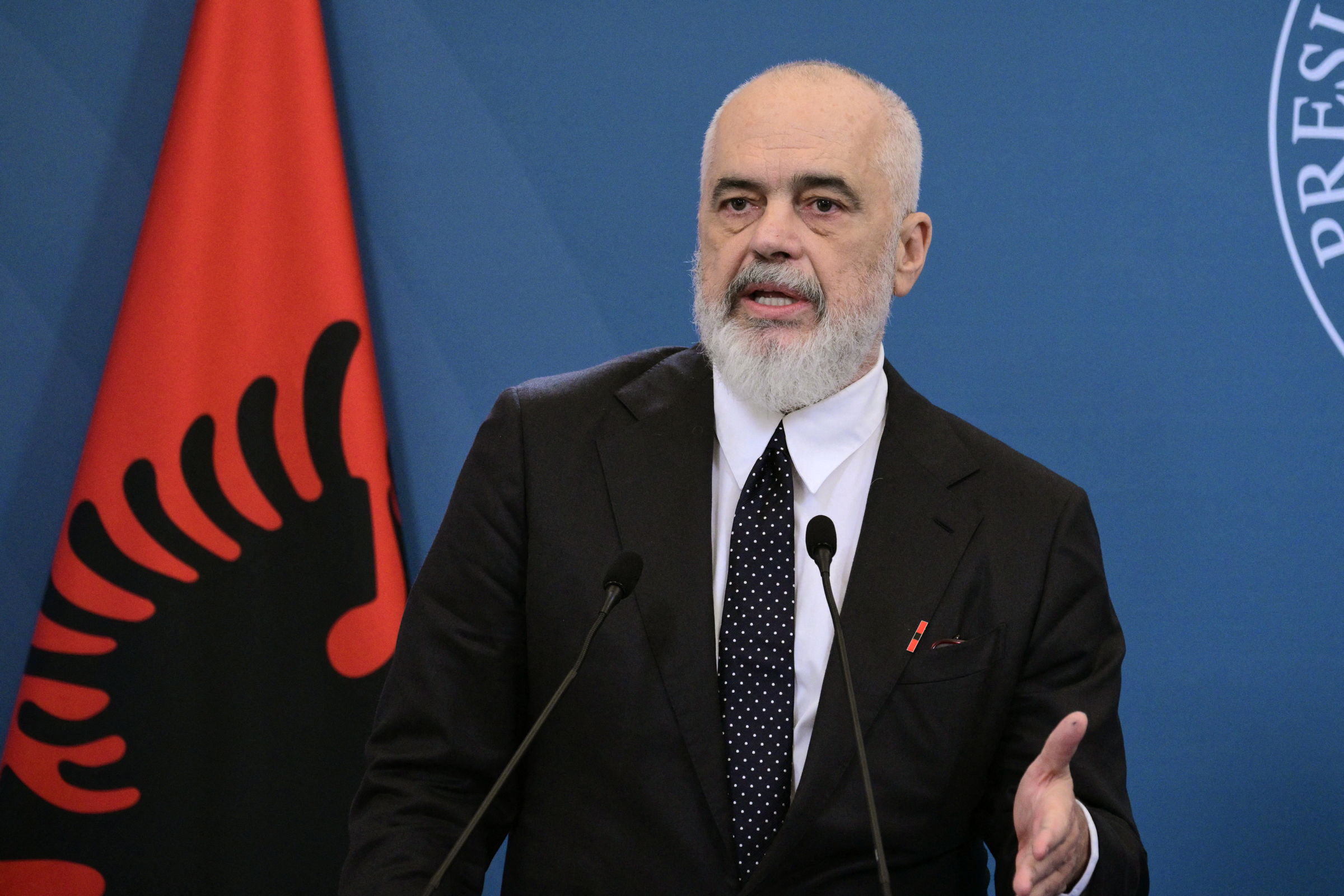 |
Albanian Prime Minister Edi Rama spoke in Rome, Italy in November 2025. Photo: AFP
The project is also being implemented at a sensitive time for Albania, as the country is advancing its process to join the European Union (EU).
The Pishe Poro Narta area has been proposed for integration into the Emerald Network, a system of ecological reserves established under the Bern Convention, and is expected to be part of the Natura 2000 network once Albania joins the EU. Natura 2000 comprises the world's largest natural conservation areas, established and maintained by the EU to protect rare animal and plant species and important natural habitats.
The European Commission stated it is closely monitoring developments in the area and emphasized that EU environmental standards must be fully applied to the project.
For conservationist Eichelmann, the Vjosa National Park exemplifies "what our world looked like 100 years ago."
"Is there anything left that we don't want to destroy?" Eichelmann asked. "This is an issue the international community must fight to protect."
Nhu Tam (According to Al Jazeera, TIME, DW)