A significant dust storm, originating from North Africa and the Sahara Desert, swept across Israel, severely impacting air quality nationwide. Beginning around 3h on 14/2, the event drastically reduced visibility in many areas, with fine dust concentrations quickly surpassing "hazardous" levels.
At the storm's peak, air quality monitoring platforms, including IQAir, identified Tel Aviv and Jerusalem as the most air-polluted cities globally. Their pollution indices exceeded those recorded in Almaty, Kazakhstan; Lahore, Pakistan; and Kolkata, India.
In response to the deteriorating conditions, the Israeli Ministry of Health issued a public health advisory. Residents were urged to close windows, utilize air purifiers, and wear face masks even while indoors. Vulnerable populations, including individuals with heart or lung conditions, the elderly, children, and pregnant women, received specific recommendations to limit outdoor exposure and avoid strenuous physical activity outside.
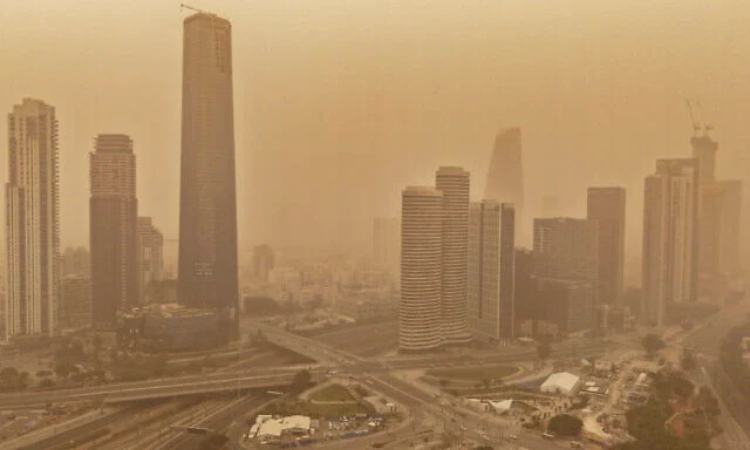 |
Tel Aviv shrouded in thick dust haze on 14/2. Photo: ToI. |
While the dust haze began to dissipate by midday, meteorological agencies cautioned that strong winds would persist. Winds were expected to maintain a minimum speed of 55 km/h, with gusts potentially reaching 65 km/h. Officials also advised the public against swimming, citing "strong to very strong" sea conditions and waves reaching 2,4 meters along the central coast due to the high winds.
This weather event coincided with forecasts for potential rain in some parts of Israel. In the northern region, Mount Hermon experienced snowfall, following its first snow of the season last year.
Dust storms are not uncommon in Israel, given its proximity to the Sahara Desert and other arid regions of North Africa and the Middle East, particularly during late winter and early spring. However, these events do not typically elevate air pollution to "hazardous" levels. Incidents severe enough to place cities like Tel Aviv or Jerusalem at the top of global pollution rankings are considered rare.
Israel currently controls all of Jerusalem, while the Palestinian Authority considers East Jerusalem the capital of a future Palestinian State.
Duc Trung (According to Times of Israel, Jerusalem Post, AFP)