European Union (EU) leaders convened a summit on 24-25/4 in the Republic of Cyprus to discuss the bloc's security, economic, and budgetary issues. During the meeting on the evening of 24/4, they addressed a rarely mentioned topic: Article 42.7 on common defense in the union's treaty.
Cyprus President Nikos Christodoulides, who chaired the session, stated that EU leaders agreed the European Commission would prepare a "blueprint" on how members should respond if the common defense clause is activated.
Article 42.7 stipulates that EU member states have an "obligation to aid and assist by all means in their power" if a member is attacked by a foreign government or a non-state entity. This clause is rarely invoked as it closely resembles Article 5 on collective defense in the NATO Treaty, a military alliance to which most EU nations belong.
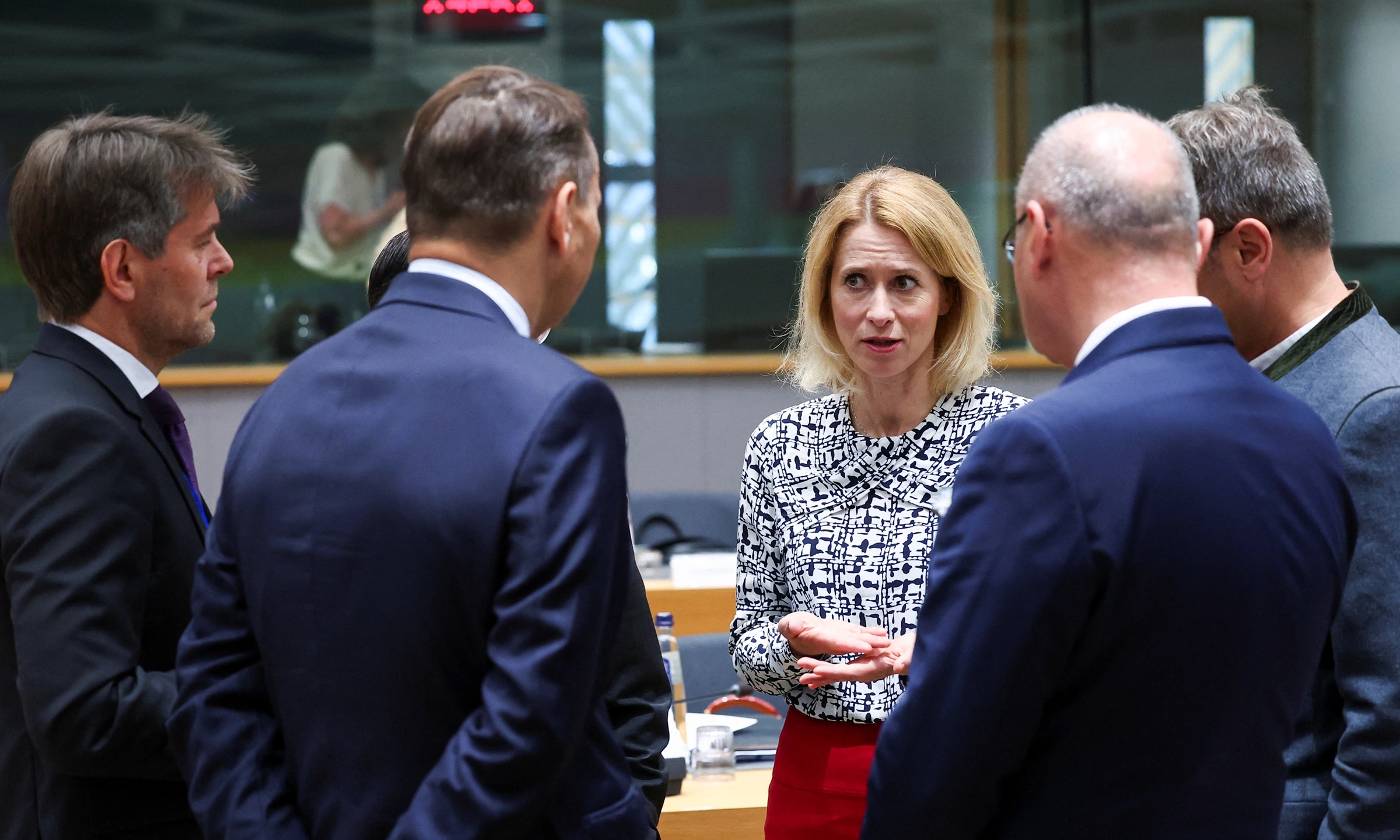 |
Officials attend an EU foreign ministers' meeting in Brussels, Belgium, 7/2025. Photo: Reuters |
European Council President Antonio Costa also confirmed on 24/4 that the EU "is designing a guide" on how to apply this mutual assistance clause. He cited the recent drone attack targeting a British base in Cyprus during the initial phase of the Middle East conflict as an example.
"Following that attack, Greece, then France, Italy, Spain, and the Netherlands, mobilized military equipment and forces to help Cyprus with its defense," Costa stated.
France is the only nation to have activated Article 42.7, following the 2015 Paris terrorist attacks, where extremists killed 130 people at bars, restaurants, a stadium, and the Bataclan concert hall. At that time, France called on other EU member states to enhance their military commitments abroad, allowing for the redeployment of troops to bolster domestic security.
The EU treaty's previous lack of specific provisions for implementing Article 42.7 was once considered a strength, allowing the union flexible responses. However, member states now express uncertainty about its operational mechanisms, particularly amid increasing skepticism regarding the US commitment to NATO.
"Suppose France activates Article 42.7, which nations would promptly meet the French government's request? What do states activating Article 42.7 require?" Cyprus President Christodoulides asked, adding that these issues are undergoing detailed discussion.
Cyprus, a non-NATO member, advocates for the EU to consider this clause more seriously following a UAV attack on the British Akrotiri airbase on the island in March. Nevertheless, some EU members remain cautious about any actions that might be perceived as weakening NATO's Article 5.
"NATO remains the cornerstone of collective defense, but the EU possesses complementary tools to NATO, such as sanctions, financial support, and humanitarian aid. These could be utilized in the event of Article 42.7's application," an EU official stated.
This EU initiative unfolds as US President Donald Trump has repeatedly criticized NATO members and threatened to withhold defense from bloc members. Recently, reports also surfaced that the US was considering "suspending" Spain's membership in the alliance, citing its lack of support for Washington's military operations. However, a NATO official clarified that the alliance's founding treaty "does not contain any provisions for suspending membership."
Ngoc Anh (According to Guardian, Reuters, AFP)