US news agency Axios and Lebanese television channel Al Mayadeen reported on 26/4, citing informed sources, that Iran had sent a message to the US via Pakistan. The message stated that if Washington wished to resume effective negotiations, the two sides needed to proceed through three stages.
Stage one involves a complete cessation of hostilities and ensuring that conflict does not recur against Iran and Lebanon. If the demands of the first stage are accepted, the two sides would then move to stage two, which would involve discussions on managing and operating the Strait of Hormuz.
Only after the completion of the first two stages would Iran discuss the nuclear issue, which constitutes stage three.
Iran has not confirmed the information reported by the media.
When asked about the information, White House spokesperson Olivia Wales stated that these were sensitive diplomatic discussions and Washington "will not negotiate through the press".
"As the President has stated, the US holds the upper hand and will only accept an agreement that prioritizes the interests of the American people, while absolutely not allowing Iran to possess nuclear weapons," the spokesperson added.
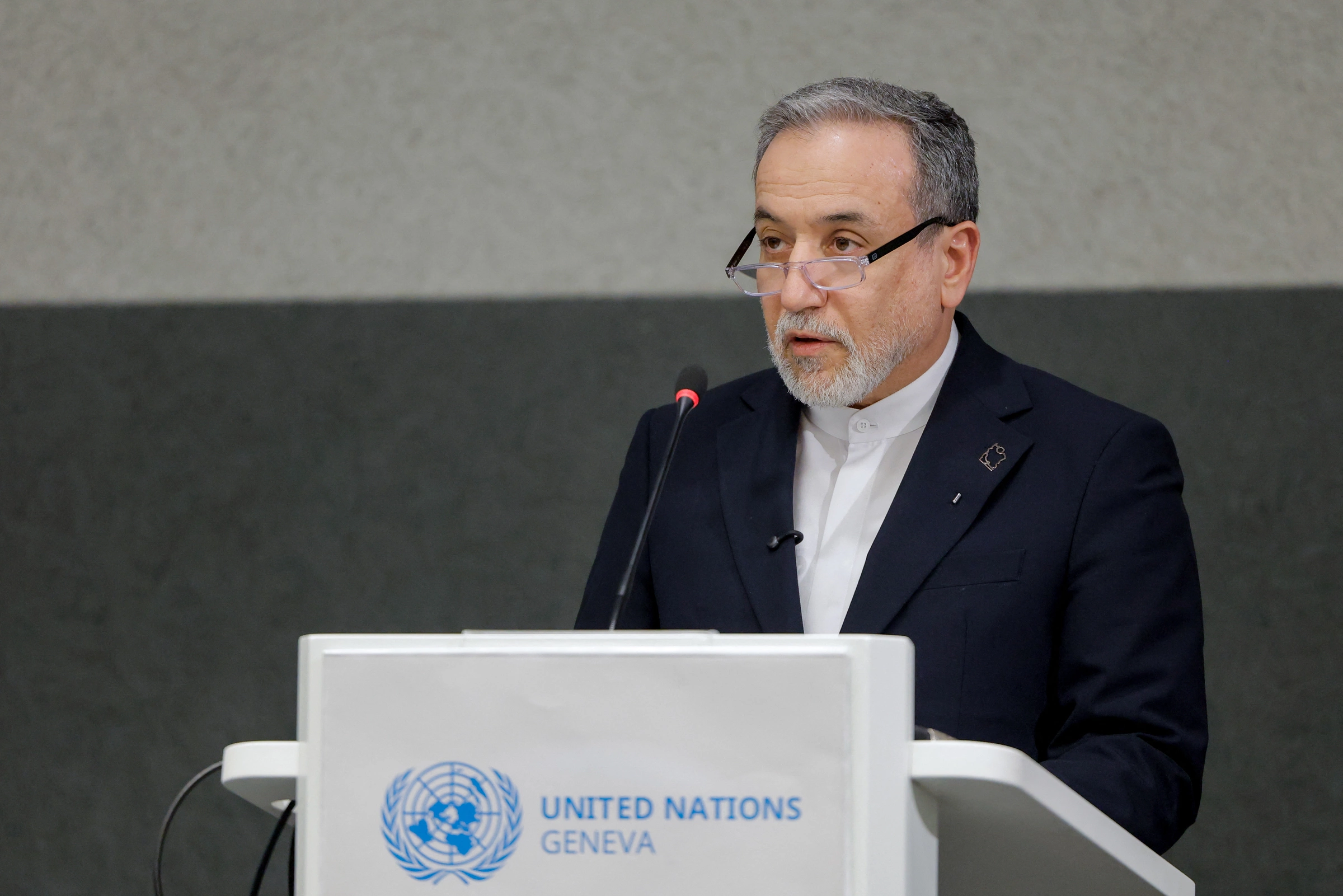 |
Iranian Foreign Minister Abbas Araghchi speaks in Geneva, Switzerland on 17/2. *Photo: AFP* |
Details of the three-stage negotiation process emerged after a second round of talks between the US and Iran in Pakistan could not be held.
Iranian Foreign Minister Abbas Araghchi traveled to Pakistan on two occasions but refused direct negotiations with Washington. In response, President Trump declared that he would no longer send US envoys to Pakistan to engage in dialogue with Iran, suggesting that discussions "can be conducted by phone".
The US President warned that Iran's oil infrastructure could "explode" within three days due to severe technical incidents caused by the US blockade of Iranian ports.
"When vast oil reserves are compressed within a system with no ships or storage tanks for consumption due to a blockade, the pressure will cause pipelines to explode from within, even burst from underground. Once that happens, Iran will never be able to restore the infrastructure to its original state," President Trump said in an interview with Fox News on 26/4.
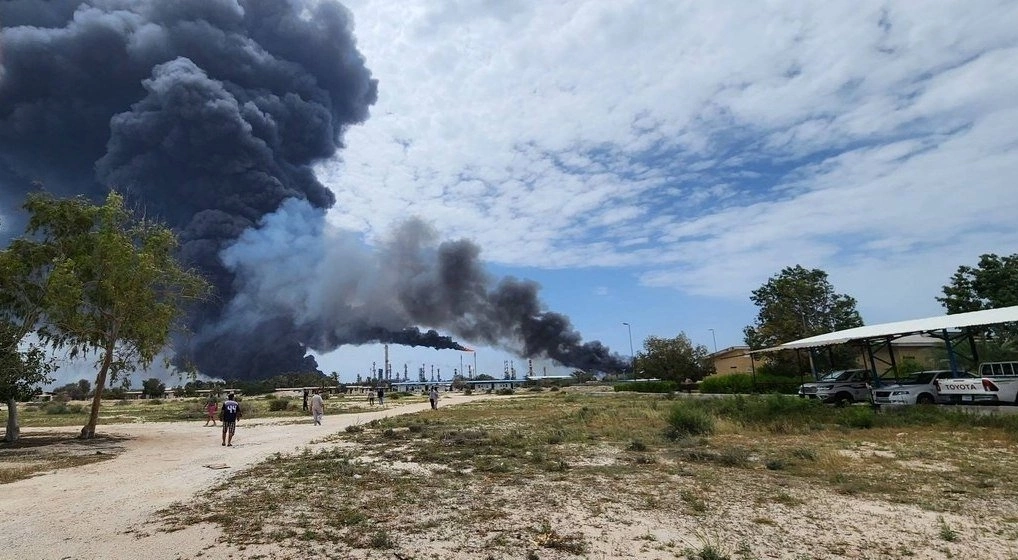 |
Smoke rises from what is believed to be a refinery on Lavan Island, Iran on 8/4. *Photo: X/ AMK Mapping* |
The US and Iran previously negotiated for about 21 h in Islamabad on 11/4 but failed to reach consensus on key issues, including control over the Strait of Hormuz and whether Iran could continue uranium enrichment.
President Trump ordered a blockade of Iranian seaports from 13/4 to pressure the country into accepting the terms of an agreement, but Tehran did not concede and retaliated by tightening control over the Strait of Hormuz.
President Trump has extended the ceasefire with Iran until Tehran presents a concrete proposal to Washington.
Duc Trung (According to Axios, AP, CNN)