"One of the achievements from General Secretary and President To Lam’s visit is the deepening of political trust, clearly demonstrating the unique and high-level nature of the relationship between the two countries," stated Ha Wei, the Chinese Ambassador to Vietnam, following General Secretary and President To Lam’s state visit to China from 14-17/4.
The ambassador highlighted that this marked the first overseas visit by Vietnam's top leader after the 14th National Congress of the Communist Party of Vietnam. It was also the first time a foreign head of state visited Xiong'an New Area, a future city in China.
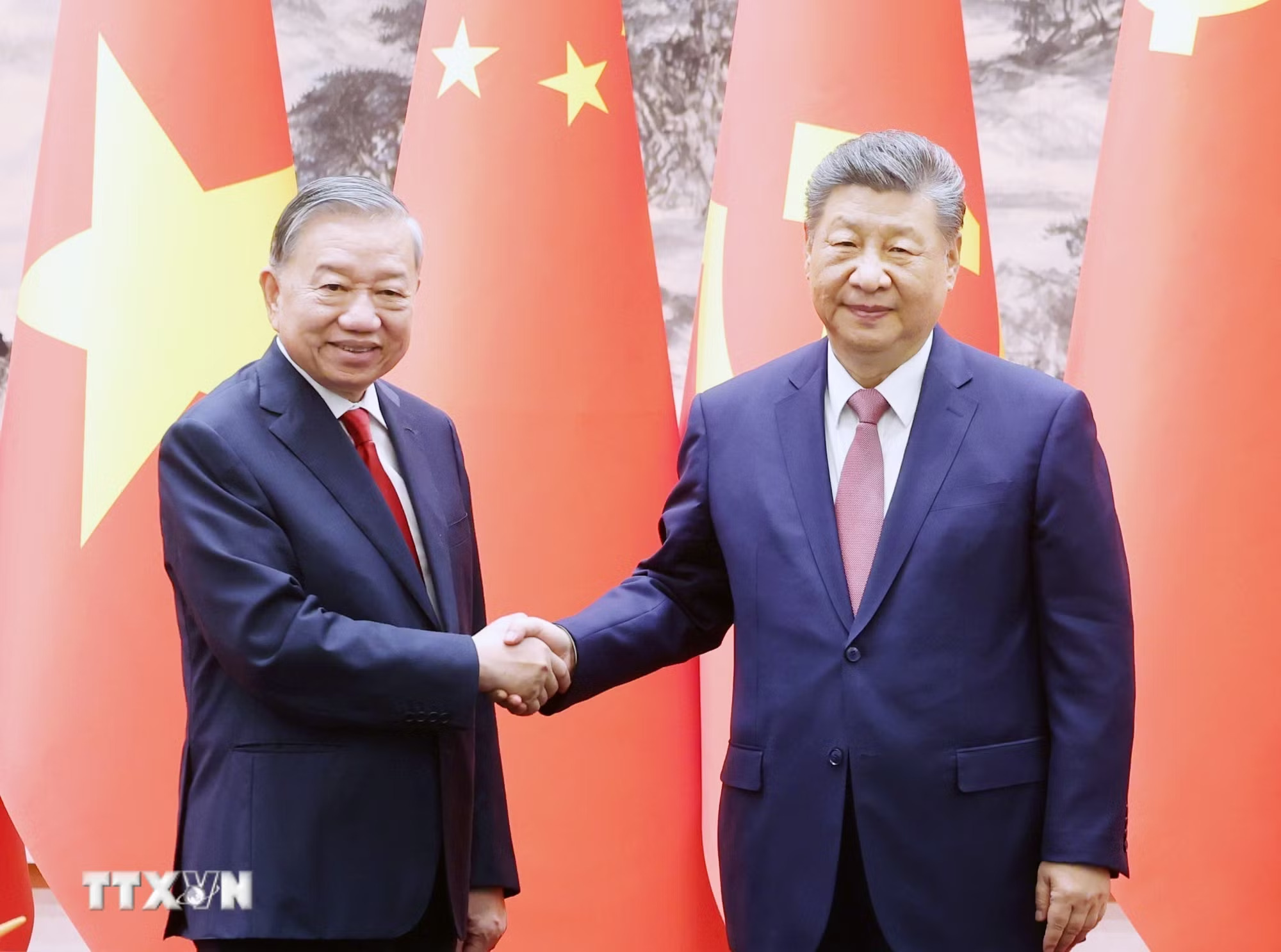 |
General Secretary and President To Lam with General Secretary and President Xi Jinping. Photo: TTXVN
During his visit, General Secretary and President To Lam became the first foreign leader to travel on China’s high-speed railway for over 10 hours, passing through five provinces along a 2,500 km route. "The visit will become a new milestone in the history of Vietnam-China friendship and will profoundly influence both bilateral and regional relations," Mr. Ha Wei said.
Following the visit, both sides issued a joint statement affirming their commitment to further deepening relations and promoting cooperation across six areas to foster strong Vietnam-China ties in the new era.
Vietnam-China Joint Statement
Ambassador Ha Wei observed that in the joint statements between the two countries from 2023-2026, the specific phrasing regarding the building of a Vietnam-China community with a shared future evolved from "building" to "accelerating construction" and now to "building at a higher level."
"This is not merely an increase in words, but demonstrates the continuous deepening of Vietnam-China relations, while also reflecting the precision, stability, and continuity of the socialist development path both countries have chosen," he explained.
Political, Security, and Defense Cooperation
According to Ambassador Ha Wei, Vietnam and China experienced "unprecedented high-level contact" over the past year. For the first time, they successfully organized multiple bilateral meetings, most notably the 3+3 strategic dialogue involving the Ministers of Foreign Affairs, National Defense, and Public Security. "This is a crucial strategic exchange platform, initiated first by Vietnam and China globally," he noted.
Associate Professor, Doctor Nguyen Minh Hoan, Head of the Philosophy Faculty at the Academy of Journalism and Communication, Ho Chi Minh National Academy of Politics, assessed the 3+3 ministerial mechanism as "a new development in higher-level strategic connectivity cooperation" between Vietnam and China.
"This indicates that bilateral relations no longer rely solely on political goodwill or fragmented cooperation frameworks, but have transitioned to a stage operated by substantive, synchronized coordination mechanisms among key state pillars, thereby gradually structuring trust as outlined in the 'six more' orientation," Mr. Hoan stated.
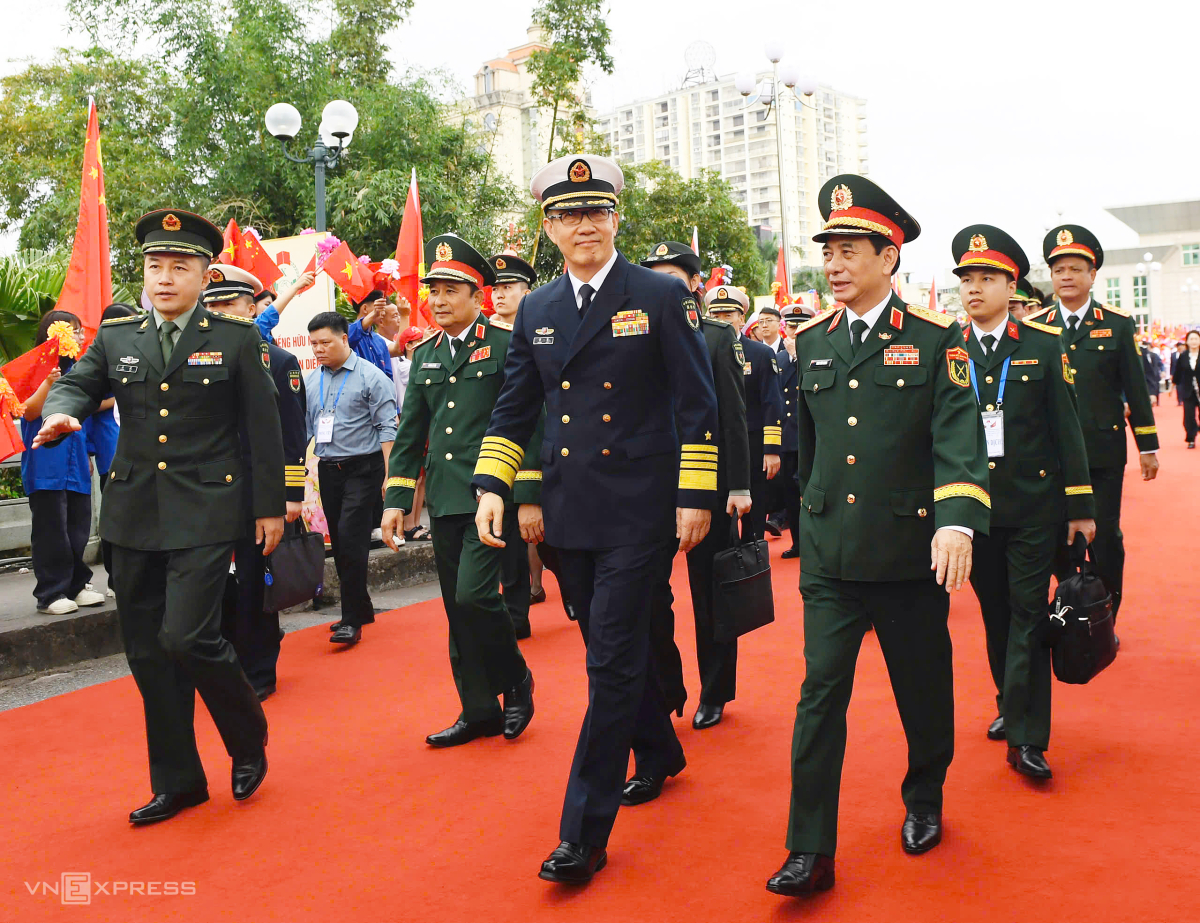 |
Vietnamese and Chinese Defense Ministers at an exchange in Mong Cai on 18/3. Photo: Son Ha
The "six more" orientation in Vietnam-China relations includes: higher political trust, more substantive defense and security cooperation, deeper practical cooperation, a stronger social foundation, closer multilateral coordination, and better controlled and resolved disagreements.
According to the expert, a fundamental new point is that for the first time, the fields of foreign affairs, national defense, and security are integrated into an overall coordination structure. This "reflects a shift from declarative political trust to institutionalized trust capable of practical operation."
The 3+3 mechanism plays a strategic regulatory role, reducing misunderstandings, controlling tensions, and strengthening sustainable political trust. It also effectively frees up resources for development, allowing both countries to focus more on economic, scientific, technological development, infrastructure connectivity, and human resource training goals.
Railway Cooperation as a Key Pillar
In the joint statement released after the visit, Vietnam and China agreed to enhance strategic development connectivity, making railway cooperation a new highlight in their strategic partnership.
Ambassador Ha Wei observed that Vietnam and China have achieved "unprecedented substantive cooperation," with bilateral trade reaching a new record, exceeding 250 billion USD. China continues to be Vietnam's largest trade partner and the largest export market for Vietnamese agricultural and aquatic products.
The number and scale of investments from China into Vietnam continue to hold the first and second positions. Several infrastructure connectivity projects are being promoted, including three standard-gauge railway lines connecting the two countries: Lao Cai - Hanoi - Hai Phong, Dong Dang - Hanoi, and Mong Cai - Ha Long - Hai Phong.
According to the ambassador, differences in railway standards between Vietnam and China have somewhat limited the development of trade, commerce, and travel between the two nations. Therefore, both countries agreed to make the promotion of railway connectivity a strategic breakthrough in economic and trade cooperation to address this challenge.
"Railway connectivity between Vietnam and China is not just a physical connection of infrastructure, but also a key pillar in building a community with a shared future," the ambassador noted. "This will help increase cross-border transport efficiency, enhance the quality of trade, facilitate travel for people, and create a truly intertwined landscape."
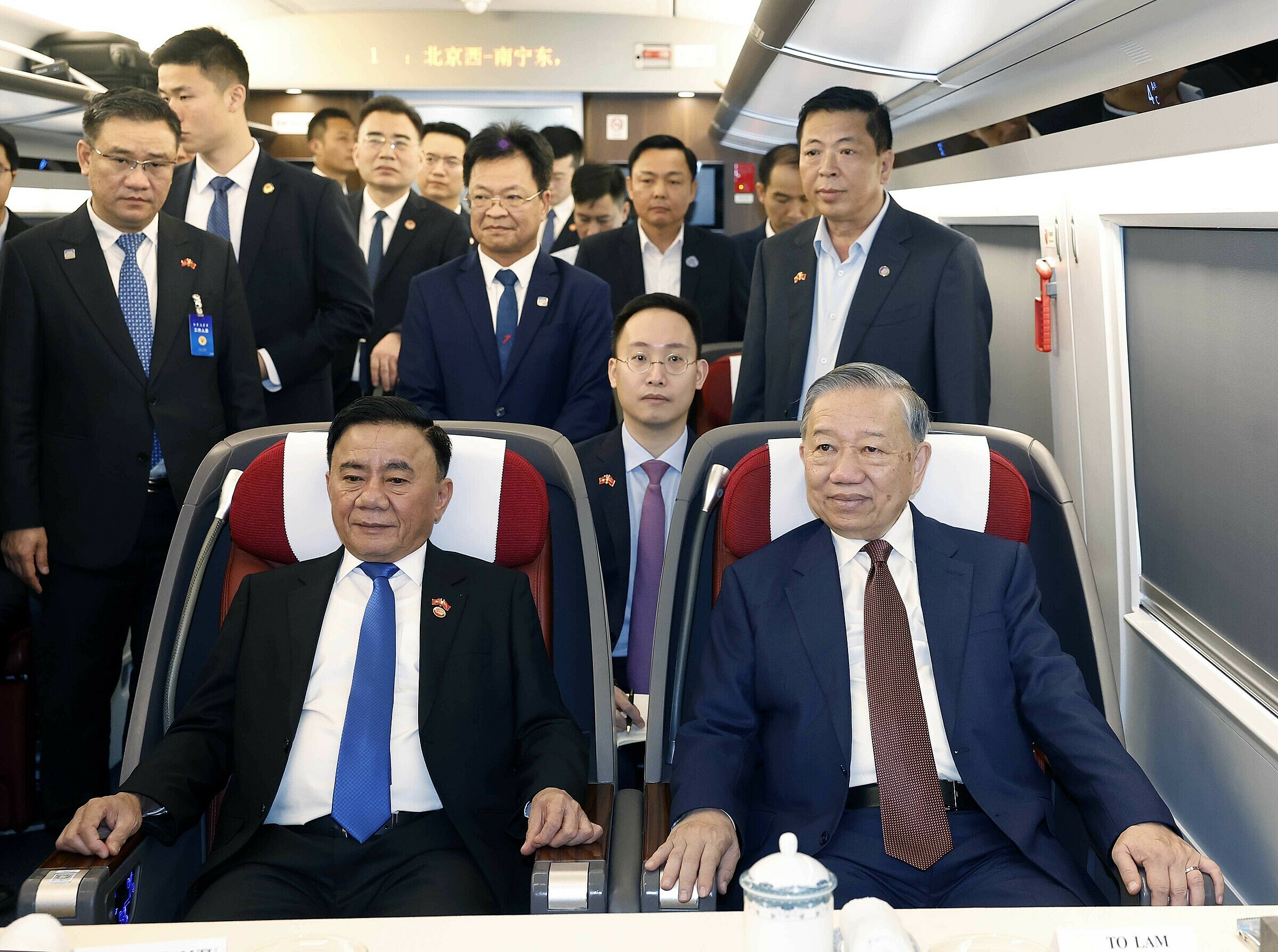 |
Chinese railway industry leaders accompanied General Secretary and President To Lam on a high-speed train to visit Nanning city on 16/4. Photo: TTXVN
Cooperation in this sector can also help Vietnam complete its railway network, enhance its value in global production and supply chains, and hold significance in increasing the economic sustainability of the region and the security of production and supply chains.
"The three standard-gauge railway projects are central to building cross-border railways and multimodal transport systems for both countries," the ambassador said. "Both sides are also working to upgrade and build smart border gates, reduce processing times, implement 24/7 customs clearance, and enhance the coordinated efficiency of production and supply chains."
Mr. Ha Wei mentioned that during the visit, General Secretary and President To Lam gained a deep understanding of the development situation in various regions of China and its high-speed railway system. He also expressed appreciation for China's development and technology in this field. "We sensed that General Secretary and President To Lam has very high expectations for promoting high-speed railway cooperation between the two countries," he said.
Balancing the Trade Deficit
The scale of Vietnam-China trade has seen a significant leap over the past decade. By 2025, bilateral turnover reached 256.5 billion USD, nearly four times the approximately 66.2 billion USD recorded in 2015, solidifying China's position as Vietnam's largest trade partner.
Regarding China's trade surplus with Vietnam, Ambassador Ha Wei noted that China also experienced a similar trade deficit during its rapid development many decades ago.
According to data from the General Department of Vietnam Customs, in 2025, Vietnam exported 70.4 billion USD to China and imported 186 billion USD.
"We understand that a trade surplus is not a sustainable form of cooperation, nor do we wish to promote this trend," Mr. Ha Wei said. "China will strive to reduce its trade surplus with Vietnam; this is a shared understanding and direction for both sides."
China recently increased its purchases of Vietnamese agricultural products. In January 2026, Vietnam exported nearly 1.5 billion USD in agricultural, forestry, and aquatic products to China, accounting for over 22% of total turnover and increasing over 66% compared to the same period last year.
Beyond economy and trade, the ambassador believes that following General Secretary and President To Lam’s visit, science and technology cooperation between Vietnam and China holds immense potential. Both countries will continue to focus on emerging fields such as artificial intelligence (AI), healthcare, and green energy.
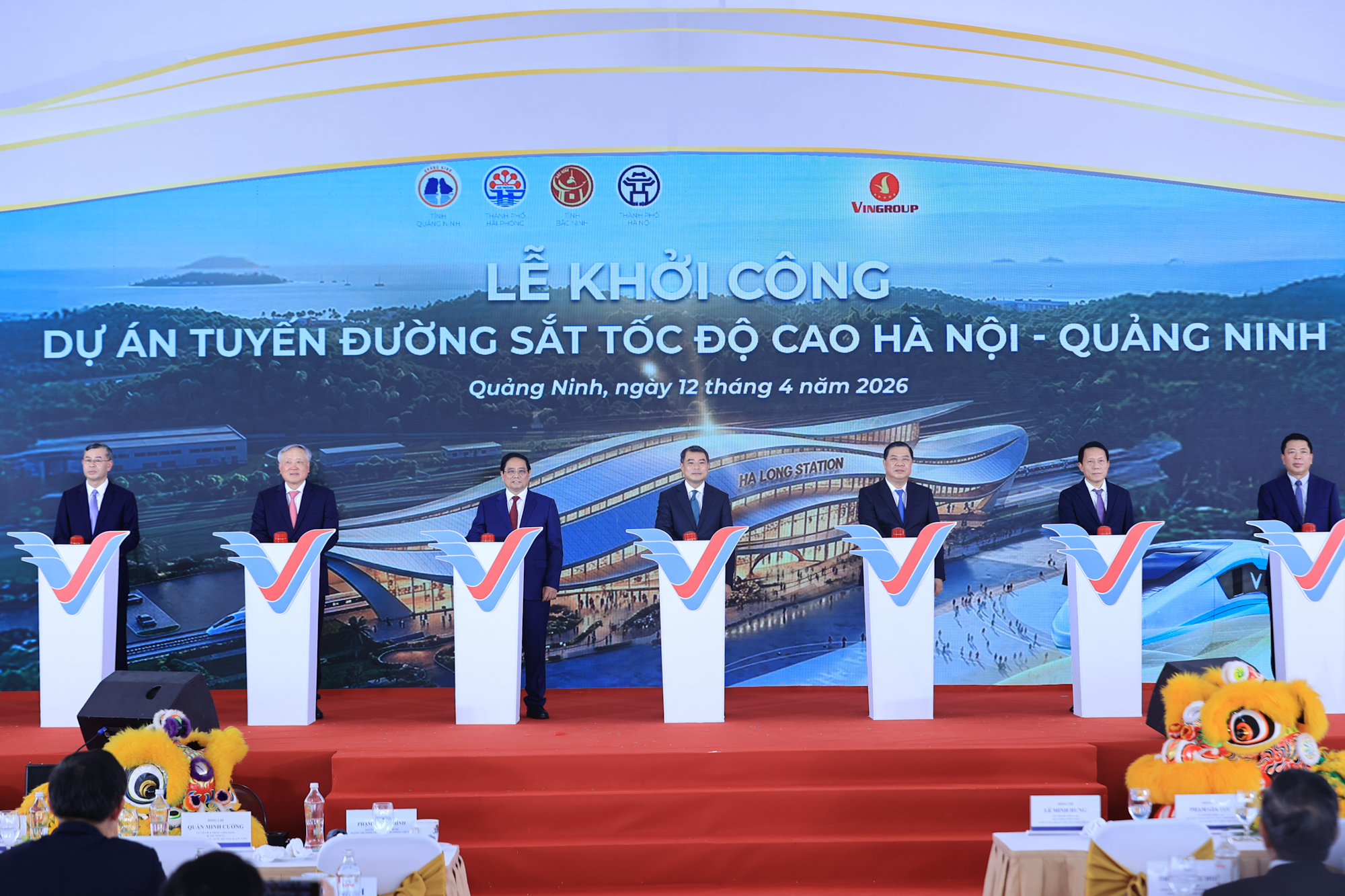 |
Prime Minister Le Minh Hung and delegates at the groundbreaking ceremony for the Hanoi - Quang Ninh railway line on 12/4. Photo: Chinhphu.vn
The semiconductor industry, artificial intelligence (AI), hydrogen energy, high-speed rail, smart logistics, and new digital production technologies represent breakthrough areas and highlight the most significant human resource bottlenecks today.
According to Associate Professor, Doctor Nguyen Minh Hoan, the simultaneous emphasis by both sides on boosting cooperation in education and training, science and technology, culture, and people-to-people exchanges "connects intellectual cooperation with development strategy, where science, technology, innovation, and digital transformation are identified as primary drivers of growth."
This offers prospects for comprehensive human development, driving deep reform within Vietnam's education system, and training high-quality human resources directly linked to the transformation of development models and the formation of new industries.
"As Vietnam-China cooperation increasingly expands into these areas, human resources become a prerequisite for projects to operate effectively and create real value; thus, education and training not only serve development but are directly shaping the development path," Mr. Hoan stated.
Promoting People-to-People Exchanges
Ambassador Ha Wei noted that the pace of people-to-people exchanges between Vietnam and China over the past year was "unprecedentedly high," with many diverse activities. In 2025, Chinese tourist arrivals to Vietnam reached 5.3 million, an increase of 41.3% compared to the same period last year, accounting for 25% of Vietnam's total international tourist market. China has regained its position as Vietnam's largest international tourist market.
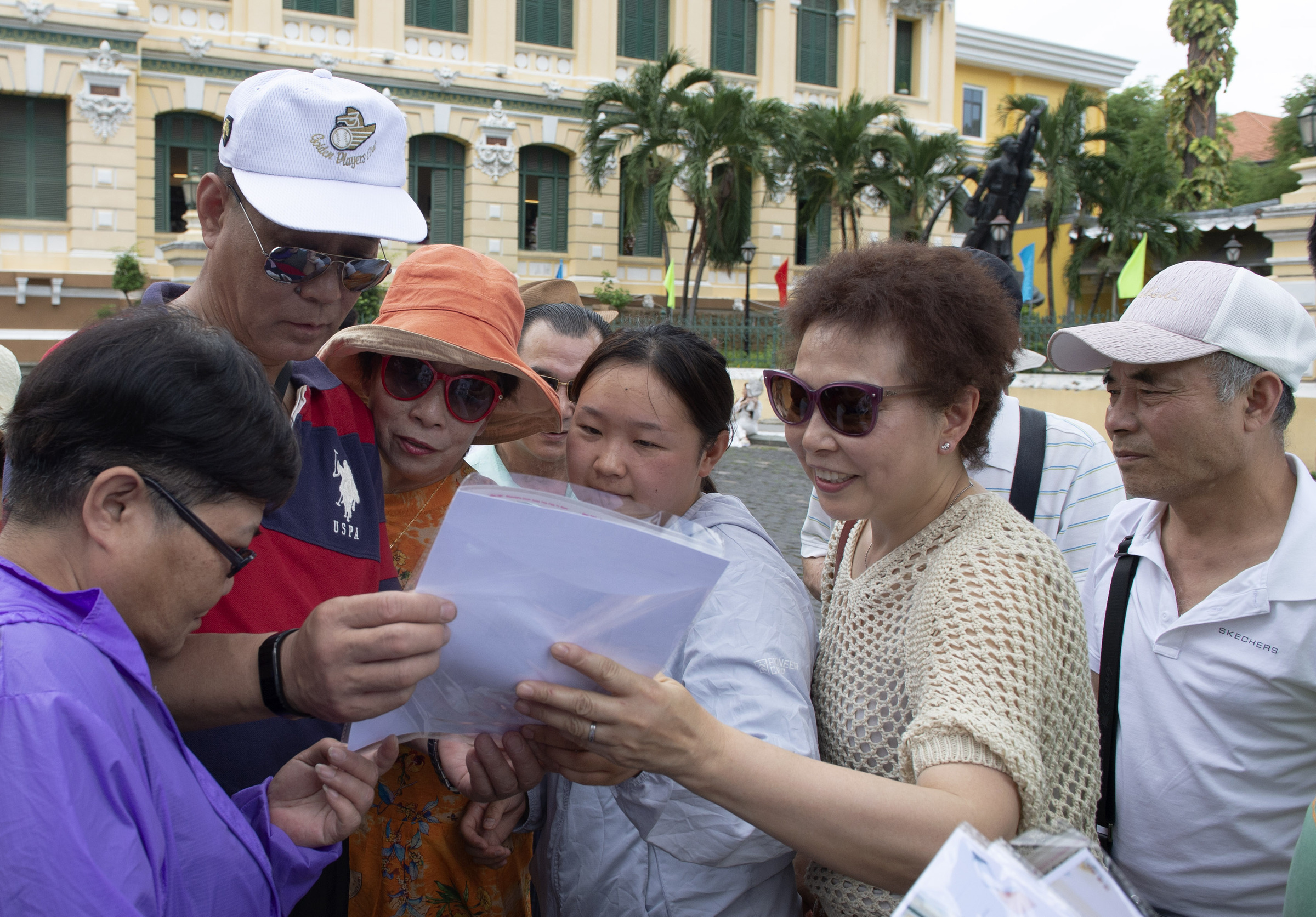 |
Chinese tourists visit the City Post Office, Ho Chi Minh City. Photo: Dang Khoa
During the visit, General Secretary and President To Lam and General Secretary and President Xi Jinping announced the launch of the Vietnam-China Tourism Cooperation Year.
Ambassador Ha Wei explained that the significance of the Vietnam-China Tourism Cooperation Year lies in promoting economy and trade through tourism, strengthening traditional friendship through cultural exchange, and enabling mutual understanding and closeness between the people of both countries to truly enjoy the benefits of tourism cooperation.
"This year, we expect to achieve a breakthrough and overcome bottlenecks, attracting more Chinese tourists to Vietnam and vice versa," he expressed his hope.
Associate Professor, Doctor Hoan, who is also a Standing Committee member of the Vietnam-China Friendship Association, noted that Vietnam and China's plan to explore visa exemptions for group tourists at certain locations would help reduce administrative barriers and travel costs. This would significantly expand the scale and frequency of contact between the people of the two countries.
"Understanding between peoples cannot be formed solely through media or political discourse but must be nurtured through real experiences, through daily communication. This policy helps these foundations permeate people's lives, forming small streams that contribute to the great river of long-lasting friendship," he said.
Additionally, the visa exemption policy directly impacts education and training, fostering more flexible and substantive student exchange programs, short-term internships, joint research, and academic exchanges between educational institutions in both countries.
"When both the social and institutional foundations are strengthened, the Vietnam-China community with a shared future can become an entity with strategic depth and lasting vitality," Mr. Hoan concluded.
Nguyen Tien