CNN reported on 13/4 that US officials indicated approximately 15 warships are operating in the Middle East. This deployment includes the aircraft carrier USS Abraham Lincoln, the amphibious assault ship USS Tripoli, the dock landing ship USS Rushmore, the amphibious transport dock USS New Orleans, and 11 Arleigh Burke-class destroyers. The locations of these vessels and the forces participating in the Hormuz Strait blockade were not disclosed.
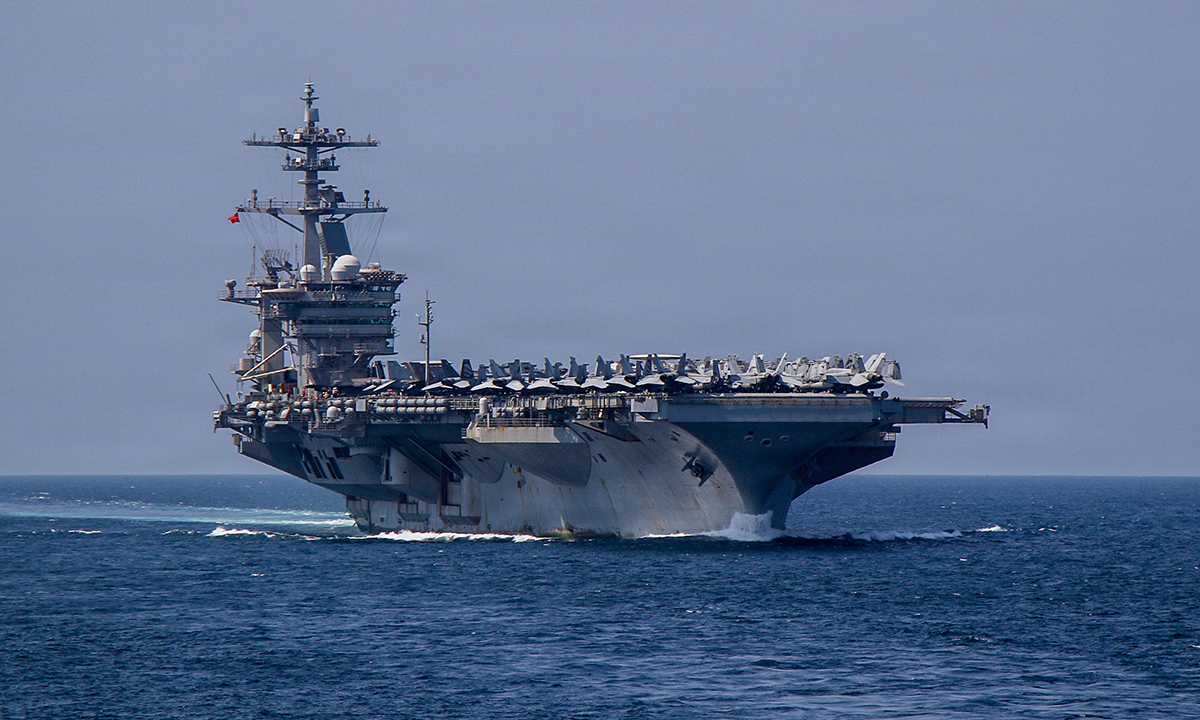 |
The aircraft carrier USS Abraham Lincoln in the Middle East on 10/3. *Photo: US Navy* |
Further reinforcing the US naval presence, the aircraft carrier USS Gerald R. Ford, which previously participated in an attack on Iran, along with several destroyers and logistics ships, are operating in the eastern Mediterranean. These forces would need to transit the Suez Canal or sail around Africa to reach the blockade area. Additionally, two US officials told the Wall Street Journal on the same day that the George H.W. Bush Carrier Strike Group is sailing around southern Africa en route to the Middle East. This unusual route suggests US warships are avoiding the Red Sea, where they risk attacks from Houthi forces.
Houthi forces have repeatedly launched missiles at Israel since Israel and the US launched an attack on Iran on 28/2. The Yemeni armed group also warned it would blockade the Bab al-Mandeb Strait, connecting the Red Sea and the Gulf of Aden, a shipping route through the Suez Canal.
US Central Command (CENTCOM), the agency responsible for US military operations in the Middle East, announced it began enforcing a blockade of the Gulf of Oman and the Arabian Sea, east of the Hormuz Strait, on all vessels traveling to and from Iranian ports as of 13/4. Humanitarian shipments, including food, medical supplies, and other essential goods, will be permitted to pass but must undergo inspection.
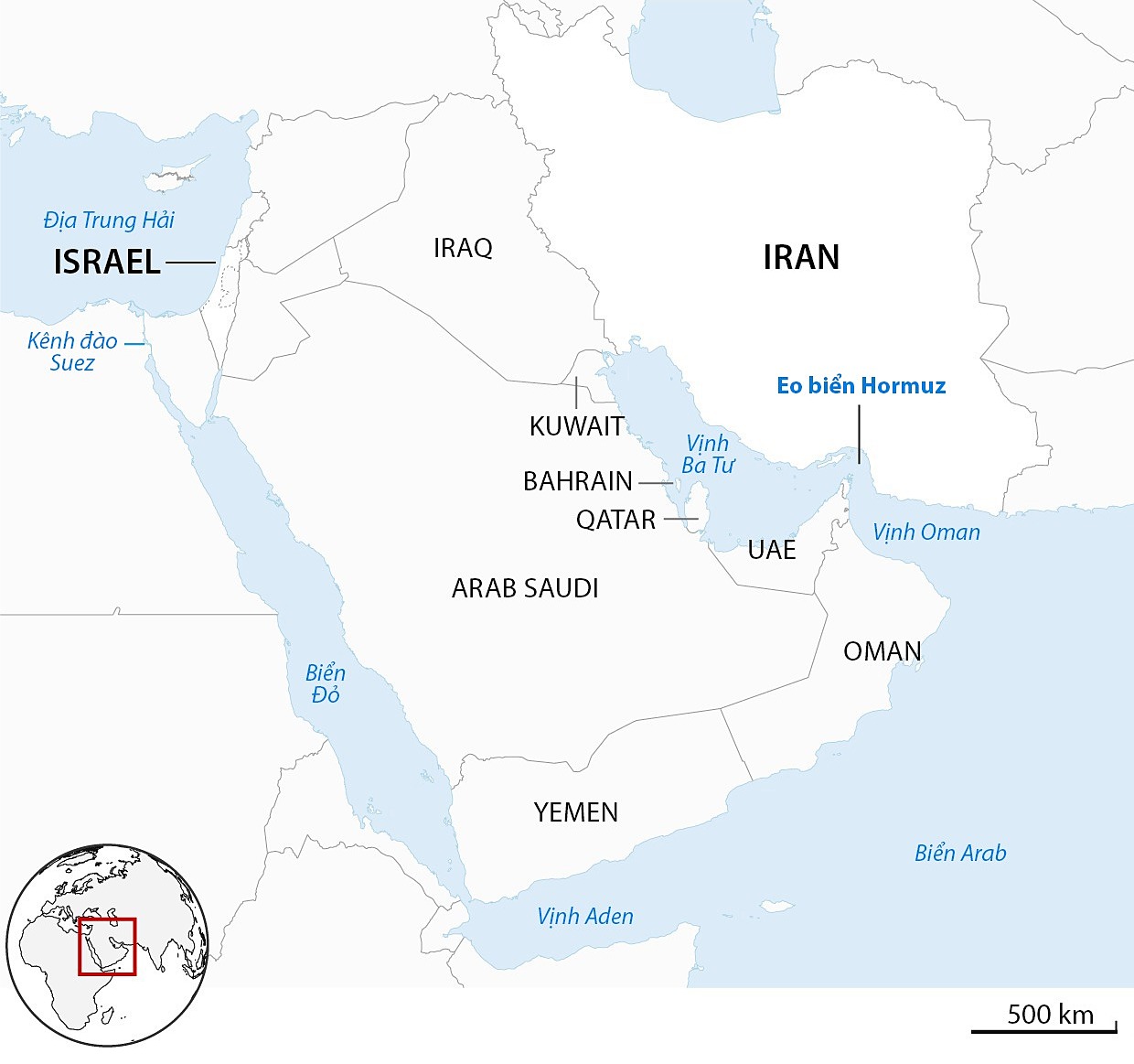 |
Location of the Hormuz Strait. *Graphic: Guardian* |
In response, Iranian Foreign Minister Abbas Araghchi previously spoke by phone with his Saudi Arabian and Qatari counterparts to discuss what Tehran called "the risks of provocative actions caused by Washington." Araghchi stated that Iran "had adopted a goodwill approach by accepting the ceasefire" with the US, but criticized Washington for maintaining excessive demands in negotiations, leading to the dialogue results in Pakistan not meeting expectations.
*By Nguyen Tien (According to CNN, WSJ, AFP, AP)*