French farmers have been organizing protests and erecting roadblocks since december 2025, opposing the government's handling of the lumpy skin disease outbreak in livestock. On 13/1, protesters from towns surrounding paris and other regions drove hundreds of tractors to the capital, parking them near the french parliament building.
French police estimated that about 400 people gathered near the parliament building. According to France's leading agricultural union, FNSEA, more than 500 tractors and 800 farmers participated in the demonstration.
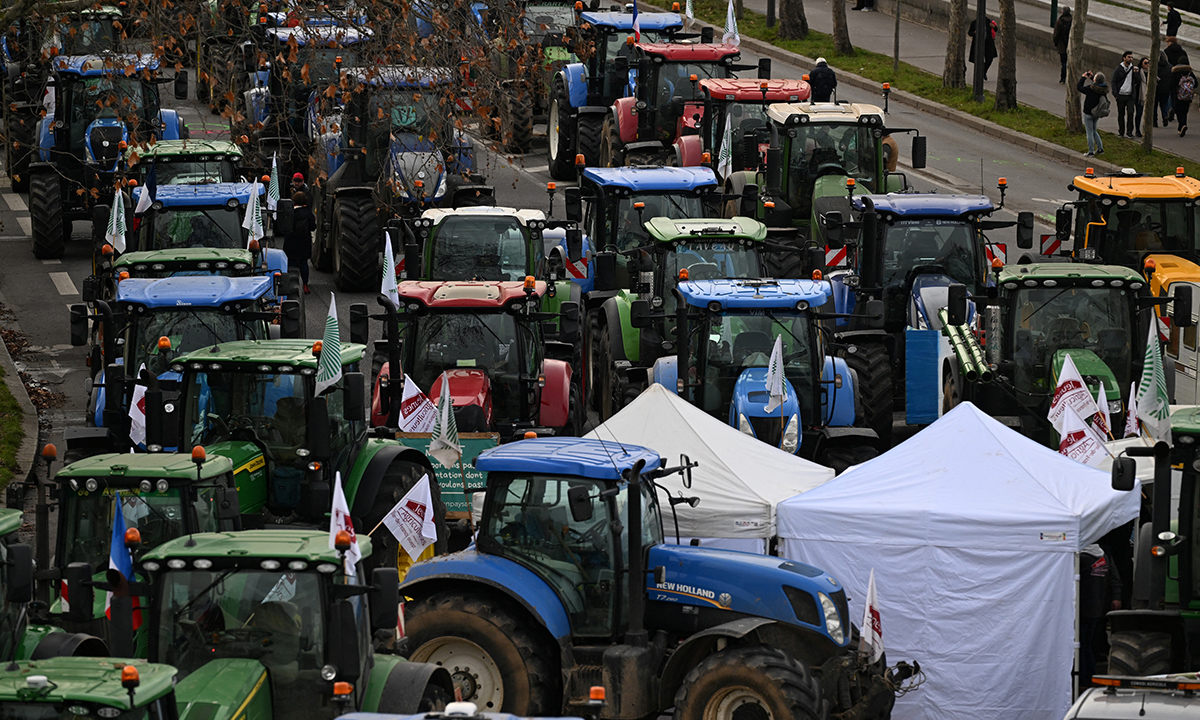 |
Tractors and french farmers gathered in paris on 13/1. Photo: AFP |
Prime Minister Sebastien Lecornu later pledged to introduce an emergency agriculture bill to address the farmers' concerns. The bill will focus on several priorities, including water issues, predators, and production resources, and will be presented before France's agricultural exhibition opens in february.
However, FNSEA stated that this was insufficient. "We decided to stay overnight", said Damien Greffin, vice president of FNSEA, outside the lower house of the french parliament.
"We've had enough", said Guillaume More, head of FNSEA's paris branch. "We haven't been able to make money from our farms for three years".
FNSEA and another union, Jeunes Agriculteurs, are demanding immediate government action. Last week, french authorities announced a support package worth 300 million EUR (350 million USD) for farmers, along with other measures, including allowing an increase in the number of wolves that can be culled.
This year, France's largest agricultural exhibition will not feature cows, marking the first time this has happened since the event began in 1964. Farmers stated they refused to bring livestock to the exhibition due to health concerns and to express solidarity with those affected by the lumpy skin disease outbreak.
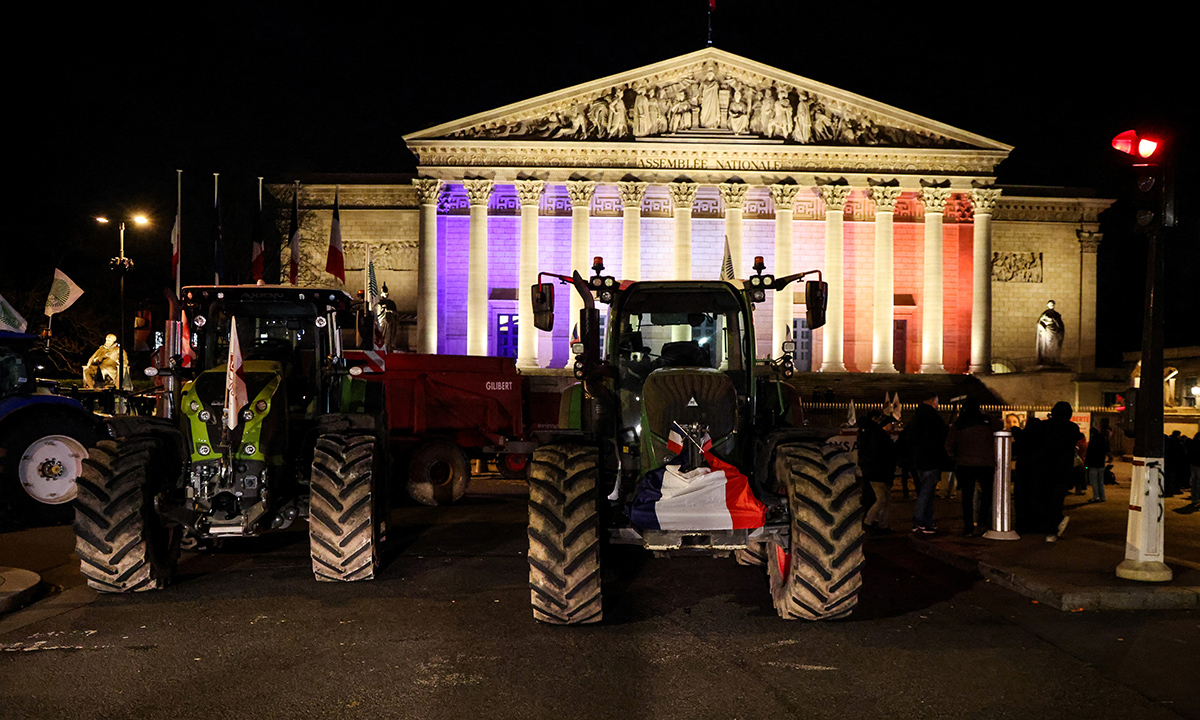 |
Tractors parked in front of the french parliament building on 14/1. Photo: AFP |
Additionally, the European Union's (EU) anticipated agreement with the Mercosur Common Market (Mercosur) on 17/1 is seen as the final straw amid deep instability in the french agricultural sector.
Most of the 27 EU member states support the agreement, considering it crucial for boosting exports during Europe's difficult economic situation, as well as strengthening diplomatic ties at a time of global uncertainty.
The agreement, expected to be effective for 25 years, is anticipated to create one of the world's largest free trade areas and allow the EU to export machinery, chemicals, and pharmaceuticals at lower tariffs.
However, french farmers and those in several other EU countries are concerned about unfair competition from cheap beef and other agricultural products from South America.